 EN
EN

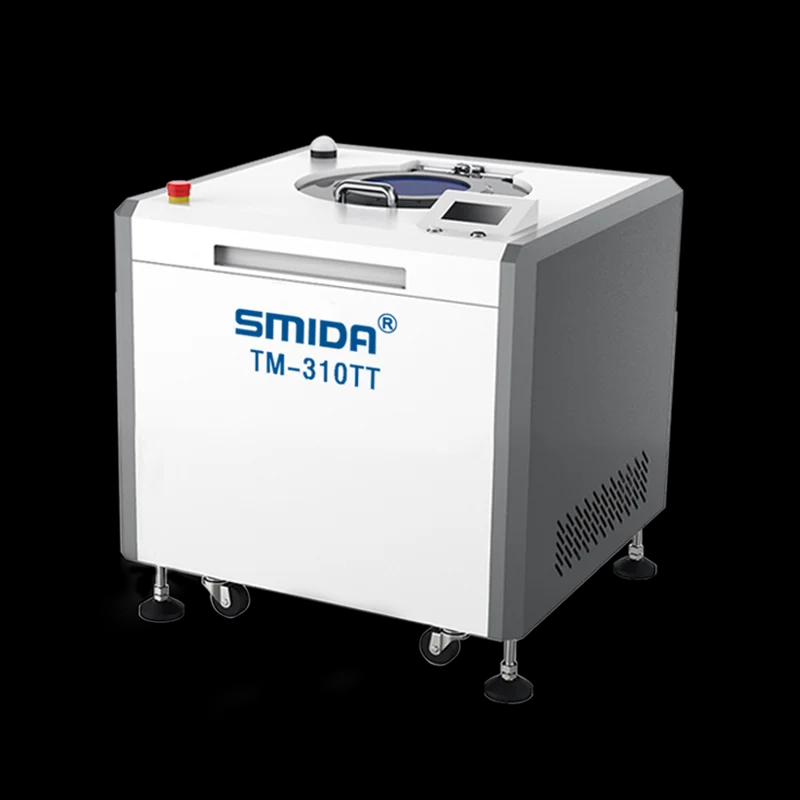
Exploring the Shifting Landscape of Surface Mount Technology Quality Control
Electronics manufacturing has shifted dramatically over recent years as production engineers and SMT assembly specialists lean heavily toward higher precision and zero-defect production workflows. Anyone closely involved in high-density printed circuit board fabrication knows that managing solder paste preparation can entirely make or break an entire surface mount line. When electronics manufacturing facilities evaluate material preparation processes, automated solder paste mixers stand out as an indispensable cornerstone for eliminating human error and ensuring consistent paste rheology. Industry insights consistently point out that demand for automated mixing equipment continues growing steadily across global electronics manufacturing sectors, where buyers expect both immaculate joint integrity and dependable throughput speeds without ever compromising on solder performance. Furthermore, modern production operators increasingly gravitate toward mixing solutions that naturally eliminate entrapped air bubbles during preparation, making high-performance automated systems a vital asset in contemporary SMT facilities worldwide. In addition, production managers appreciate how easily these mixers handle viscous compounds across different container sizes, making them a reliable choice for global production lines looking to optimize operational performance and cost-efficiency. Moreover, facility operators value how these systems integrate smoothly into existing factory layouts, ensuring seamless preparation workflows without major operational disruptions.
Decoding the Core Mechanics of Automated Solder Paste Mixing
Preparing solder paste for high-reliability surface mount technology involves precise planetary motion physics and centrifugal fluid dynamics rather than mere manual stirring. Because solder paste consists of fine metal alloy powders suspended in a complex chemical flux matrix, achieving uniform viscosity and complete homogenization requires advanced dual-axis rotation and careful thermal management. Professional manufacturing facilities typically rely on specialized programmable mixing cycles to ensure that the paste experiences controlled centrifugal forces, driving out microscopic air pockets while thoroughly blending settling elements. Market feedback shows that traditional manual stirring methods fail to match the repeatability required for modern fine-pitch component placement, making automated orbital mixing an absolute necessity. These automated systems dominate commercial fabrication orders across the board because the controlled rotational mechanics yield void-free, highly stable paste that eliminates bridging and tombstoning defects during reflow. Furthermore, engineering teams continually refine rotation speeds to maintain peak fluid integrity across high-volume production schedules.
Balancing Rheological Consistency with Solder Performance
Even though solder paste preparation involves high shear forces, modern automated mixing techniques are engineered to prevent flux separation and maintain optimal thixotropic behavior. Specialized orbital rotation setups actively manage the kinetic energy applied to the jar, ensuring that delicate alloy powders maintain their structural suspension without experiencing viscosity breakdown or premature dry-out. From a practical manufacturing standpoint, fine-tuning rotational RPM and cycle durations offers an elevated level of control while doing a fantastic job at preparing paste for ultra-fine-pitch stencil printing. Independent electronics manufacturing guidelines emphasize that maintaining optimal paste temperature and uniform viscosity through automated conditioning is crucial for high-yield SMT lines, ensuring that printed deposits retain their sharp definition batch after batch. Production engineers often experiment with these specialized mixing parameters to inject fresh efficiency into legacy workflows without compromising assembly quality. Additionally, proper temperature stabilization management ensures a clean working environment and prevents moisture condensation on cold jars straight from storage.
Navigating Industrial Integration and Process Consistency
Integrating automated preparation equipment internationally requires a keen eye for system reliability, barcode tracking compatibility, and strict operational safety standards. Minor fluctuations in power supply stability or incorrect cycle programming can sometimes cause subtle inconsistencies in paste viscosity, which can frustrate high-speed pick-and-place manufacturing schedules. Leading electronics producers utilize advanced closed-loop feedback systems and robust digital cycle logs to ensure that every single mixing batch matches the required engineering parameters precisely. Working alongside vertically integrated manufacturing partners equipped with comprehensive in-house testing facilities helps global electronics buyers minimize these risks, streamline production timelines, and protect their hard-earned operational reputation in competitive markets. Effective equipment maintenance and sturdy machine architecture ultimately guarantee smooth, uninterrupted production runs from initial shift preparation down to final line deployment. Transparent communication regarding technical specifications further ensures that engineering teams remain completely aligned throughout production scaling.
Maximizing Line Yield Through Advanced Viscosity Control
Beyond standard orbital rotation and routine cycle timing, the ultimate success of any SMT assembly line relies on proper paste conditioning, temperature recovery, and overall material resilience. Modern automated mixers offer a unique advantage by combining high-speed centrifugal motion with intuitive digital interfaces that translate complex rheological requirements into flawless paste preparation. When electronics manufacturing teams collaborate closely with experienced equipment makers, they can customize mixing profiles, adapter sizes, and automation triggers to match exact factory floor requirements and target alloy types. This level of technical adaptability ensures that finished circuit boards maintain superior solder joint integrity, eliminate bridging defects, and achieve long-term reliability across diverse consumer and industrial applications. Proper paste conditioning also reduces component rework significantly by preventing printing anomalies prior to actual reflow operations.
Partnering with SMIDA for Superior Manufacturing and Supply Solutions
Finding the right equipment manufacturing partner is often the deciding factor for electronics businesses aiming to stand out in crowded global markets. SMIDA has established a strong reputation in the industrial machinery sector by combining advanced mechanical engineering, precision motion control, and thorough quality testing protocols to deliver exceptional solder paste mixing solutions. Through robust expertise in custom equipment development, reliable manufacturing practices, and dependable technical support, SMIDA empowers global partners to bring sophisticated production lines to life with absolute confidence, ensuring top-tier equipment performance, dependable supply chain execution, and lasting market appeal.
Table of Contents
- Exploring the Shifting Landscape of Surface Mount Technology Quality Control
- Decoding the Core Mechanics of Automated Solder Paste Mixing
- Balancing Rheological Consistency with Solder Performance
- Navigating Industrial Integration and Process Consistency
- Maximizing Line Yield Through Advanced Viscosity Control
- Partnering with SMIDA for Superior Manufacturing and Supply Solutions