 EN
EN

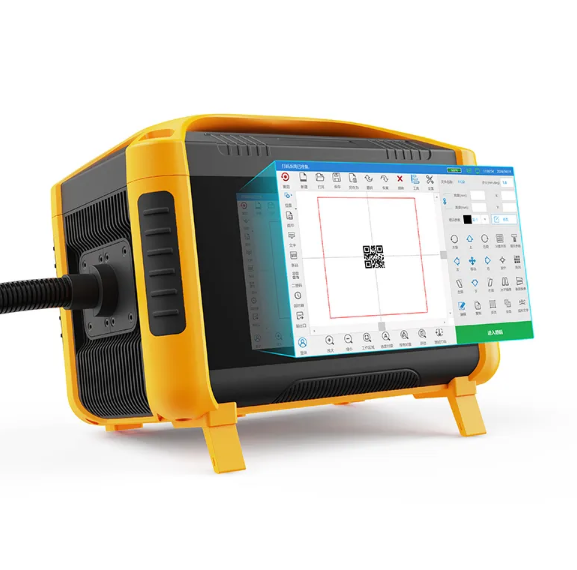
The short answer: more than you think
Walk into any production floor that handles sensitive components—medical devices, consumer electronics, high-end packaging—and chances are there's a UV laser marking machine somewhere in the line. But ask the operators what materials they can actually run through it, and you'll get a range of answers. Some say plastics. Others say glass. A few mention metals.
The truth is, UV laser marking covers a broader spectrum of materials than most people realize. But the real question isn't just what can be marked—it's what should be marked with UV versus other laser types. That distinction makes all the difference in a production environment.
Why UV lasers mark differently
UV laser marking machines operate at a 355-nanometer wavelength, which is fundamentally different from the 1064nm of fiber lasers or the 10.6μm of CO₂ systems. That shorter wavelength changes everything about how the beam interacts with material.
Instead of generating heat to vaporize or melt the surface, UV lasers break molecular bonds directly through a photochemical process. This is often called "cold processing" because the thermal effect is minimal to nonexistent. The material doesn't burn, char, or warp around the mark.
That's the technical distinction that opens up the material possibilities. Heat-sensitive substrates that would discolor or deform under infrared lasers can be marked cleanly with UV.
Plastics: where UV really shines
Plastics are the sweet spot for UV laser marking. Polyethylene (PE), polyvinyl chloride (PVC), polypropylene (PP), and many other polymer families respond well. The UV photons trigger a photochemical transformation that changes the color of the plastic without removing material or causing thermal damage.
For example, UV lasers can create dark, high-contrast marks on nylon and polyurethane that contain titanium dioxide—common in residential circuit breakers. They can also mark transparent and coated plastics, as well as colored substrates. In pharmaceutical packaging, UV marking is used on gel capsules, blister packages, and bottle caps.
A Midwest medical device contract manufacturer ran into trouble with fiber lasers on their polymer catheter components. The heat was causing surface distortion that affected the sealing surfaces. Switching to a UV laser marking machine eliminated the issue entirely—the marks were crisp, and the parts maintained their dimensional integrity. The change didn't slow down production either.
Glass, ceramics, and other challenging surfaces
Glass presents a different set of challenges. Traditional CO₂ lasers create microfractures when marking glass, which can compromise structural integrity. UV lasers achieve more uniform and detailed engravings without the same risk of micro-cracking.
The cold engraving capability makes UV suitable for coated and uncoated glass applications—everything from optical lenses and LCD panels to beverage bottles and drinkware.
Ceramics, silicon wafers, and certain composites also fall within the UV marking range. Semiconductor manufacturers use UV systems for precision marking on wafers and IC components, where any thermal stress would be unacceptable.
Metals: yes, but with caveats
UV laser marking machines can mark metals, but this is where the limitations start to show. Stainless steel, aluminum, gold, silver, and other polished or coated surfaces can be marked. However, fiber lasers are generally faster and more cost-effective for most metal marking applications.
UV becomes the better choice for metals when the surface is heat-sensitive or when the mark requires extremely fine detail. Coated metals, thin foils, and certain precious metal applications benefit from the low thermal impact. But for everyday metal part marking—serial numbers on steel brackets, logos on aluminum housings—fiber is usually the more practical option.
Where UV doesn't make sense
Being honest about limitations matters. UV laser marking machines are not the right tool for every material or every job. Highly reflective surfaces can sometimes scatter the beam unpredictably. Certain dark or carbon-filled plastics absorb UV energy differently and may not produce sufficient contrast.
| Material Category | UV Laser Suitability | Notes |
|---|---|---|
| Polyethylene, PVC, PP | Excellent | Photochemical color change, no thermal damage |
| Nylon, polyurethane (with TiO₂) | Excellent | High-contrast dark marks possible |
| Transparent/coated plastics | Excellent | Cold marking preserves clarity |
| Glass (coated and uncoated) | Very Good | Uniform engraving, minimal micro-cracking |
| Silicon wafers, ceramics | Very Good | Precision marking without thermal stress |
| Stainless steel, aluminum | Good | Works, but fiber is often more efficient |
| Highly reflective metals | Limited | Beam scatter can reduce mark quality |
| Dark carbon-filled plastics | Limited | Contrast may be insufficient |
The cost equation matters too. UV laser sources tend to be more expensive than fiber or CO₂ alternatives. For high-volume metal marking where heat isn't a concern, the ROI on UV doesn't always pencil out.
Making the right call for your materials
The decision about what materials to run through a UV laser marking machine comes down to three factors: thermal sensitivity, required precision, and production volume. Heat-sensitive plastics, glass, and delicate electronics components lean heavily toward UV. Rugged metal parts with loose tolerance requirements? Fiber will do the job faster and cheaper.
What makes UV valuable is its versatility across material types that other lasers can't handle well. One machine can move from marking medical-grade polymers to engraving glass vials to coding ceramic substrates—all without swapping hardware.
Companies like Smida have been manufacturing UV laser marking systems alongside fiber and CO₂ platforms for years, with equipment deployed across industries ranging from medical devices to consumer electronics. The common thread across their customer base isn't a single material type—it's the recognition that when thermal damage isn't an option, UV is the answer.