 EN

Understanding Fluid Dynamics and Viscosity Challenges
Navigating industrial mixing lines reveals a constant technical hurdle across chemical, advanced material, and battery manufacturing sectors regarding fluid thickness and operational limits. Operating production floors efficiently means figuring out precisely how thick a vacuum mixer can actually process without stalling motors or compromising mix quality. From low-viscosity electronic coatings that demand absolute clarity free of microscopic bubbles to ultra-heavy electrode pastes used in modern energy storage, grasping the operational envelope of vacuum mixing technology remains vital for plant engineers and technical directors alike. Achieving uniform dispersion under negative pressure requires a meticulous balance of mechanical shear forces, complex fluid rheology, and precise vacuum dynamics. Modern industrial vacuum mixers bridge the performance gap between delicate liquid blending and heavy-duty mastication, successfully handling everything from runny fluids to extremely thick pastes through robust mechanical engineering and adaptable agitator configurations. Selecting equipment that matches the precise viscosity profile prevents costly mechanical overloads, motor stalling, and thermal degradation, directly safeguarding product quality and minimizing unexpected downtime on the factory floor. Industrial processing facilities worldwide continually demand equipment capable of handling wide viscosity shifts without requiring complete machinery overhauls between product batches. Furthermore, understanding the interplay between container geometry and rotational torque ensures that operators can push production boundaries safely while maintaining optimal shear distribution throughout every mixing cycle, resulting in superior product uniformity across diverse manufacturing applications.
Mastering Low-Viscosity Blending and Defoaming
Processing thin liquids such as electronic potting compounds, specialized low-viscosity resins, pharmaceutical solutions, and high-purity optical adhesives introduces distinct challenges that differ vastly from handling heavy pastes. Instead of fighting mechanical resistance, operators must control fluid splashing, turbulent vortex creation, and invisible micro-bubble entrapment. Standard atmospheric mixing equipment frequently whips ambient air straight into thin liquids, resulting in micro-defects within cured polymer matrices, compromised dielectric strength in electronics, or optical distortions in protective coatings. Applying a tightly regulated vacuum environment inside the mixing vessel allows the system to efficiently extract dissolved and trapped gases from the fluid matrix. At the same time, high-speed dispersion discs, sawtooth blades, or specialized rotor-stator elements generate controlled micro-turbulences, ensuring thorough degassing and complete homogenization without degrading sensitive materials or altering chemical properties. This dual-action approach meets the stringent optical and structural purity standards demanded in high-tech aerospace, electronics, and medical device manufacturing environments where microscopic flaws lead to product rejection. Maintaining precise vacuum pressure throughout this delicate phase prevents volatile loss while securing uniform clarity in transparent formulations.
Balancing Shear and Flow in Intermediate Viscosities
Transitioning toward intermediate-viscosity formulations like advanced cosmetics, structural adhesives, polyurethane pre-polymers, and industrial silicone sealants shifts the fluid dynamics entirely, bringing non-Newtonian behaviors into play. Materials within this intermediate bracket often display pronounced shear-thinning characteristics where resistance drops under continuous mechanical stress. Maintaining an optimal equilibrium between convective bulk movement and high localized shear prevents ingredient agglomeration and ensures complete chemical reactions across every batch. Dual-shaft and triple-shaft planetary configurations excel in these scenarios by combining revolving planetary stirrers with high-speed emulsifying attachments. The planetary paddles constantly sweep the vessel interior to eliminate dead zones and prevent material build-up, while simultaneous vacuum application prevents air pockets from forming as the formulation thickens during processing. This dynamic interaction secures reliable batch-to-batch consistency for high-end cosmetic emulsions and structural industrial sealants alike, ensuring that physical properties remain uniform throughout extensive production runs. Engineers must carefully calibrate blade speeds to match the evolving viscosity profile as raw components transform into cohesive, finished mixtures.
Tackling High-Viscosity and Heavy-Paste Challenges
Handling ultra-heavy materials such as thick battery electrode pastes, high-solid thermal interface compounds, thick automotive sealants, and dense ceramic injection molding slurries represents the ultimate test for industrial mixing machinery. Traditional impeller designs fail immediately when confronted with extreme resistance, often stalling or cutting empty channels through the cohesive medium rather than achieving bulk circulation. Heavy-duty manufacturing setups rely instead on robust helical ribbon agitators, twin-screw mechanisms, and multi-flight anchor designs coupled with high-torque gear systems designed to knead dense materials effectively. In this demanding environment, the vacuum chamber performs a critical dual function by removing volatile solvent vapors, moisture pockets, and microscopic air voids that could otherwise cause pinholes, coating delamination, or structural weak points in final components. Integrated thermal management jackets further dissipate the intense frictional heat generated during heavy shearing, protecting heat-sensitive formulations and maintaining consistent batch rheology over extended mixing durations. Proper temperature control combined with aggressive mechanical kneading ensures that highly viscous materials achieve complete structural homogeneity without suffering thermal breakdown.
Delivering Reliable Manufacturing Excellence with SMIDA
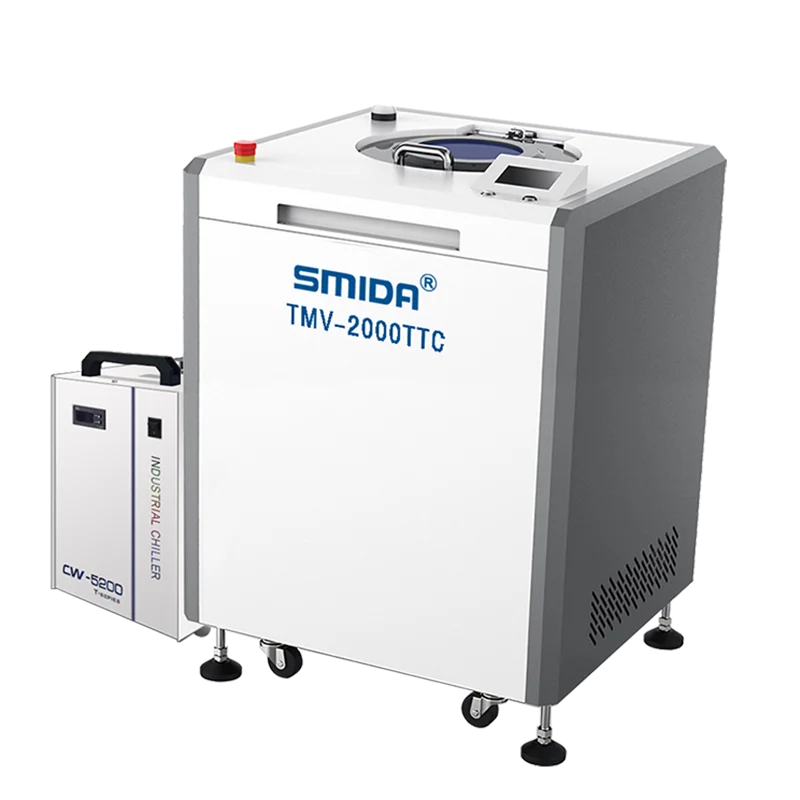
Selecting and deploying the right vacuum mixing machinery for complex industrial workflows demands deep technical insight, empirical shop-floor know-how, and robust manufacturing capabilities. Delivering tailored mixing solutions that align with international quality standards enables global manufacturers to scale laboratory formulations into reliable mass production smoothly. Through advanced engineering practices, stringent supply chain controls, and comprehensive technical support, SMIDA empowers industrial partners worldwide to overcome difficult mixing hurdles, ensuring long-term operational stability, superior product quality, and seamless factory automation. Whether optimizing a multi-ton industrial production line or upgrading specialized material processing facilities, leveraging proven engineering prowess ensures that industrial processing equipment handles any viscosity challenge reliably, safely, and efficiently. Investing in versatile, high-performance mixing systems gives producers a decisive competitive advantage in fast-evolving global markets.