 EN
EN

The lab mixer that actually keeps up with formulation work
Walk into any R&D lab that deals with pastes, adhesives, or cosmetic creams, and the mixing equipment often tells a story. Older units struggle with viscous materials. Air gets trapped. Temperature drifts. Batch-to-batch consistency becomes a guessing game. The operators develop workarounds—extra mixing time, manual scraping, repeated vacuum cycles—that eat up hours better spent on formulation development.
Modern planetary lab mixers have changed that dynamic. They combine orbital motion, vacuum capability, and precise control in a way that lets researchers focus on the chemistry rather than wrestling with the machine.
Planetary motion does more than spin things around
The defining feature of a planetary lab mixer is exactly what the name suggests—the mixing container revolves around a central axis while also rotating on its own axis. This dual movement creates a compound flow field inside the mixing vessel. Radial shear breaks down agglomerated particles. Axial convection turns the material over repeatedly. Tangential infiltration blends components with different densities.
What that means in practice: no dead zones. Traditional mixers with a single agitator leave material stuck to the vessel walls or sitting stagnant in corners. The planetary action keeps everything in motion. A formulation chemist at a Midwest adhesives company once described the difference as "going from stirring a pot of cold honey with a wooden spoon to having a thousand tiny hands working the material from every angle at once." The analogy holds.
Vacuum integration eliminates the bubble problem
Air entrapment ruins more batches than most operators care to admit. Bubbles that form during mixing affect density, optical clarity, structural integrity, and shelf life. Degassing after the fact is slow and often incomplete.
Planetary lab mixers with built-in vacuum functionality address this at the source. The vacuum pulls negative pressure inside the mixing chamber while the planetary motion works the material. Bubbles migrate toward the container edges under centrifugal force and get evacuated continuously.
The numbers tell the story. For semiconductor packaging adhesives, residual bubble rates drop from 5 percent with conventional processing to below 0.1 percent with vacuum planetary mixing. That is the difference between a reliable electrical connection and a field failure.
Temperature control keeps sensitive formulations stable
Heat generation during high-speed mixing is a real problem. Friction between particles, shear forces, and mechanical energy all convert to thermal energy. For temperature-sensitive materials—think enzyme-based formulations, certain polymers, or cosmetic actives—uncontrolled heating can degrade the product before it even leaves the lab.
Advanced planetary lab mixers incorporate active temperature control loops. Cooling circuits circulate fluid around the mixing chamber to maintain setpoint temperatures. Some systems offer heating as well, for materials that require elevated processing temperatures.
The practical impact shows up in viscosity stability. A lithium battery materials supplier using temperature-controlled planetary mixing reported a 40 percent improvement in viscosity stability for silicon-based anode slurries compared to uncontrolled mixing. That kind of consistency translates directly to better electrode coating and more uniform cell performance.
Programmability removes operator variability
One of the most underrated features of modern planetary lab mixers is the ability to save and recall mixing programs. Speed profiles, vacuum levels, temperature setpoints, and run times get stored as recipes. Any technician can load the same program and get the same result.
This matters more than it might seem. In a busy lab, three different operators might run the same material on three different shifts. Without programmable controls, each one makes small adjustments based on habit or intuition. The cumulative effect is batch-to-batch variation that complicates scale-up and frustrates quality control.
With stored programs, the machine becomes the keeper of the process. Human judgment still matters for setup and troubleshooting, but the execution stays locked to the parameters that worked.
Capacity flexibility bridges lab and production
Planetary lab mixers come in a range of sizes, from small units handling a few hundred milliliters to systems that process several liters. This range matters for scale-up work. A formulation developed on a lab-scale unit should translate to production without complete re-engineering of the mixing parameters.
The key is maintaining geometric and kinematic similarity across scales. A well-designed planetary mixer family keeps the same motion ratios and flow patterns whether the container holds 300 ml or 9 liters. That means the mixing intensity and uniformity stay comparable. Scale-up becomes a matter of adjusting time and speed within known bounds rather than starting from scratch.
Where the planetary lab mixer falls short
No piece of equipment does everything. Planetary lab mixers excel with viscous pastes, slurries, and multi-component systems. They are less effective with extremely low-viscosity fluids that slosh rather than flow in a controlled manner. For pure liquid blending, a simple magnetic stirrer or overhead agitator might be faster and more economical.
The other consideration is batch size. Planetary mixers are inherently batch processors. Continuous mixing operations require different equipment altogether. For R&D and small-batch production, though, the batch nature is rarely a limitation—it is often an advantage for formulation tracking and quality documentation.
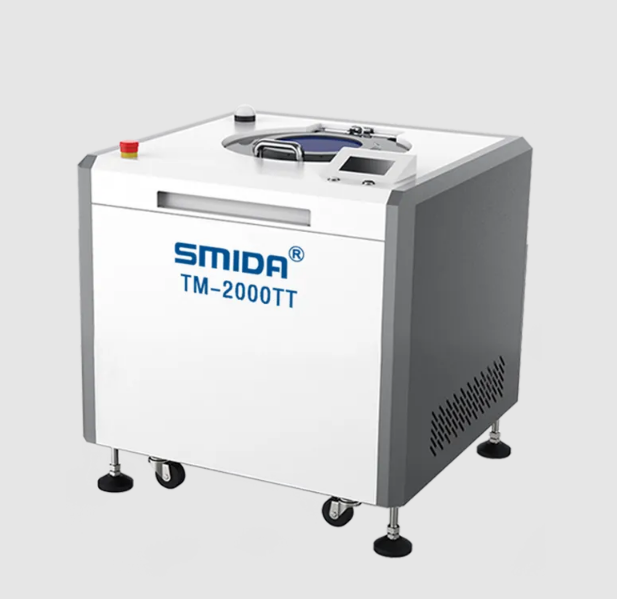
SMIDA builds planetary lab mixers that bring these features together in practical, production-ready packages. With over a decade of R&D in intelligent mixing equipment and a product line spanning laboratory-scale through industrial units, the company supports formulation work across adhesives, cosmetics, chemicals, electronics, and new energy materials. The integration of planetary motion, vacuum systems, and temperature control under one engineering roof means researchers get consistent performance without piecing together solutions from multiple vendors.
Table of Contents
- The lab mixer that actually keeps up with formulation work
- Planetary motion does more than spin things around
- Vacuum integration eliminates the bubble problem
- Temperature control keeps sensitive formulations stable
- Programmability removes operator variability
- Capacity flexibility bridges lab and production
- Where the planetary lab mixer falls short