 EN

Why Absolute Precision Matters in Medical Material Preparation
Working with medical-grade materials leaves very little room for mistakes. Whether you are blending implantable biomaterials, diagnostic pastes, dental composites, or specialized silicones, the structural reliability of the end product relies heavily on how evenly the raw ingredients are mixed. Even tiny trapped air bubbles, poorly dispersed fillers, or minor particulate contamination can lead to serious device failures or biocompatibility issues down the road. Traditional mixing techniques, such as manual stirring or old-fashioned impeller blades, often trap air inside the mixture, struggle to break down stubborn clumps, and carry the risk of contamination from mechanical wear. Because of these challenges, upgrading to a specialized vacuum mixer designed for delicate medical tasks has become a major priority for engineering teams everywhere.
The Shift Toward Bladeless Planetary Centrifugal Mixing
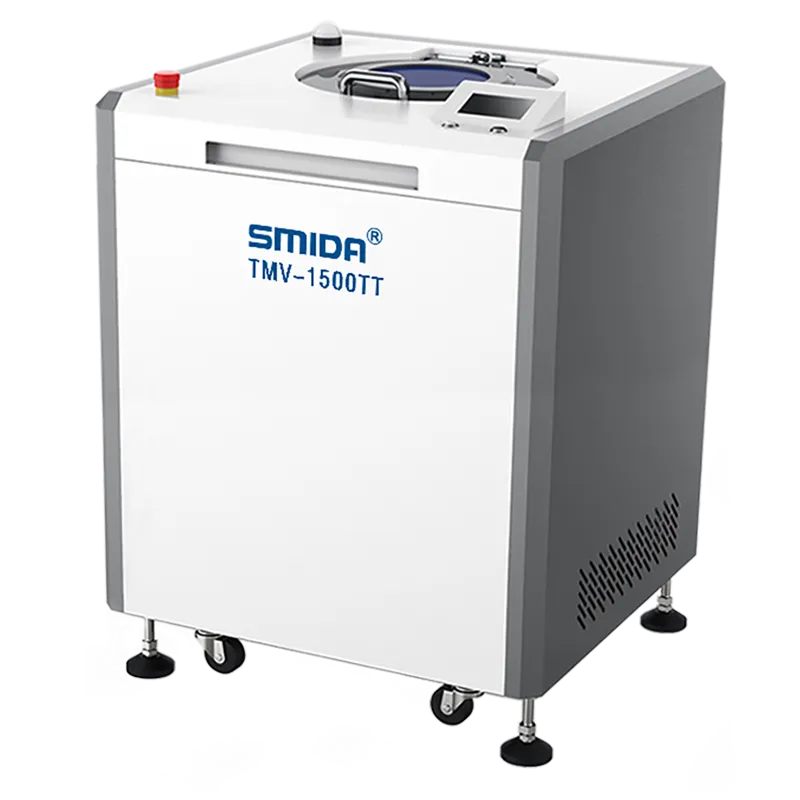
To get around the limits of conventional agitation, the industry has largely moved toward advanced planetary centrifugal vacuum mixers. Instead of relying on physical mixing blades that dip into the material, these modern high-precision systems use a bladeless, non-contact dual-axis motion—spinning and revolving simultaneously—inside a strong vacuum environment. The revolving motion pushes dense materials outward while driving hidden micro-bubbles up to the surface, where the vacuum pulls them out instantly. At the same time, the counter-rotation creates gentle yet effective shear forces that pull apart clustered particles into fine primary components, achieving deep homogenization in just a few minutes. This dual action guarantees a bubble-free, highly uniform mixture without messing with the chemical or physical nature of sensitive medical compounds.
Real-World Experience: Solving Voids in Medical Silicone Processing
A great example of this technology in action involves preparing thick, two-component medical-grade silicones used for prosthetics and wearable health monitors. In a recent engineering project with a medical device developer, standard mixing gear left trapped air pockets behind, which caused weak spots and tiny cracks during stress testing. By switching to a high-performance vacuum planetary centrifugal system, the team ran a quick, automated mixing and degassing cycle lasting just a couple of minutes. The high-torque drive handled the thick silicone effortlessly, while the powerful vacuum completely sucked out all the hidden air pockets. The result was a completely solid silicone matrix with fantastic tensile strength, consistent flexibility, and full compliance with tough medical regulations.
Keeping Temperatures Stable During Sensitive Mixing Cycles
Medical formulas often include heat-sensitive ingredients, active biological components, or fast-curing polymers that generate a lot of heat while being blended. If the temperature gets too high, it can ruin the batch by causing polymers to cure too early or destroying delicate active agents. Industry best practices highlight the importance of using precise temperature control features, such as cooling jackets or adjustable thermal regulation, to keep things cool and stable throughout the entire mixing cycle. Managing temperature hand-in-hand with vacuum degassing ensures that active formulations stay safe from heat damage while keeping the overall material flow predictable and smooth.
Scaling From Lab R&D to Full-Scale Industrial Production
When you are manufacturing medical products on a larger scale, consistency is everything. A formula that works wonderfully in a small laboratory test beaker needs to behave in the exact same way when you scale it up for high-volume production. Modern high-precision vacuum mixers make this transition much easier through smart digital controls that let operators save and reload specific processing recipes. By locking in the exact rotational speeds, vacuum strength, and cycle times, teams can completely remove human error from the equation. This kind of reliable repeatability speeds up product development, cuts down on wasted materials, and saves a lot of money over time.
Partnering with Industry Experts for Reliable Manufacturing Solutions
Tackling the complex demands of medical material processing usually takes more than standard off-the-shelf equipment; it calls for a reliable manufacturing partner with deep industry experience. With over sixteen years of dedicated focus on planetary mixing technology, SMIDA has grown into a trusted global provider of precision mixing and degassing solutions. SMIDA offers a wide range of equipment—from compact laboratory units to large industrial production platforms—built with proprietary bladeless non-contact designs, powerful drives, and reliable temperature-controlled vacuum options tailored for the medical field. Backed by solid manufacturing capabilities, strict quality control, and flexible custom engineering options like stainless steel contact parts and bespoke vacuum setups, SMIDA provides the strong supply chain foundation and technical edge needed to push modern medical manufacturing forward.
Table of Contents
- Why Absolute Precision Matters in Medical Material Preparation
- The Shift Toward Bladeless Planetary Centrifugal Mixing
- Real-World Experience: Solving Voids in Medical Silicone Processing
- Keeping Temperatures Stable During Sensitive Mixing Cycles
- Scaling From Lab R&D to Full-Scale Industrial Production
- Partnering with Industry Experts for Reliable Manufacturing Solutions