 EN

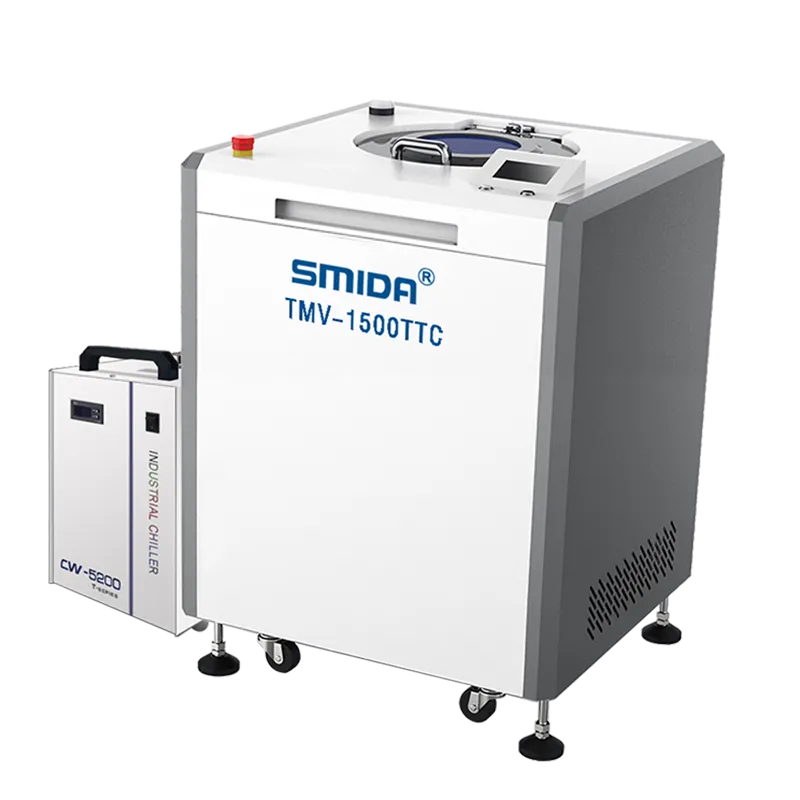
The Hidden Defect Crisis: Why Standard Open Mixing Falls Short
In modern high-tech manufacturing, advanced material formulation represents the absolute backbone of long-term product reliability. Whether production teams are blending high-viscosity conductive adhesives for microelectronics, formulating optical-grade silicone encapsulants, or compounding specialized battery slurries, achieving absolute material homogeneity is non-negotiable. However, a persistent challenge plagues production floors worldwide: microscopic air entrapment and volatile pocket formation. Standard atmospheric mixing—operating purely under ambient room pressure—relies solely on mechanical agitation to blend ingredients. While this traditional method works fine for low-end, non-critical liquids, it consistently fails when handling dense, viscous formulations. As ambient air gets folded into the fluid matrix during standard stirring, stubborn micro-bubbles become permanently trapped, leading to structural voids, surface pinholes, and critical dielectric breakdown in finished components.
For production process engineers who have spent years troubleshooting stubborn fluid formulation bottlenecks across demanding manufacturing facilities, the limitations of atmospheric mixing are painfully familiar. Relying exclusively on open-air agitation often results in excessive batch rejection rates, compromised structural integrity, and unpredictable field performance. Industry materials research reports consistently indicate that gas-induced internal defects account for a massive percentage of total component failures in advanced electronics and aerospace assemblies. This is precisely where understanding the critical performance gap between open-air processing and advanced vacuum mixing becomes an operational necessity for modern industrial plants aiming to eliminate internal defects and elevate overall product quality.
Engineering Dynamics: The Physics of Atmospheric vs. Vacuum Environments
To truly grasp why vacuum mixing dramatically outperforms traditional open-air processing, one must examine the underlying physics governing both environments. Atmospheric mixing operates entirely under normal barometric pressure. When mechanical blades or rotational stirrers churn through a high-viscosity fluid under atmospheric conditions, the surrounding air pressure exerts a continuous downward force on the liquid's surface. This ambient pressure effectively traps microscopic gas pockets, preventing them from rising naturally. Furthermore, the violent shearing action of open blades frequently introduces new air pockets into the mixture rather than extracting existing ones, creating a frustrating cycle of ongoing contamination.
In stark contrast, a professional vacuum mixer introduces a tightly controlled negative pressure environment directly into the processing chamber. According to fluid dynamics principles published in industrial engineering literature, reducing the internal atmospheric pressure drastically lowers the boiling points of volatile components while expanding trapped gas bubbles in accordance with gas laws. As the pressure drops, tiny micro-bubbles expand, coalesce into larger pockets, and buoyant forces drive them rapidly upward and out of the fluid matrix. When paired with advanced centrifugal or planetary mixing dynamics, vacuum extraction strips away trapped gases, leaving behind a completely dense, void-free material matrix that atmospheric mixing can simply never achieve.
Structural Integrity and Performance Metrics: What Changes in the Final Product?
The tangible differences between products manufactured via atmospheric processing versus those created using a high-performance vacuum mixer become immediately apparent upon rigorous physical testing. In applications such as optical lens bonding or transparent electronic potting, even a microscopic air bubble acts as an optical distortion point or a stress concentration zone under thermal expansion. When components undergo thermal cycling in the field, trapped micro-bubbles expand, causing micro-cracking, delamination, and eventual electrical short circuits. Vacuum-mixed materials completely eliminate these vulnerability points, offering superior tensile strength, enhanced thermal conductivity, and flawless optical clarity.
Field implementation data gathered from high-reliability manufacturing sectors demonstrates that transitioning from open-air mixing to vacuum-sealed processing reduces internal structural void rates significantly. Technicians no longer need to rely on inefficient, time-consuming secondary degassing steps, such as prolonged resting in thermal vacuum ovens—which often cause premature curing or solvent evaporation imbalances. By executing simultaneous high-shear blending and vacuum extraction inside a closed container, manufacturers achieve uniform molecular dispersion and absolute bubble-free consistency in a single, streamlined cycle, maximizing daily throughput and reducing material waste.
Operational Efficiency, Cleanliness, and Safety on the Plant Floor
Beyond raw material quality and structural strength, production managers must evaluate how mixing methodologies impact daily plant operations, cleanroom safety, and operator ergonomics. Atmospheric mixing setups, by their very open nature, expose chemical formulations to ambient dust, airborne particulate contamination, and excessive solvent fumes. This open exposure creates significant health hazards for operators, requires constant ventilation maintenance, and frequently leads to cross-contamination between different production batches. Additionally, cleaning sticky, residue-laden stirring paddles and open tanks introduces significant labor downtime and chemical waste.
Modern vacuum mixing systems completely revolutionize plant floor hygiene and operational safety by utilizing sealed, disposable or easily sanitized mixing containers. Because the entire blending and degassing cycle occurs within a hermetically sealed chamber, volatile organic compounds and hazardous vapors are safely contained, protecting workers and maintaining pristine cleanroom standards. Furthermore, the absence of physical immersion blades eliminates blade clean-up downtime entirely, protecting delicate slurries from metallic contamination and ensuring that every single production shift runs with maximum safety, repeatability, and efficiency.
Commercial Scalability and Manufacturing Excellence: The SMIDA Advantage
Scaling up advanced fluid preparation from a small laboratory research beaker to high-volume commercial manufacturing requires uncompromising industrial machinery, precise engineering tolerances, and a robust global supply chain backbone. This is precisely where industry-leading innovators like SMIDA establish a decisive competitive edge. Utilizing state-of-the-art CNC machining centers, high-precision dynamic balancing equipment, and rigorous structural stress-testing protocols, SMIDA transforms heavy-duty industrial components into masterclasses of vacuum mixing reliability and operational longevity. Their stringent quality assurance protocols—including multi-axis vibration analysis and extended continuous-load evaluations—ensure that every vacuum mixing system performs flawlessly under demanding factory conditions.
The true strength of SMIDA extends far beyond standalone equipment engineering; it is rooted deeply in comprehensive customization capabilities, expert technical support, and agile global supply chain management. By maintaining strict control over core component sourcing, electronic control architecture, and specialized vacuum engineering, SMIDA delivers reliable, factory-direct solutions to global electronics manufacturers, advanced materials laboratories, and medical device producers. Whether engineering custom-capacity vacuum mixing units for high-volume automated production lines or supplying precise benchtop models for pioneering research facilities, SMIDA provides the industrial capability and engineering dependability required to support long-term operational success and brand leadership.
Table of Contents
- The Hidden Defect Crisis: Why Standard Open Mixing Falls Short
- Engineering Dynamics: The Physics of Atmospheric vs. Vacuum Environments
- Structural Integrity and Performance Metrics: What Changes in the Final Product?
- Operational Efficiency, Cleanliness, and Safety on the Plant Floor
- Commercial Scalability and Manufacturing Excellence: The SMIDA Advantage