 EN
EN

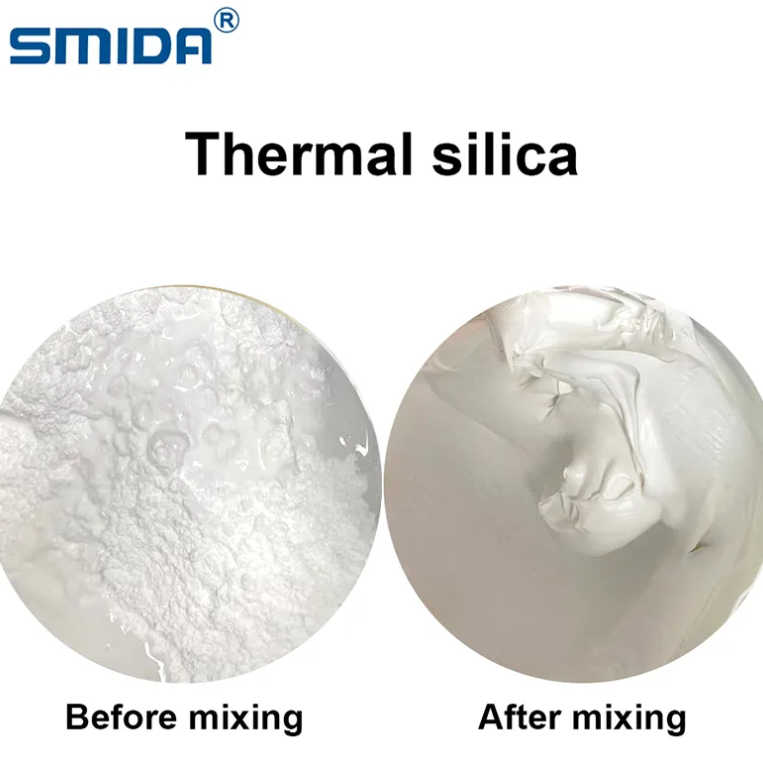
Alright, let's kick things off by getting real about what we're talking about here. When I say "non-contact mixing," I'm talking about a way of blending liquids, powders, or biological materials where nothing physically touches the substance you're working with. No spinning blades. No paddles. No mechanical parts dipping into your precious mixture. Sounds a bit sci-fi, right? But it's actually been around for a while, and it's finally getting the spotlight it deserves in the bioprocessing world.
Traditional mixing, the kind we've all seen in labs and factories for decades, relies on mechanical contact. You drop an impeller or a stir bar into the container, you spin it, and everything gets mixed up. Simple enough. But here's the problem. When you're dealing with living cells, sensitive proteins, or expensive pharmaceutical compounds, that physical contact becomes a huge liability. Every time a blade touches the liquid, it creates shear stress. And shear stress is like kryptonite for delicate biological materials. It can rip apart cell walls, denature proteins, and basically ruin your entire batch.
That's where non-contact mixing steps in to save the day. Think of it like this. Instead of stirring your coffee with a spoon, you're swirling the whole mug around to get the cream to blend. Same idea, different scale. Technologies like planetary centrifugal mixers use a combination of revolution and rotation to generate mixing forces that can reach hundreds of G's, all without any internal hardware touching the material. Pretty cool, right?
And the benefits go way beyond just being gentle on your cells. Non-contact mixing also solves a bunch of other headaches that bioprocessing teams deal with every single day. Contamination risk drops dramatically because there's no seal to leak and no mechanical part to shed particles or debris. Cleaning becomes a breeze or sometimes completely unnecessary with single-use setups. And the whole process becomes way more consistent and reproducible because you're not relying on an operator's technique to get the mix right.
The Core Advantages That Are Changing the Game
So let me break down the real-world advantages that non-contact mixing brings to the table. Because honestly, the list is pretty impressive.
First up, sterility and contamination control. This is the big one. In the world of bioprocessing, contamination is your worst enemy. One rogue microbe or a few stray particles can sink an entire production run, costing millions and delaying patient access to life-saving therapies. Traditional mechanical mixers rely on seals and gaskets to keep the sterile environment separate from the drive mechanism. But seals wear out. They leak. They generate particles. And every time that happens, you've got a problem on your hands. With non-contact mixing technologies like magnetically levitated impellers, there's no physical connection between the motor and the mixing element at all. The impeller floats inside the vessel, driven entirely by magnetic fields. No seals, no friction, no particles, no pathways for contamination. That's a game-changer for aseptic processing.
Second, product quality and integrity. Like I mentioned earlier, shear stress is a major concern when you're working with shear-sensitive biologics. Monoclonal antibodies, viral vectors, stem cells, all of these are fragile. Studies have actually shown that mixers designed to operate with no contact between the impeller and the drive unit are significantly more gentle on monoclonal antibody molecules compared to traditional designs. That means higher yields, better product quality, and fewer failed batches. And when you're dealing with products that cost thousands or even tens of thousands of dollars per dose, that's a huge deal.
Third, operational efficiency. Here's where things get really practical. Non-contact mixing systems, especially the single-use variety, can drastically cut down on turnaround time between batches. Instead of spending hours or even days cleaning and validating a stainless steel tank, you simply swap out a disposable mixing bag or container and you're ready to go. Some manufacturers have reported cutting product changeover time from days down to just a few hours. That means more production runs per year, faster time to market, and lower costs overall.
And fourth, scalability. A lot of people assume that non-contact mixing is only good for small-scale lab work. That's just not true anymore. Companies are now offering magnetically levitated mixing systems that scale all the way from 10 liters up to 3,000 liters. That means you can use the same core technology from early-stage R&D all the way through to commercial manufacturing. No need to re-engineer your process at every scale-up step.
Where We're Seeing Non-Contact Mixing in Action Right Now
Let's talk about some real-world applications. Because theory is great, but what matters is whether this stuff actually works in the real world. And spoiler alert, it does.
One of the biggest areas where non-contact mixing is making waves right now is in the production of cell and gene therapies. These are highly personalized treatments that often need to be manufactured in small batches for individual patients. Traditional stainless steel systems are just too slow and too inflexible for this kind of work. Single-use, non-contact mixing systems are a perfect fit. They're fast to set up, they eliminate cross-contamination risks between different patient batches, and they provide the gentle mixing environment that delicate viral vectors and modified cells need to stay viable.
Vaccine manufacturing is another huge application. Remember all those mRNA vaccines that came out during the pandemic? Producing those lipid nanoparticles requires incredibly precise and gentle mixing to get the encapsulation right. Too much shear and you break the nanoparticles. Too little mixing and you don't get uniform encapsulation. Non-contact mixing hits that sweet spot perfectly.
We're also seeing non-contact mixing being used extensively for buffer and media preparation. This might sound less glamorous than cutting-edge gene therapies, but it's absolutely critical. Bioprocessing facilities go through massive volumes of buffers and culture media every single day. Traditional methods for preparing these solutions are slow, labor-intensive, and carry significant contamination risks. Non-contact mixing systems streamline the whole process. They can prepare hundreds of liters of perfectly mixed, sterile buffer in a fraction of the time it would take using conventional methods.
And let's not forget about research and development. In the lab, researchers are using non-contact mixing for everything from drug discovery screening to formulation development. The ability to mix tiny volumes, sometimes as small as a few microliters, with high precision and no contamination is a massive advantage for early-stage research.
SMIDA has been right in the middle of this shift, offering mixing solutions that serve industries ranging from medical devices and pharmaceuticals to advanced materials and electronics. The company's portfolio includes planetary centrifugal mixers and other non-contact technologies that are helping labs and production facilities work smarter, not harder.
What the Future Holds for Non-Contact Bioprocessing
So where do we go from here? If you ask me, the future of non-contact mixing in bioprocessing looks incredibly bright. And there are a few key trends that are going to drive that growth over the next few years.
First, I think we're going to see a massive acceleration in the adoption of single-use, non-contact mixing systems as the industry continues to move away from traditional stainless steel infrastructure. The shift has been happening for a while, but it's really picking up steam.
Second, automation and digital integration are going to take non-contact mixing to the next level. We're already seeing mixing systems that can be programmed with custom "recipes" for different materials, automatically adjusting speed, time, and other parameters to get the perfect mix every time. But that's just the beginning. As artificial intelligence and machine learning become more integrated into bioprocessing operations, we'll see mixing systems that can learn from previous runs, predict optimal settings for new formulations, and self-adjust in real-time to maintain perfect mixing conditions. Some experts are saying that AI will become the "core brain" driving breakthroughs in biomanufacturing by 2026, shifting the industry from trial-and-error to rational design.
Third, we're going to see non-contact mixing expand into new applications that we haven't even thought of yet. For example, acoustic levitation mixing, which uses sound waves to manipulate droplets in mid-air, is already being explored for chemical and biomedical applications. Imagine being able to mix tiny volumes of expensive reagents with absolutely no container contact, no waste, and no contamination risk. That's the kind of innovation that's on the horizon.
Fourth, sustainability is going to play a bigger role. Traditional bioprocessing consumes massive amounts of water and energy, especially for cleaning and sterilization. Non-contact mixing systems, particularly single-use ones, can dramatically reduce water and chemical consumption because there's no need for intensive cleaning between batches. This aligns perfectly with the growing emphasis on green chemistry and sustainable manufacturing practices.
Fifth, regulatory bodies are starting to catch up. As more data accumulates showing that non-contact mixing systems can meet or exceed the performance of traditional systems, we'll see clearer regulatory pathways for their adoption. This will lower the barrier for smaller companies and accelerate innovation across the industry.
Finally, the non-contact mixing market itself is set for serious growth. The global bioprocessing market is projected to reach over 160 billion dollars by 2030. And a significant chunk of that growth is going to come from advanced mixing technologies that enable more efficient, more flexible, and higher-quality production.
Wrapping It Up
Look, at the end of the day, non-contact mixing isn't just some fancy new gadget for bioprocessing nerds to geek out over. It's a fundamental shift in how we think about mixing biological materials. It addresses real problems that have plagued the industry for decades. Contamination risk, shear damage, cleaning headaches, scalability challenges. All of these get significantly better when you take the "contact" out of contact mixing.
The technology is mature. The benefits are proven. And the adoption curve is accelerating. Whether you're working in a small research lab, a pilot plant, or a massive commercial manufacturing facility, non-contact mixing has something to offer. It's gentler on your products. It's cleaner and safer. It's faster and more efficient. And it's scalable from microliters to thousands of liters.
So if you haven't already started looking at non-contact mixing for your bioprocessing operations, now's the time. The future is already here. It's just not touching anything.