 EN
EN

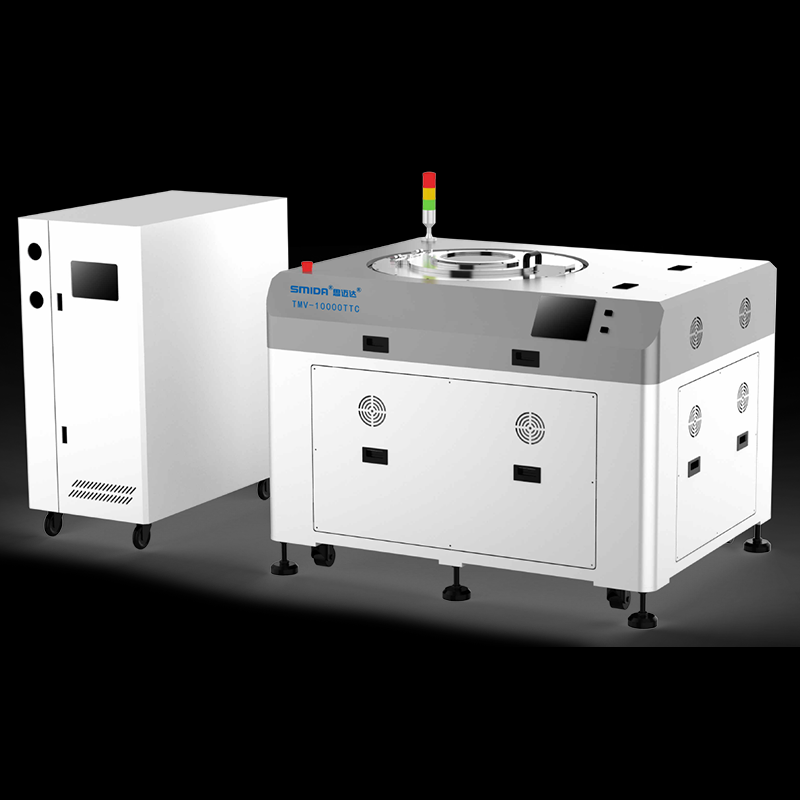
The Mixing Challenge in Polymer Manufacturing
In the modern chemical industry, the synthesis of high-performance polymers is a delicate balance of science and engineering. Whether developing specialized epoxy resins, advanced silicone formulations, or conductive polymer composites, the ultimate quality of the final material is determined by the precision of the mixing process. As global industries demand materials with higher thermal resistance, enhanced durability, and consistent electrical properties, the role of chemical mixers has evolved far beyond simple agitation. Formulators must now achieve molecular-level homogeneity while effectively eliminating common defects—such as micro-bubbles, uneven filler distribution, and material agglomerates—that frequently derail product performance and compromise structural integrity. Modern manufacturing requires a shift toward smarter, more capable technology that can handle these complex requirements with ease, ensuring that every batch meets the highest possible industry standards for reliability and performance.
Achieving Molecular Level Homogeneity
Achieving consistent, reliable dispersion in complex, high-viscosity polymer systems is notoriously difficult for standard equipment. Traditional high-shear mixers often struggle when processing dense materials, frequently leading to non-uniform distribution of critical additives and, crucially, the unavoidable entrapment of unwanted air. For specialized polymers, this trapped air often creates structural weaknesses, surface defects, and significant aesthetic inconsistencies. SMIDA’s planetary centrifugal mixing technology represents a massive technical advancement, utilizing a specialized simultaneous rotation and revolution process to generate incredibly powerful shear forces. This advanced non-contact approach allows for the efficient, thorough dispersion of fillers and active agents into the polymer matrix without ever needing physical blades, which can introduce unwanted contaminants or create excessive localized heat. By ensuring uniform chemical distribution at the molecular level, this sophisticated method directly enhances the final structural integrity of the polymer product, providing a solid foundation for all subsequent manufacturing steps.
The Impact of Precision on Polymer Properties
The fundamental properties of a polymer—its tensile strength, flexibility, elasticity, and overall curing profile—are directly tied to the uniformity of its internal chemical structure. Any inconsistency in the mixing phase can lead to uneven curing, unpredictable shrinkage, or localized points of catastrophic failure. Advanced vacuum planetary centrifugal systems allow for real-time, granular control over every critical processing parameter. By operating under strictly controlled vacuum levels, these systems effectively remove even the most stubborn micro-bubbles, which is absolutely essential for manufacturing clear, high-performance, and reliable materials. When fillers are perfectly dispersed and voids are completely eliminated, the resulting polymers exhibit superior mechanical and chemical resistance, easily meeting the increasingly stringent requirements of diverse sectors ranging from advanced aerospace engineering to precision microelectronics. Manufacturers rely on this level of precision to ensure that their products not only function correctly but also last longer under harsh environmental conditions.
Scaling Up From Lab to Industrial Success
One of the most persistent, frustrating bottlenecks in professional polymer development is the complex transition from small-scale laboratory trials to full-scale industrial production. Research and development teams often discover that processes carefully optimized at the bench scale fail when scaled up to larger vessels, leading to wasted batches, manufacturing inconsistencies, and significant financial losses. The key to successful, repeatable scale-up lies in data-driven standardization. By utilizing programmable, high-precision mixing equipment, formulators can precisely document, save, and replicate every variable—including exact rotational speed, specific vacuum pressure, and total processing time. This unwavering consistency ensures that the material characteristics achieved in the lab are perfectly mirrored in mass production, drastically reducing the time to market and significantly enhancing the overall profitability and efficiency of the manufacturing operation. When processes are standardized across the entire production chain, the risks of batch-to-batch variation are minimized, resulting in a more streamlined and profitable operation.
SMIDA Empowering Polymer Innovation
True innovation in the world of polymer science always relies on the absolute reliability of the tools behind the discovery. SMIDA understands that the immense complexity of modern polymer chemistry requires far more than just standard industrial machinery; it demands high-performance, intelligent equipment specifically designed for demanding process requirements. With extensive industry expertise, a robust, large-scale manufacturing base, and numerous core technology patents, SMIDA has firmly established itself as a foundational partner for research institutes and industrial giants globally. From custom non-standard automation projects to specialized, high-capacity vacuum planetary centrifugal mixers, the global team provides fully tailored solutions that effectively bridge the gap between scientific theory and industrial reality. By providing the essential engineering backbone and manufacturing depth necessary for large-scale production, SMIDA helps brands maintain their competitive edge in a fast-paced, material-driven global market. Whether optimizing a delicate, luxurious resin or scaling up a challenging, high-viscosity composite paste, SMIDA offers the supply chain reliability, manufacturing depth, and technical excellence necessary to achieve true manufacturing greatness. This commitment to quality and innovation makes the company a preferred partner for enterprises looking to push the boundaries of what is possible in polymer production.