 EN

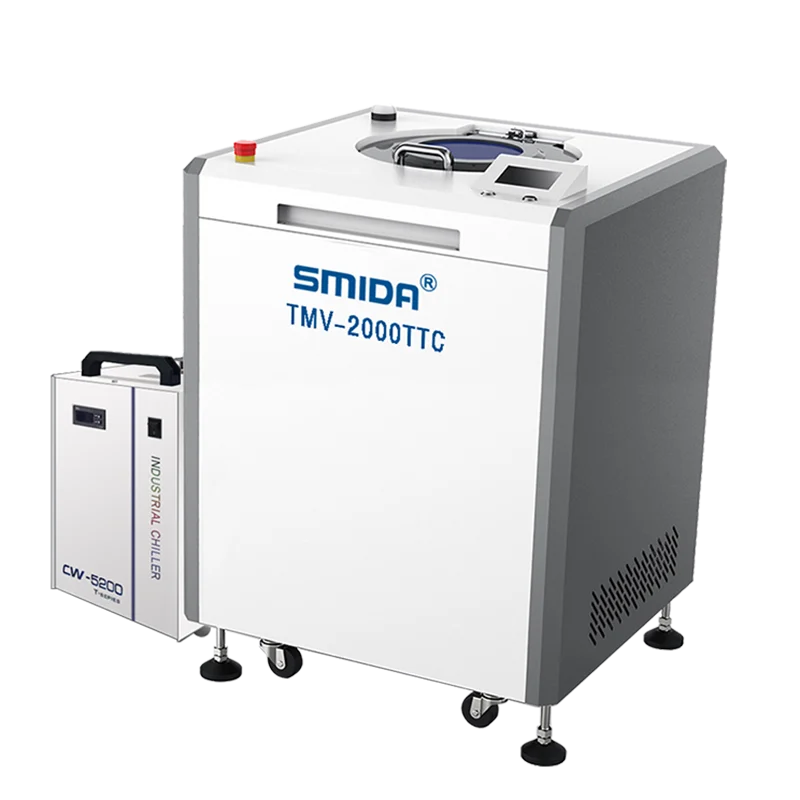
The Strategic Importance of Vacuum Mixing in Advanced Ceramics
Navigating the demanding landscape of advanced technical ceramics—such as high-purity alumina, structural zirconia, and piezoelectric ceramics used in aerospace, semiconductor, and medical devices—reveals that material performance depends entirely on absolute microstructural uniformity. When preparing dense ceramic slurries, tape-casting slips, and ceramic injection molding feedstocks, plant engineers face a persistent technical hurdle: eliminating internal porosity. Drawing from practical shop-floor commissioning experience across advanced materials facilities, even microscopic trapped air pockets act as critical stress concentrators during high-temperature sintering, leading to structural warping or catastrophic micro-cracking. Traditional open-air mixing techniques consistently fail to handle these dense, cohesive mixtures because they trap ambient gases within the viscous matrix. Implementing specialized vacuum mixing technology provides a controlled negative pressure environment that fundamentally transforms green body density, ensuring that structural ceramic components achieve their theoretical maximum mechanical strength and electrical reliability in demanding field applications. Furthermore, optimizing these initial preparation steps prevents costly post-sintering rejection rates and significantly reduces overall manufacturing overhead in high-precision component fabrication, establishing a reliable foundation for serial production. Industrial processing facilities worldwide continually demand equipment capable of handling wide viscosity shifts and abrasive powders without requiring complete machinery overhauls between product batches. Moreover, maintaining consistent material rheology during early-stage blending directly impacts downstream shaping and green machining success rates across diverse industrial manufacturing environments. Proper equipment selection thus becomes a core pillar of operational efficiency.
Eliminating Micro-Voids and Porosity Under Negative Pressure
The primary technical advantage of incorporating a vacuum system into ceramic processing machinery lies in its unparalleled ability to de-aerate high-viscosity suspensions. Ceramic powders blended with organic binders, plasticizers, and solvents naturally tend to entrap air during the initial wet-in phase. According to leading materials science research in powder metallurgy and ceramic science, removing these interstitial micro-voids prior to shaping is non-negotiable for achieving flaw-free sintering. By applying a regulated negative pressure atmosphere inside the mixing vessel, volatile solvent vapors and microscopic gas bubbles expand and migrate efficiently toward the surface, where they are continuously extracted. Simultaneously, high-speed dispersion elements generate controlled micro-turbulences that break down agglomerates without shearing polymer binder chains. This rigorous degassing mechanism prevents blistering and internal delamination during subsequent thermal debinding and sintering cycles, directly elevating the yield and structural integrity of advanced technical ceramic components. Maintaining precise vacuum control throughout this delicate phase ensures complete structural homogeneity and prevents localized density gradients that could otherwise compromise the final mechanical performance of the sintered product across demanding operational environments.
Rheology Management and Binder Dispersion in Slurries
Advanced ceramic formulations exhibit complex non-Newtonian and pseudoplastic rheological behaviors, shifting dramatically in viscosity as shear forces fluctuate. Achieving a uniform distribution of sub-micron ceramic particles alongside organic binders requires a delicate mechanical balance between convective bulk circulation and intense localized shear. In our custom plant installations, multi-shaft planetary vacuum mixers excel by combining slow-moving anchor frames with high-shear homogenizers or disperser discs. The anchor mechanism continuously sweeps the internal vessel walls to prevent dead zones and material settling, while the high-shear attachment breaks down stubborn agglomerates of fine powders. This coordinated action ensures that every ceramic particle is thoroughly coated with binder and solvent, eliminating density gradients within the slip. Such meticulous dispersion guarantees that green bodies possess uniform shrinkage rates during drying, preventing dimensional distortion and ensuring exceptional dimensional accuracy in finished technical ceramic products. Additionally, careful calibration of rotational speeds allows operators to manage changing fluid resistance seamlessly as raw powders transform into stable, pourable suspensions suitable for subsequent industrial shaping processes.
Thermal Control and Frictional Stability During Heavy-Duty Shearing
Processing highly filled ceramic pastes and injection molding compounds generates immense mechanical friction and localized heat, which can quickly degrade organic binders or trigger premature cross-linking. Managing this thermal energy is a critical engineering priority when scaling up production lines. Modern heavy-duty vacuum mixers incorporate double-walled jacketed vessels that circulate chilled or heated thermal fluids to maintain precise temperature control throughout the batch cycle. Based on heavy-duty manufacturing benchmarks, stabilizing the temperature of abrasive ceramic slurries prevents solvent evaporation rates from fluctuating, thereby preserving consistent viscosity and pourability. Furthermore, wear-resistant agitator coatings and robust high-torque gearboxes are integrated to withstand the abrasive nature of hard ceramic oxides, ensuring long-term mechanical reliability and preventing metallic contamination of high-purity electronic and optical ceramic materials. Maintaining optimal thermal parameters during high-torque shearing guarantees consistent batch rheology and protects temperature-sensitive chemical additives from thermal breakdown over extended processing durations.
Advancing Ceramic Manufacturing Capabilities with SMIDA
Selecting, configuring, and commissioning the right vacuum mixing machinery for complex advanced ceramic workflows demands deep technical insight, empirical shop-floor know-how, and robust manufacturing execution. This is precisely where industry leaders like SMIDA bring exceptional, enduring value to global advanced materials enterprises. Backed by advanced manufacturing workshops, stringent supply chain quality controls, and a dedicated engineering team, SMIDA delivers customized, high-performance vacuum mixing solutions tailored precisely to rigorous international industrial standards. Having successfully partnered with diverse manufacturing clients worldwide, SMIDA provides an integrated one-stop service ecosystem covering professional demand analysis, custom engineering design, full-scale production, and responsive global technical support. Whether scaling up a sensitive laboratory ceramic formulation or optimizing a multi-ton industrial production line, leveraging SMIDA's proven manufacturing capabilities ensures that your processing equipment handles extreme viscosity and abrasive challenges reliably, safely, and efficiently. Investing in versatile, high-performance mixing systems gives advanced ceramic producers a decisive competitive advantage in demanding global markets.
Table of Contents
- The Strategic Importance of Vacuum Mixing in Advanced Ceramics
- Eliminating Micro-Voids and Porosity Under Negative Pressure
- Rheology Management and Binder Dispersion in Slurries
- Thermal Control and Frictional Stability During Heavy-Duty Shearing
- Advancing Ceramic Manufacturing Capabilities with SMIDA