 EN

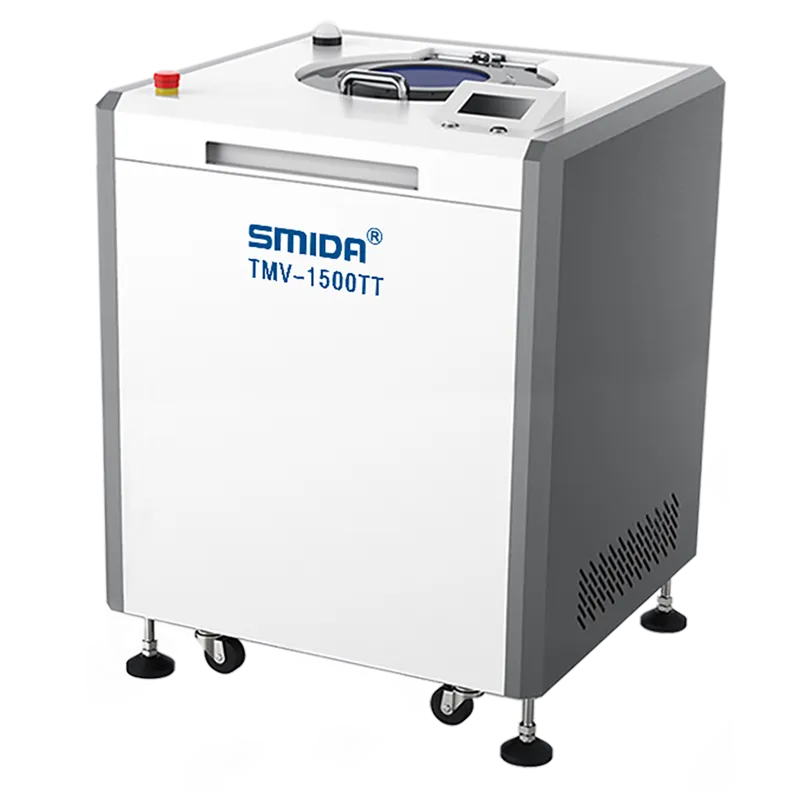
The Evolution of Industrial Mixing: Overcoming the Consistency Challenge
In modern advanced manufacturing, achieving microscopic uniformity across complex material formulations stands out as one of the most persistent operational hurdles. Whether an engineering team is blending high-viscosity electronic adhesives, formulating conductive pastes for battery production, or compounding medical-grade silicone resins, minor inconsistencies can trigger catastrophic batch failures down the line. Traditional propeller stirrers and conventional rotary mixers frequently fall short when dealing with high-density materials, leaving behind trapped air micro-bubbles, uneven pigment dispersion, or stubborn localized aggregation. Industry technical reports consistently highlight that a major percentage of production defects in advanced composite and electronics assembly stem directly from suboptimal initial mixing and degassing procedures.
For production process engineers who spend years optimizing formulation workflows across various high-tech manufacturing plants, the costly toll of inadequate material preparation is all too familiar. Relying on outdated agitation equipment leads straight to wasted raw materials, extended cycle times, and unpredictable final product performance in the field. This is precisely where advanced planetary centrifugal mixers fundamentally transform the production floor. By utilizing simultaneous dual-axis rotation and revolution dynamics, these high-performance systems completely eliminate the need for traditional impeller blades, enabling simultaneous high-shear blending and vacuum degassing within a single, sealed container.
Engineering Excellence: The Mechanics of Dual-Axis Planetary Dynamics
To truly grasp why industry leaders are aggressively moving away from traditional mixing methods, one must examine the underlying physics of planetary centrifugal mixing technology. Unlike conventional agitators that rely on mechanical blades churning aggressively through a batch, a planetary centrifugal mixer operates on a sophisticated dual-axis centrifugal force framework. The mixing container spins rapidly on its own individual axis while simultaneously revolving at high speeds along a central orbit. This complex kinetic motion generates immense centrifugal forces—frequently reaching several hundred gravities—which drive materials outward while simultaneously folding them inward with intense shear stress.
According to materials science research published in industrial engineering journals, this compound centrifugal force enables rapid, uniform molecular dispersion even in ultra-high-viscosity pastes exceeding one million centipoise. Furthermore, the intense gravitational pull forces microscopic air bubbles trapped deep within the matrix to migrate upward and escape instantly. This dual-action capability—blending and debubbling simultaneously without physical propeller blades—prevents mechanical contamination, eliminates clean-up downtime, and ensures that every single batch achieves absolute structural and chemical homogeneity from edge to edge.
Operational Efficiency and Defect Elimination: Best Practices from the Plant Floor
Deploying a high-end planetary centrifugal mixer effectively requires far more than simply tossing raw ingredients into a mixing cup and pressing start; it demands a strategic, data-driven approach to parameter optimization. In hands-on manufacturing consulting practice, one of the most common bottlenecks is improper speed-to-time profiling. Different material viscosities require tailored acceleration curves and vacuum pressure thresholds to prevent material overflow or incomplete dispersion. Modern industrial mixers feature programmable digital control panels that allow technicians to save multi-stage recipes, ensuring repeatable, human-error-free execution across multi-shift production runs.
Field implementation data shows that transitioning to a blade-less planetary centrifugal mixing process slashes average cycle times from hours down to mere minutes. Because the mixing occurs directly inside disposable or sealed containers, clean-up times are virtually eliminated, drastically reducing cross-contamination risks in sensitive cleanroom environments. When operators combine optimized digital recipes with precise vacuum debubbling, the rate of structural void formation in electronic potting compounds and thermal interface materials drops dramatically. This massive reduction in microscopic defects translates directly into superior yield rates and enhanced long-term field reliability for finished industrial goods.
Commercial Scalability and High-Tech Applications: The Manufacturing Edge
Scaling up advanced material production from a laboratory research bench to full-scale commercial manufacturing requires robust industrial machinery, flawless engineering tolerances, and a reliable global supply chain backbone. This is precisely where elite equipment innovators like SMIDA establish a decisive competitive edge. Utilizing advanced CNC machining centers, high-precision dynamic balancing equipment, and rigorous structural stress-testing protocols, SMIDA transforms heavy-duty industrial components into masterclasses of mixing reliability and longevity. Their comprehensive quality assurance standards—including multi-axis vibration analysis and extended continuous-load testing—ensure that every mixing system leaving the facility performs flawlessly under demanding industrial conditions.
The true strength of SMIDA extends far beyond standalone equipment manufacturing; it is anchored in comprehensive customization capabilities, expert technical support, and agile global supply chain management. By maintaining strict control over core component sourcing, electronic control architecture, and specialized vacuum engineering, SMIDA delivers reliable, factory-direct solutions to global electronics manufacturers, battery producers, and advanced materials laboratories. Whether engineering custom-capacity centrifugal mixers for high-volume automotive production lines or supplying precision benchtop units for cutting-edge research and development facilities, SMIDA provides the industrial capability and engineering dependability required to support long-term operational success and brand leadership.