 EN
EN

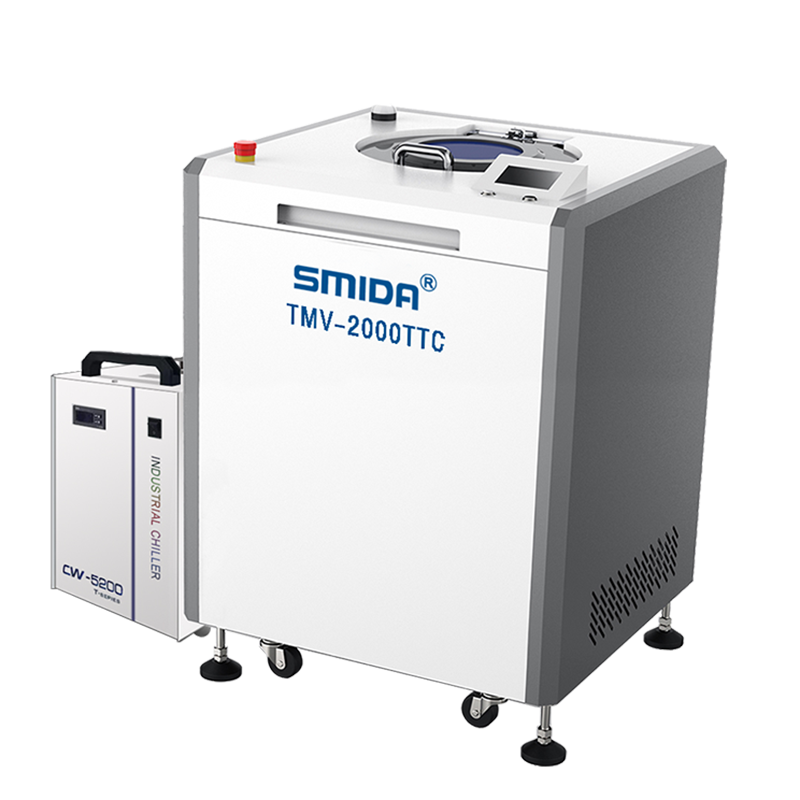
Precision Engineering for High-Performance Battery Slurry
In the rapidly evolving landscape of advanced energy storage, the quality of electrode slurry serves as the fundamental building block for cell performance. For researchers, material scientists, and industrial engineers working on high-performance lithium-ion batteries, achieving a perfectly homogenous mixture of active materials, conductive agents, and polymer binders is a formidable technical challenge. A planetary centrifugal mixer provides a sophisticated, non-contact solution by utilizing the simultaneous force of revolution and rotation.
Eliminating Microscopic Defects Through Advanced Vacuum Degassing
One of the most vital applications of a planetary centrifugal mixer in modern battery production is the simultaneous high-speed dispersion and deep vacuum degassing of the slurry. In the manufacturing of electrodes, even microscopic, entrapped air bubbles can lead to significant defects in the final coating, resulting in localized variations in thickness, potential short circuits, or inconsistent electrochemical performance within the finished battery cell. By integrating sophisticated vacuum technology directly into the mixing process, the system effectively pulls trapped air out of the viscous mixture while the intense planetary motion breaks down stubborn particle agglomerates. This is where professional expertise and equipment precision become non-negotiable; utilizing a machine that offers stable, vacuum-assisted homogenization allows for the creation of ultra-stable slurries. Our equipment at SMIDA has been extensively validated by industry leaders to effectively eliminate these bubble-related defects, ensuring that the final output is completely free from voids and perfectly optimized for high-precision roll-to-roll coating applications.
Unmatched Versatility for R&D and Industrial Scaling
The inherent flexibility offered by a planetary centrifugal mixer makes it an indispensable asset for both small-scale laboratory research and larger-scale pilot manufacturing batches. Researchers often face the need to rapidly iterate through various binder-to-active-material ratios, a task that requires a mixing solution capable of handling small, diverse sample sizes without the recurring risk of cross-contamination. Because the mixing process occurs entirely within a disposable or easily removable container, the cleaning requirements are minimal, facilitating an efficient, rapid iteration of novel battery formulations.
Ensuring Absolute Process Traceability and Batch Consistency
Consistency is the absolute cornerstone of reliable, high-yield battery production, and a planetary centrifugal mixer excels in providing highly repeatable, data-backed results. By utilizing sophisticated, integrated control systems, operators can monitor, adjust, and log critical process variables such as RPM, gravitational force intensity, and cycle duration. This data-driven approach is essential for maintaining the stringent quality standards required in the competitive energy storage industry. When you utilize high-end mixing solutions, you are not simply mixing a raw slurry; you are ensuring that every single batch meets the same rigorous electrochemical performance benchmarks. SMIDA’s ongoing commitment to providing equipment that integrates seamlessly into complex industrial workflows helps battery manufacturers significantly reduce material waste, lower labor-intensive cleaning costs, and consistently produce electrodes with superior microstructural uniformity, which ultimately results in the creation of more reliable, safer, and longer-lasting energy storage systems.