 EN
EN

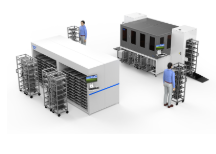
The Bottom Line: Safety and Consistency in Sterile Production
Non-contact mixing has emerged as a cornerstone technology for sterile pharmaceutical applications because it fundamentally eliminates mechanical contamination risks, prevents thermal degradation, and guarantees absolute batch uniformity. These factors are non-negotiable when it comes to maintaining patient safety and meeting the rigorous demands of global regulatory compliance. Unlike traditional methods that rely on intrusive impellers or rotating blades, modern non-contact technology maintains a hermetically sealed, sanitary environment throughout the entire processing cycle. This closed-loop approach is quickly becoming the gold standard for high-value biological formulations, injectable medications, and complex drug delivery systems where even microscopic impurities could lead to catastrophic product failures. As the pharmaceutical industry shifts toward more personalized and sensitive drug therapies, the necessity for a cleaner, more controlled, and highly predictable mixing environment has become paramount for manufacturers aiming to secure a leading position in the global market.
The Contamination Challenge in Traditional Mixing
Standard mechanical mixing setups often come with inherent design flaws that make sterile processing incredibly difficult to validate. Traditional systems utilize blades, impellers, and various agitators that rely on rotating drive shafts and mechanical seals; these components are notoriously difficult to clean and represent the perfect hiding spots for microorganisms. Over time, these moving parts can also shed microscopic metal particles or lubricating fluids directly into the batch, immediately compromising the sterility and integrity of the final product. Beyond the obvious risk of cross-contamination, there is the persistent issue of mechanical shear stress. When mixing sensitive protein-based drugs or delicate biological emulsions, the intense, localized force applied by metal blades can lead to protein denaturation or thermal degradation of active pharmaceutical ingredients. Furthermore, these mechanical systems frequently suffer from stagnant "dead zones" where material fails to circulate properly, resulting in inconsistent dispersion and questionable product quality. These recurring technical hurdles create massive headaches for manufacturers striving to maintain top-tier compliance and consistent performance across large-scale production lines.
Engineering a Better Path with Non-Contact Technology
Non-contact mixing systems, particularly those utilizing advanced planetary centrifugal forces, change the game entirely by removing the mechanical obstacles to sterile purity. By completely eliminating internal moving parts such as blades, impellers, and drive shafts, these systems successfully remove the primary vectors for contamination. The entire mixing process takes place within a single, sealed, and disposable or sanitary container. By utilizing high-speed orbital and rotational forces, the system achieves rapid, uniform blending while simultaneously performing necessary degassing in one seamless step. This closed-loop approach keeps the pharmaceutical product isolated from the external environment from the moment it enters the mixer until it is ready for packaging. By preventing any direct contact between the mixing mechanism and the material, the system ensures that sterile integrity is never compromised, allowing for a safer, cleaner, and far more reliable production workflow that easily meets the stringent needs of modern health standards. The beauty of this approach is its inherent simplicity; by removing the mechanical complexity that usually leads to maintenance failures, the system achieves a level of cleanliness that is virtually impossible to replicate with traditional, blade-driven equipment.
Boosting Efficiency and Batch Consistency
Achieving high-level precision in a pharmaceutical production line can be a massive challenge, especially when handling a variety of materials with vastly different viscosities. Advanced non-contact systems provide unparalleled control over rotational speeds, vacuum environments, and processing time, which allows for the homogenization of challenging materials without any need for manual oversight. This high level of automation significantly slashes the variation typically seen between different production batches, which is a major concern for regulatory auditors. Whether the task involves formulating a complex emulsion for a transdermal treatment, preparing a high-viscosity suspension, or blending sensitive nanoparticle-based therapies, the ability to achieve consistent dispersion and complete air removal in mere minutes transforms the overall efficiency of the pharmaceutical production line. It allows manufacturers to spend significantly less time on manual process adjustments and troubleshooting, and more time ensuring the highest level of quality control across their entire operation. The ability to guarantee a perfect, bubble-free blend every single time without the intervention of complex, high-maintenance hardware is a significant benefit for any high-throughput pharmaceutical facility that cannot afford downtime or batch rejection.
Strategic Business Advantages and Regulatory Compliance
Transitioning to non-contact mixing is not just a technical upgrade; it is a smart business decision that yields substantial returns. Global regulatory bodies are constantly raising the bar, demanding higher levels of accountability, data transparency, and process reproducibility throughout the production cycle. Adopting closed-system, non-contact technology aligns perfectly with global Good Manufacturing Practice (GMP) requirements, simplifying the validation process, lowering the risk of batch failures, and drastically reducing the likelihood of costly product recalls. Furthermore, by minimizing material waste—especially when dealing with expensive biological ingredients—and improving overall yield consistency, manufacturers see significant long-term cost savings and can get their finished products to market much faster. This technical upgrade provides a strong competitive edge in a crowded global marketplace. When every batch is consistently reliable and compliant, the entire business operation becomes leaner, more predictable, and ultimately more profitable, positioning the company as a leader in quality-driven manufacturing.
The SMIDA Approach to Pharmaceutical Excellence
SMIDA understands that true innovation in the pharmaceutical sector requires equipment that matches the high sensitivity of the science itself. By focusing on high-precision planetary centrifugal mixers, SMIDA delivers advanced solutions tailored specifically to the exacting demands of the medical and healthcare industries. SMIDA’s manufacturing philosophy centers on providing high-quality, reliable equipment that supports the entire production lifecycle, from the initial process analysis to ongoing, long-term technical support. As a dedicated partner, SMIDA helps manufacturers elevate their production capabilities, optimize their supply chain efficiency, and ensure that every single batch meets the highest standards of reliability. The deep-seated engineering expertise provided by SMIDA helps bridge the gap between complex research and scalable, profitable production. By choosing to integrate these specialized systems into your facility, your organization can better safeguard its hard-earned reputation for excellence and ensure it is consistently delivering safe, high-quality results to the patients who depend on them most. SMIDA remains deeply committed to driving forward the standards of excellence in global pharmaceutical production through constant innovation, dependable hardware, and a comprehensive understanding of the challenges facing today’s manufacturers.
Table of Contents
- The Bottom Line: Safety and Consistency in Sterile Production
- The Contamination Challenge in Traditional Mixing
- Engineering a Better Path with Non-Contact Technology
- Boosting Efficiency and Batch Consistency
- Strategic Business Advantages and Regulatory Compliance
- The SMIDA Approach to Pharmaceutical Excellence