 EN
EN

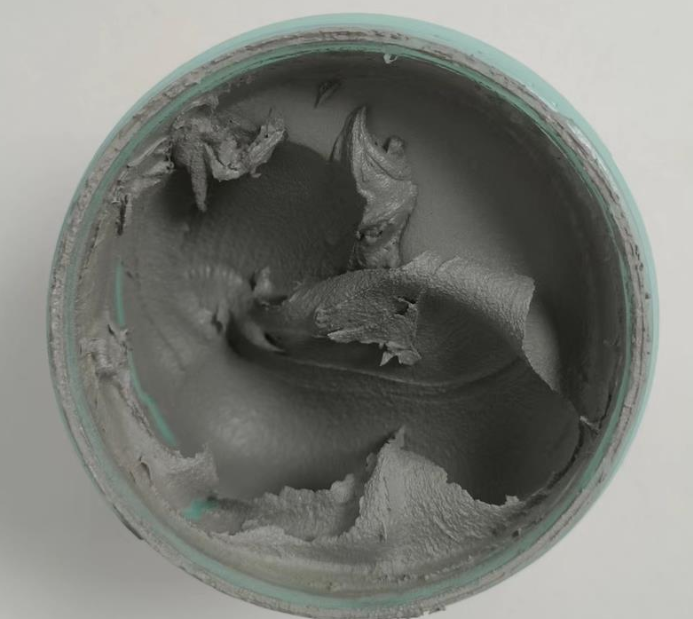
Let me start by being completely honest with you. I have seen plenty of debates about whether you really need a fancy machine just to stir some paste. And honestly, hand mixing does work. You grab a spatula, you stir the paste for about thirty seconds, and you get something that looks pretty uniform. I have been there myself more times than I can count.
But here is the thing. When you are dealing with surface mount technology assembly, where every tiny solder joint has to be perfect, the question is not really whether hand mixing can get the job done. The question is whether you can afford the risks that come with it.
Solder paste is not just some simple goo. It is a carefully engineered mixture of metal powder and flux, where the balance between these two components determines how the paste behaves during printing and reflow. That balance is delicate. When you store solder paste in a refrigerator, which you absolutely should do to extend its shelf life, the flux and metal particles can separate over time. The flux tends to float to the top while the heavier metal powder settles at the bottom. So when you open that jar after taking it out of cold storage, what you see on top is not the same as what is hiding down below.
That is why mixing matters. A study actually tested this by taking samples from the top, center, and bottom of an unstirred jar of solder paste. The results were pretty dramatic. The material from the top printed terribly, with huge variations in performance because the flux and metal particles had separated. And the bottom of the jar had its own problems. The metal concentration was too high there, making the paste too stiff and causing inconsistent transfer during printing.
So yes, you absolutely have to mix your solder paste before using it. But does hand stirring actually do the job well enough? Let me walk you through what I have learned from real world testing and industry experience.
Why Automatic Mixers Might Not Be the Perfect Solution Either
Now here is where things get interesting. A lot of people assume that if hand mixing is okay, then an automatic solder paste mixer must be even better. More consistent, more reliable, less dependent on operator skill. And on the surface, that makes perfect sense. Automatic mixers can mix larger quantities faster, they remove the human element, and they give you programmable control over mixing time and speed.
But here is the catch. Some automatic mixers apply high shear stress to the solder paste. That shear stress can lead to something called shear thinning, where the paste becomes excessively fluid and loses its ability to hold its shape on the board. When that happens, you get slumping, bridging between pads, and all sorts of ugly defects. In fact, some industry experts strongly recommend avoiding automated mixers altogether because they can alter the paste‘s behavior in unpredictable ways.
Another problem with automated mixers is heat generation. When you run a mixing machine for too long, friction heats up the paste. Every five minutes of machine rotation can increase the material temperature by about one degree Celsius. That might not sound like much, but when the recommended printing temperature for most solder pastes is around 21 degrees Celsius, pushing that temperature up by three or four degrees through over mixing is a real gamble. That frictional heat can prematurely activate the flux or accelerate aging of the paste, both of which hurt performance.
There is also the issue of inconsistency across different formulations. Not all solder pastes are the same. Some have larger particle sizes, some use different alloy compositions, some have higher metal content. Automated mixers might not achieve uniform mixing across all these different formulations. What works perfectly for one type of paste could completely ruin another.
So if hand mixing has its drawbacks and some automated mixers have their own problems, what are you supposed to do? The answer lies in choosing the right tool for the job.
The Real Debate Between Old School and New Tech
Let me break down the actual trade offs between manual and automated mixing based on what I have seen on real production floors.
Manual mixing gives you control. You can feel the paste, you can see when it looks uniform, and you can stop when you think it is ready. There is no risk of overmixing because you are the one driving the process. A skilled operator can get consistent results with just thirty seconds of hand stirring. And for small scale operations or prototyping, hand mixing is perfectly fine. It does not cost anything extra, it does not require equipment maintenance, and it works.
But manual mixing has real limitations. It is physically demanding. Stirring thick, viscous paste takes real effort, and over time that leads to operator fatigue. It is also inconsistent across different people. One operator might stir for thirty seconds while another goes for a full minute. One might use a vigorous figure eight motion while another just scrapes around the edges. Those differences add up to real variations in paste consistency.
On the other hand, an automatic solder paste mixer eliminates that human variability. Every batch gets the same treatment, the same mixing time, the same intensity. That consistency is invaluable when you are running high volume production lines where every second counts and every joint has to be reliable. A good automatic mixer can also handle much larger quantities than you could ever stir by hand, and it can do it in a fraction of the time.
But here is the critical point that many people miss. Not all automatic mixers are created equal. The problems I mentioned earlier, shear thinning, heat generation, inconsistent mixing across formulations, those mostly come from certain types of automated mixers. Specifically, mixers that use high shear mechanical agitation. There is another category of automatic mixers that works completely differently and avoids these problems entirely.
Why Non Contact Planetary Centrifugal Mixing Changes Everything
Let me introduce you to a technology that completely flips the script on this whole debate. Planetary centrifugal mixing. This is not your typical mechanical mixer with spinning blades that beat the paste into submission. It is something much smarter.
A planetary centrifugal mixer works by combining two motions. The mixing container revolves around a central axis while also rotating on its own axis. That double motion generates powerful centrifugal forces, typically hundreds of Gs, that push the material outward toward the container walls. This action mixes the paste uniformly without any physical contact between the mixing mechanism and the material. No blades. No propellers. Nothing touches the paste except the container itself.
Why does this matter? Because non contact mixing completely eliminates the high shear stress that damages solder paste rheology. There is no blade to tear through the material, no mechanical agitation to generate frictional heat, and no risk of altering the delicate balance between flux and metal powder. The material stays intact while getting perfectly mixed.
This is exactly why SMIDA has focused on planetary centrifugal technology for its solder paste mixer solutions. The TM-500S model, for example, is a dedicated solder paste mixer that uses rotation and revolution to achieve uniform mixing with no contact. It can handle up to 500 grams of solder paste per batch, and the whole process takes just three to five minutes. After mixing, the color of the solder paste is uniform, more lubricating, and the viscosity is just right for printing.
Another huge advantage of this non contact approach is that there is no cleaning required. Because nothing touches the material except the container, you do not have to scrub blades or clean mixing chambers between batches. You can use disposable containers, swap them out, and keep moving. That saves time, reduces labor costs, and eliminates contamination risks.
The temperature control aspect is also worth highlighting. Since planetary centrifugal mixing does not rely on friction or mechanical shear, it does not generate the kind of heat that damages solder paste. The material stays near room temperature throughout the process, preserving its rheological properties and ensuring consistent print performance.
So can manual mixing replace an automated solder paste mixer? The answer depends entirely on what you are trying to accomplish. For small scale work, occasional use, or when you just need to mix a single jar of paste for a quick prototype run, hand stirring is absolutely fine. It is simple, it is free, and it works.
But if you are running a production line where consistency, speed, and reliability matter, a high quality non contact planetary centrifugal mixer is a game changer. It gives you the repeatability of automation without the damaging side effects of high shear mixing. You get uniform paste every single time, batch after batch, with no operator fatigue and no guesswork.
The best part is that you do not have to take my word for it. Try it yourself. Grab a jar of solder paste, stir it by hand for thirty seconds, and print a few boards. Then take another jar, run it through a planetary centrifugal mixer for three minutes, and compare the results. I think you will see the difference.
At the end of the day, manual mixing and automated mixing both have their place. The key is knowing which tool to reach for based on what you need. And if you ask me, once you try non contact planetary centrifugal mixing, you will not want to go back to hand stirring. It is faster, it is more consistent, and it protects your paste quality instead of damaging it. That sounds like a pretty good deal to me.