 EN

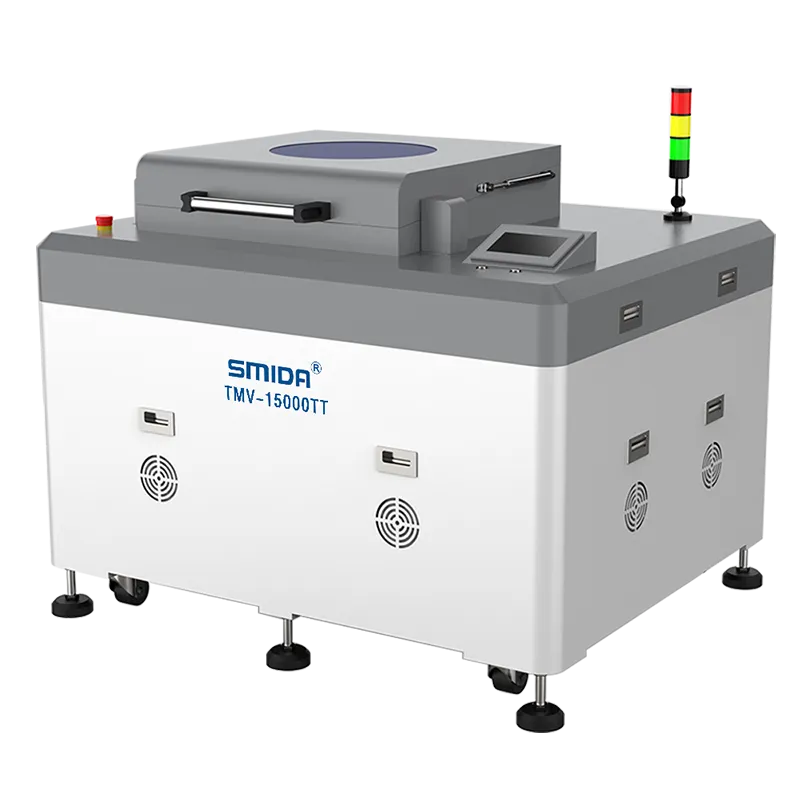
The Hidden Enemy in Advanced Formulations: Why Air Bubbles Ruin Production
In high-tech industries ranging from electronics packaging and optical lens bonding to medical device manufacturing, achieving absolute material purity remains a constant operational battle. One of the most stubborn adversaries engineers face on the production floor is microscopic air entrapment. When blending high-viscosity epoxy resins, silicone encapsulants, conductive pastes, or photopolymer inks, ambient air inevitably gets folded directly into the liquid matrix. Left unchecked, these trapped micro-bubbles transform into structural voids, optical distortions, surface pinholes, and critical dielectric breakdown points. Industry materials research reports consistently highlight that gas-induced defects account for a massive percentage of total component failures in advanced microelectronics assembly.
As a production process engineer who has spent over a decade troubleshooting viscous fluid formulation bottlenecks across multiple manufacturing plants, dealing with stubborn air bubbles is a familiar challenge. Relying on traditional static resting periods, thermal vacuum chambers, or old-fashioned paddle stirrers often introduces long production bottlenecks, incomplete bubble extraction, and solvent evaporation issues. This is precisely where modern centrifugal defoaming mixers revolutionize the workflow. By harnessing powerful centrifugal physics rather than traditional mechanical probes or vacuum-only chambers, these advanced machines strip away trapped gases in minutes while simultaneously blending the formulation to perfection.
Engineering Excellence: The Physics of Dual-Axis Centrifugal Force
To truly grasp how a defoaming mixer eliminates air without relying on physical mixing blades, one must examine the fundamental physics governing its operation. Unlike conventional mixers that churn through liquid with a rotating impeller, a centrifugal defoaming mixer operates on a sophisticated dual-axis rotation and revolution framework. The mixing cup spins rapidly on its own individual axis while simultaneously revolving at high velocities along a central orbit. This combined kinetic motion generates immense centrifugal forces—frequently reaching hundreds of times the force of gravity—which act simultaneously on materials of varying densities within the mixture.
According to fluid dynamics research published in industrial engineering journals, this high-G environment establishes a massive density-separation gradient inside the container. Because air bubbles possess an exceptionally low density compared to surrounding high-viscosity resins or pastes, the extreme centrifugal acceleration forces the buoyant micro-bubbles to migrate rapidly toward the center and top of the fluid column. Simultaneously, the compound shear forces fold the heavier liquid matrix outward. This simultaneous multi-directional movement breaks surface tension barriers around trapped pockets of gas, forcing them to coalesce and escape instantly into the head-space of the container.
Simultaneous Blending and Degassing Without Mechanical Impellers
One of the greatest engineering breakthroughs of the centrifugal defoaming mixer is its ability to blend and degas a formulation simultaneously without ever inserting a physical stirring rod or paddle into the material. In traditional mixing systems, the act of stirring with a blade inherently introduces new air pockets into the fluid, requiring a secondary, time-consuming degassing phase. By eliminating mechanical impellers entirely, the centrifugal system achieves a completely closed-container mixing process that prevents outside contamination, eliminates blade clean-up downtime, and stops cross-contamination between different production batches.
Furthermore, advanced defoaming mixers incorporate programmable digital control systems that allow operators to execute multi-stage profiles. Technicians can program an initial high-speed blending phase to achieve molecular-level dispersion of pigments or fillers, followed by a specialized high-G degassing phase that forces all residual micro-bubbles to the surface. Field performance data demonstrates that this dual-action processing cuts total cycle times from several hours down to less than two minutes, dramatically boosting daily throughput while ensuring flawless structural integrity in sensitive electronic potting and adhesive applications.
Preventing Thermal Degradation and Preserving Chemical Integrity
When attempting to remove air bubbles from volatile or heat-sensitive chemical formulations, traditional thermal vacuum ovens often create more problems than they solve. Applying prolonged heat to lower fluid viscosity and encourage bubble rise can trigger premature curing, solvent boiling, and the alteration of precise stoichiometric ratios. Moreover, standard vacuum chambers can cause low-boiling-point components to flash off, ruining the chemical makeup of advanced structural adhesives and conductive inks.
Centrifugal defoaming technology bypasses these thermal pitfalls entirely through mechanical acceleration rather than thermal reduction. Because the high-G forces manipulate density differentials mechanically, materials can be completely degassed at room temperature within seconds, preventing any unwanted exothermic reactions or thermal degradation. Research papers from polymer science authorities confirm that mechanical centrifugal degassing preserves the original molecular weight distribution and viscosity profile of complex resin systems, ensuring that final cured products maintain their intended mechanical strength, thermal conductivity, and electrical resistance.
Industrial Scalability and Manufacturing Excellence: The Power of SMIDA
Scaling up advanced fluid preparation from a small laboratory research beaker to high-volume commercial manufacturing requires uncompromising industrial machinery, precise engineering tolerances, and a robust global supply chain backbone. This is precisely where industry-leading innovators like SMIDA establish a decisive competitive edge. Utilizing state-of-the-art CNC machining centers, high-precision dynamic balancing equipment, and rigorous structural stress-testing protocols, SMIDA transforms heavy-duty industrial components into masterclasses of defoaming reliability and operational longevity. Their stringent quality assurance protocols—including multi-axis vibration analysis and extended continuous-load evaluations—ensure that every defoaming mixing system performs flawlessly under demanding factory conditions.
The true strength of SMIDA extends far beyond standalone equipment engineering; it is rooted deeply in comprehensive customization capabilities, expert technical support, and agile global supply chain management. By maintaining strict control over core component sourcing, electronic control architecture, and specialized kinetic engineering, SMIDA delivers reliable, factory-direct solutions to global electronics manufacturers, advanced materials laboratories, and medical device producers. Whether engineering custom-capacity centrifugal defoaming units for high-volume automated production lines or supplying precise benchtop models for pioneering research facilities, SMIDA provides the industrial capability and engineering dependability required to support long-term operational success and brand leadership.
Table of Contents
- The Hidden Enemy in Advanced Formulations: Why Air Bubbles Ruin Production
- Engineering Excellence: The Physics of Dual-Axis Centrifugal Force
- Simultaneous Blending and Degassing Without Mechanical Impellers
- Preventing Thermal Degradation and Preserving Chemical Integrity
- Industrial Scalability and Manufacturing Excellence: The Power of SMIDA