 EN

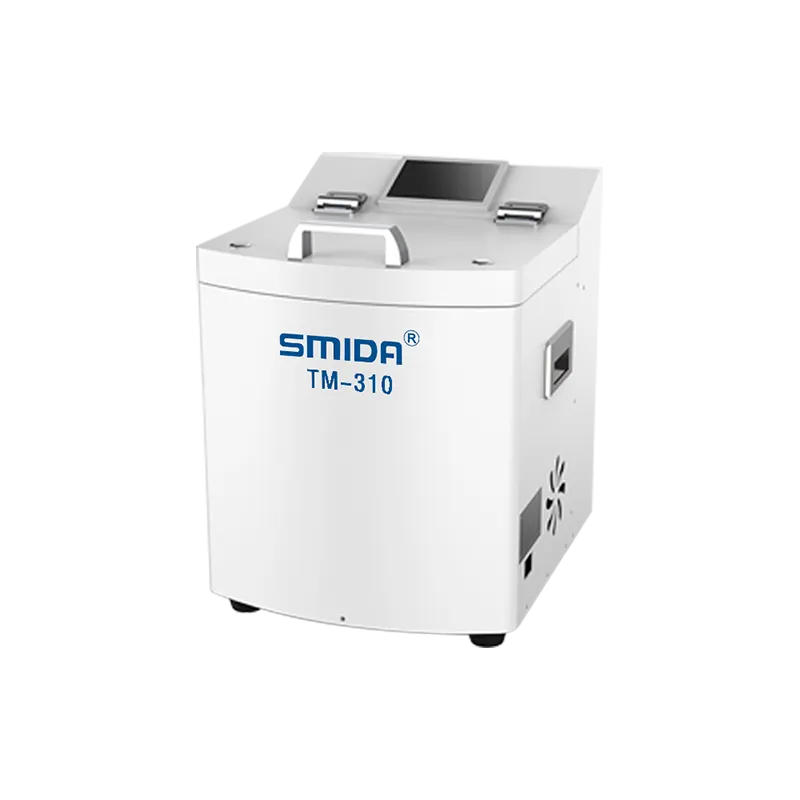
The Nanomaterial Challenge: Overcoming Agglomeration in Advanced Formulations
In the realm of advanced material science and high-tech manufacturing, working with nanomaterials offers incredible potential for enhancing electrical conductivity, thermal performance, and overall structural strength. However, formulating functional inks, carbon nanotube composites, and metal nanoparticle pastes comes with a massive technical hurdle: severe nanoparticle agglomeration. Because of their ultra-high surface energy and van der Waals forces, nanoparticles naturally tend to clump together into large, stubborn clusters. When these clusters remain unbroken, they ruin the electrical and mechanical properties of the final product. Industry research reports consistently indicate that improper nanoparticle dispersion is the root cause of batch failure in advanced electronic printing and energy storage manufacturing.
As materials processing consultants who have spent over a decade troubleshooting formulation bottlenecks for high-tech research laboratories and production facilities, watching teams struggle with traditional agitators is a familiar sight. Relying on conventional sonicators or high-speed rotor-stator mixers often introduces severe mechanical wear, excessive heat buildup, and metallic contamination into sensitive nano-suspensions. This is where advanced planetary centrifugal mixers fundamentally change the paradigm. By utilizing simultaneous dual-axis rotation and revolution dynamics, these blade-less systems achieve superior nanoparticle breakdown and uniform dispersion without ever plunging physical stirring implements into the active material.
Engineering Excellence: The Mechanics of High-G Shear and Deagglomeration
To truly understand why planetary centrifugal mixing excels at processing nanomaterials, one must examine the unique physics driving the mixing vessel. Unlike traditional mechanical stirrers that rely on shear forces generated solely by a rotating blade edge, a planetary centrifugal mixer operates through a compound centrifugal force system. The mixing container spins rapidly on its own axis while simultaneously revolving along a central orbit at high velocity. This dual-axis movement generates intense gravitational forces—often exceeding several hundred gravities—that force high-density nanoparticles and liquid matrices to collide and shear against one another continuously.
According to materials science studies published in leading nanotechnology journals, this extreme high-G environment generates massive localized shear stress capable of overcoming the surface attraction forces holding nanoparticle agglomerates together. As the materials are driven outward and folded inward simultaneously, individual nanoparticles are pried apart and wetted out evenly by the surrounding resin or solvent. This non-contact mixing approach ensures that shear energy is distributed uniformly across the entire batch, preventing the dead zones and uneven concentration gradients commonly associated with conventional laboratory stirring equipment.
Simultaneous Deagglomeration and Vacuum Degassing for Nanoscale Integrity
One of the most insidious problems encountered when formulating nanomaterial pastes is the introduction of micro-voids and trapped air bubbles. When mixing high-viscosity nano-suspensions, the high surface area of nanoparticles tends to trap ambient air tightly within the matrix. If left unresolved, these microscopic bubbles create structural defects, pinholes in printed electronic traces, and weak spots in thermal interface layers. Traditional degassing methods, such as prolonged resting or thermal vacuum chambers, are terribly inefficient and often cause volatile solvents to evaporate prematurely, altering the precise chemical formulation.
Modern planetary centrifugal mixers solve this dual dilemma by integrating high-vacuum capabilities directly into the dual-axis mixing cycle. While the high-G forces tear apart nanoparticle clusters, the integrated vacuum system pulls ambient air and trapped micro-bubbles out of the viscous liquid matrix almost instantaneously. This simultaneous deagglomeration and debubbling process ensures that the finished nano-paste is completely uniform, structurally dense, and entirely free of voids. Field performance data confirms that combining high-shear rotation with vacuum extraction yields electronic and optical films with significantly enhanced clarity, conductivity, and long-term reliability.
From Laboratory R&D to Full-Scale Production: Scalability and Quality Control
Translating a successful nanomaterial formulation from a small-scale laboratory beaker up to full-scale commercial manufacturing requires robust industrial hardware, exceptional engineering tolerances, and a resilient supply chain. This is precisely where industry-leading equipment innovators like SMIDA establish a definitive competitive edge. Leveraging advanced CNC machining centers, high-precision dynamic balancing equipment, and rigorous structural stress-testing protocols, SMIDA transforms heavy-duty industrial components into masterclasses of mixing reliability. Their strict quality assurance protocols—including multi-axis vibration analysis and extended continuous-load testing—guarantee that every centrifugal mixing system performs flawlessly under demanding industrial conditions.
The true strength of SMIDA extends far beyond standalone equipment manufacturing; it is anchored in comprehensive customization capabilities, expert technical support, and agile global supply chain management. By maintaining strict control over core component sourcing, electronic control architecture, and specialized vacuum engineering, SMIDA delivers reliable, factory-direct solutions to global nanotechnology laboratories, advanced electronics manufacturers, and energy storage producers. Whether engineering custom-capacity centrifugal mixers for high-volume production lines or supplying precise benchtop units for pioneering research and development facilities, SMIDA provides the industrial capability and engineering dependability required to support long-term operational success and brand leadership.
Table of Contents
- The Nanomaterial Challenge: Overcoming Agglomeration in Advanced Formulations
- Engineering Excellence: The Mechanics of High-G Shear and Deagglomeration
- Simultaneous Deagglomeration and Vacuum Degassing for Nanoscale Integrity
- From Laboratory R&D to Full-Scale Production: Scalability and Quality Control