Tackling the Persistent Challenge of Trapped Air in Viscous Materials
Across advanced production floors, handling dense substances like thick epoxy resins, conductive silver pastes, specialized silicone sealants, and thermal interface compounds is a daily reality. These heavy fluids often reach viscosities ranging from tens of thousands to millions of centipoise. Yet, a universal frustration plagues engineers and operators alike: stubborn micro-bubbles trapped deep within the thick matrix during mixing or compounding. Because of high flow resistance and intense surface tension, these microscopic air pockets refuse to rise naturally. If left unresolved, they create structural voids, compromise electrical insulation, and lead to sudden structural failures in precision components. Solving this requires looking far beyond standard stirring rods and adopting a specialized approach designed specifically for high-density fluids.
Why Traditional Agitation Methods Fall Short
For years, laboratories and manufacturing facilities relied heavily on conventional propeller stirrers or simple planetary mixers. While these tools work fine for thin liquids, they struggle immensely with heavy materials. Standard rotating blades often generate localized high shear that actually pulls more air into the mixture instead of expelling it, creating chaotic vortexes that fold air deeper into the fluid. Furthermore, continuous mechanical stirring generates significant friction heat, which can prematurely kick off curing reactions in sensitive chemical compounds or damage their overall integrity. Traditional ultrasonic baths also fall short because their energy fades quickly over distance, failing to penetrate dense volumes evenly. Realizing the limits of open blades, industry professionals shifted focus toward non-contact, multi-axis kinetic motion.
The Power of Centrifugal Vacuum Synergy
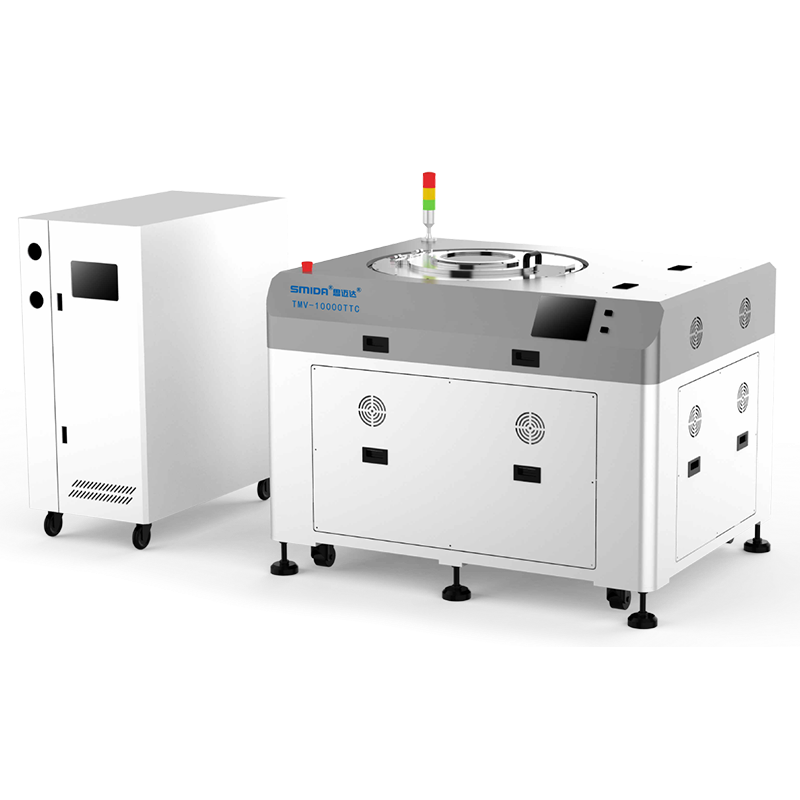
The modern benchmark for processing heavy fluids relies on advanced planetary centrifugal technology paired with a precision vacuum environment. Instead of using physical immersion blades, a professional defoaming mixer spins the mixing container on its own axis while simultaneously revolving it around a central pivot point. This dual-axis movement generates massive gravitational forces, driving high-density materials outward while forcing tiny, lightweight air pockets upward against the thick viscosity gradient. Introducing a controlled vacuum level amplifies this effect exponentially, expanding the trapped bubbles so they pop instantly under centrifugal acceleration. This simultaneous blending and degassing happens inside a closed vessel without shafts or messy clean-up routines, safeguarding the exact chemical formula and uniform consistency of the fluid.
Real-World Impact and Processing Insights
In practical factory environments, eliminating micro-voids makes a tremendous difference in final product quality and reliability. For instance, when technicians process extremely thick conductive pastes or electronic underfills, standard static vacuum chambers often require hours of settling time and still leave tiny sub-millimeter gaps behind. Transitioning to an automated centrifugal mixing system cuts cycle times down to mere minutes per batch while achieving a completely void-free finish. Industry data consistently shows that removing microscopic air pockets enhances thermal transfer efficiency and drastically boosts tensile strength. Experience on the shop floor proves that having precise control over rotational speed ramps and vacuum levels is absolute key to achieving repeatable, premium results.
Driving Business Value through Smarter Equipment
Upgrading fluid processing methods does more than just fix a technical headache; it serves as a powerful catalyst for overall business growth. In high-stakes manufacturing, dealing with material waste, botched batches, and unexpected production bottlenecks eats heavily into profit margins. Manual degassing and prolonged waiting periods create unnecessary labor costs and inconsistent output across different shifts. By automating the entire blending and degassing sequence into a single, highly repeatable cycle, manufacturing plants achieve remarkable batch-to-batch consistency. Shorter processing times naturally lead to higher daily throughput, lower scrap rates, and a faster return on equipment investment, all while meeting strict global quality standards for zero-defect supply chains.
Empowering Global Manufacturing Standards with SMIDA
Achieving flawless results with heavy, stubborn fluids demands a smart fusion of advanced physics, robust mechanical design, and reliable automation. As modern industries continue pushing the limits of miniaturization and material performance, dependable degassing is more vital than ever before. Backed by extensive industry experience and dedicated technical craftsmanship, SMIDA operates out of a massive modern production base equipped with advanced manufacturing capabilities and numerous core technology patents. SMIDA delivers cutting-edge defoaming mixer systems engineered specifically for durability, precision, and heavy industrial scale. Trusted by partners across dozens of international markets, SMIDA remains fully committed to elevating production excellence worldwide through continuous innovation, strict quality assurance, and comprehensive one-stop supply chain support.

 EN
EN