 EN

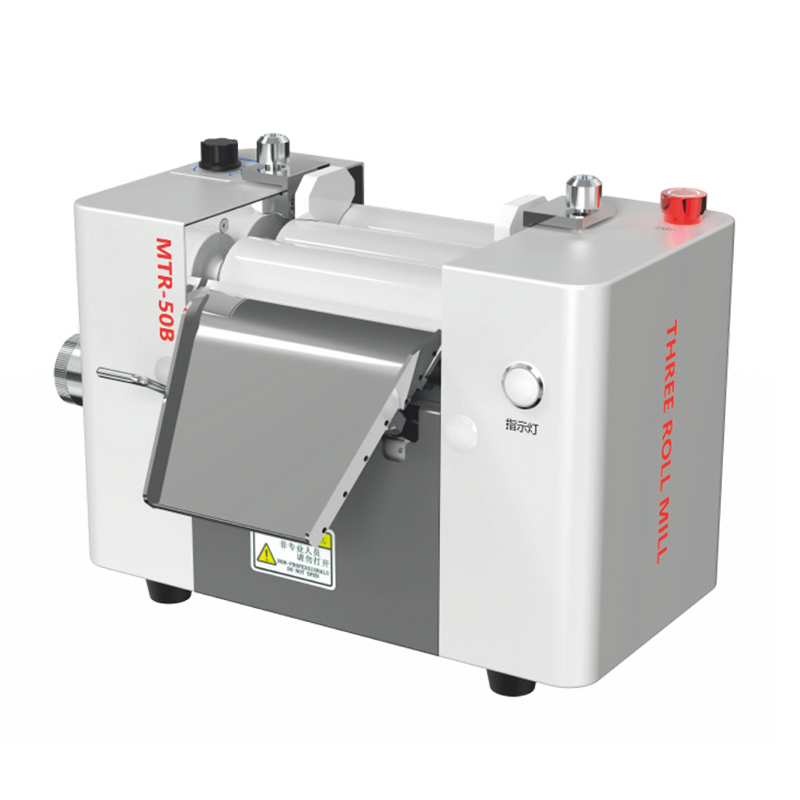
Understanding the Significance of Roll Gap in Three Roll Mill Machines
When working with advanced materials, cutting-edge electronics, and high-end cosmetics, achieving uniform dispersion down to a microscopic level is an absolute game-changer for product performance. A three roll mill machine is widely recognized as the industry gold standard for breaking down high-viscosity pastes, thick-film conductive inks, electronic polymers, and specialty chemical compounds through intense, controllable high shear forces. Yet, the real stability and success of this equipment come down to one very specific operational detail: the roll gap. Properly dialing in the tiny clearance between the feed, center, and apron rolls determines whether a production batch ends up with smooth, sub-micron particle distribution or turns into a challenge of clumping, localized overheating, and inconsistent thickness. Nailing this mechanical adjustment is the foundational step if you want to optimize both product quality and overall manufacturing output. Furthermore, understanding how shear rates, roller speeds, and gap geometry work together helps engineers unlock entirely new performance tiers during formulation development.
Step-by-Step Technical Guide to Proper Roller Calibration
Calibrating a high-precision three roll mill requires a methodical, hands-on engineering approach that balances mechanical tolerances with the tricky rheology of the materials you are running. Before touching anything, make sure the rollers are spotless, completely cool, and safely disengaged to avoid uneven surface contact and early wear. The alignment process generally starts at the high-pressure nip—right between the center and apron rolls—and then moves backward toward the primary feed nip. Using precision feeler gauges, optical sensors, or hydraulic adjusters, technicians set those initial gaps, which usually sit within a specific range depending on what particle size and paste thickness you are targeting. Here is a major real-world tip: never overlook thermal expansion. As friction builds up and generates heat during a continuous run, those solid steel or ceramic rollers expand, which naturally narrows the gap. Pre-calculating this thermal shift stops the rolls from grinding against each other and protects those finely ground alloy surfaces from costly, permanent damage.
Field Experience and Practical Troubleshooting for Gap Issues
Spending time on factory floors reveals that operators frequently run into the same handful of common hurdles, such as asymmetric film thickness, erratic material slippage, and sudden torque spikes. One classic mistake is tweaking both ends of a roller independently without keeping them parallel, which instantly creates a wedge-shaped gap and messes up the shear stress distribution across the surface. From practical experience, any fine-tuning should always be done in small steps while running a minimal no-load cycle, followed right away by a quick test scrape using a representative batch sample. If you notice material piling up too high on the apron roll or sliding backward through the feed nip instead of shearing properly, that is your immediate warning sign that the gap pressure needs a quick adjustment. Catching these tiny shifts early on keeps the batch structure intact and stops nasty surprises like coating defects or screen-printing failures down the road.
Translating Precision Gap Control into Long-Term Business Value
Beyond just hitting the right technical specs and getting fine particles, mastering roll gap adjustment brings massive, measurable commercial perks for manufacturing businesses competing in tough global markets. Keeping the gap tight and repeatable means significantly less batch-to-batch variation, which drastically cuts down on expensive waste when you are working with pricey materials like silver conductive pastes, advanced battery slurries, or specialty industrial sealants. On top of that, maintaining proper roller spacing cuts down on unnecessary mechanical friction and wear, making those expensive steel or ceramic rolls last a whole lot longer while slashing overall maintenance costs. For plant managers and operations directors, dialing in these settings guarantees high throughput, keeps quality control audits stress-free, and delivers a very solid return on investment across the board.
Elevating Your Production Line with SMIDA Solutions
Achieving consistent, dependable results on a three roll mill requires more than just smart operating techniques—it demands rugged, high-performance machinery built specifically for precision. SMIDA has spent years building a rock-solid reputation as an intelligent equipment manufacturer, operating large-scale production facilities backed by robust technology patents and strict quality standards. Whether processing advanced nanomaterials, next-gen energy storage pastes, or ultra-fine cosmetic formulas, SMIDA provides comprehensive, end-to-end manufacturing solutions ranging from standard high-efficiency mills to fully customized automated systems. Partnering with SMIDA gives global industrial operations direct access to reliable engineering support, expert technical guidance, and dependable supply chain services designed to scale up manufacturing capabilities effortlessly.
Table of Contents
- Understanding the Significance of Roll Gap in Three Roll Mill Machines
- Step-by-Step Technical Guide to Proper Roller Calibration
- Field Experience and Practical Troubleshooting for Gap Issues
- Translating Precision Gap Control into Long-Term Business Value
- Elevating Your Production Line with SMIDA Solutions