 EN
EN

SMIDA Planetary Centrifugal Mixer: Customized Solution for Gel Mixing – Structure Protection, Bubble-Free & Homogenization
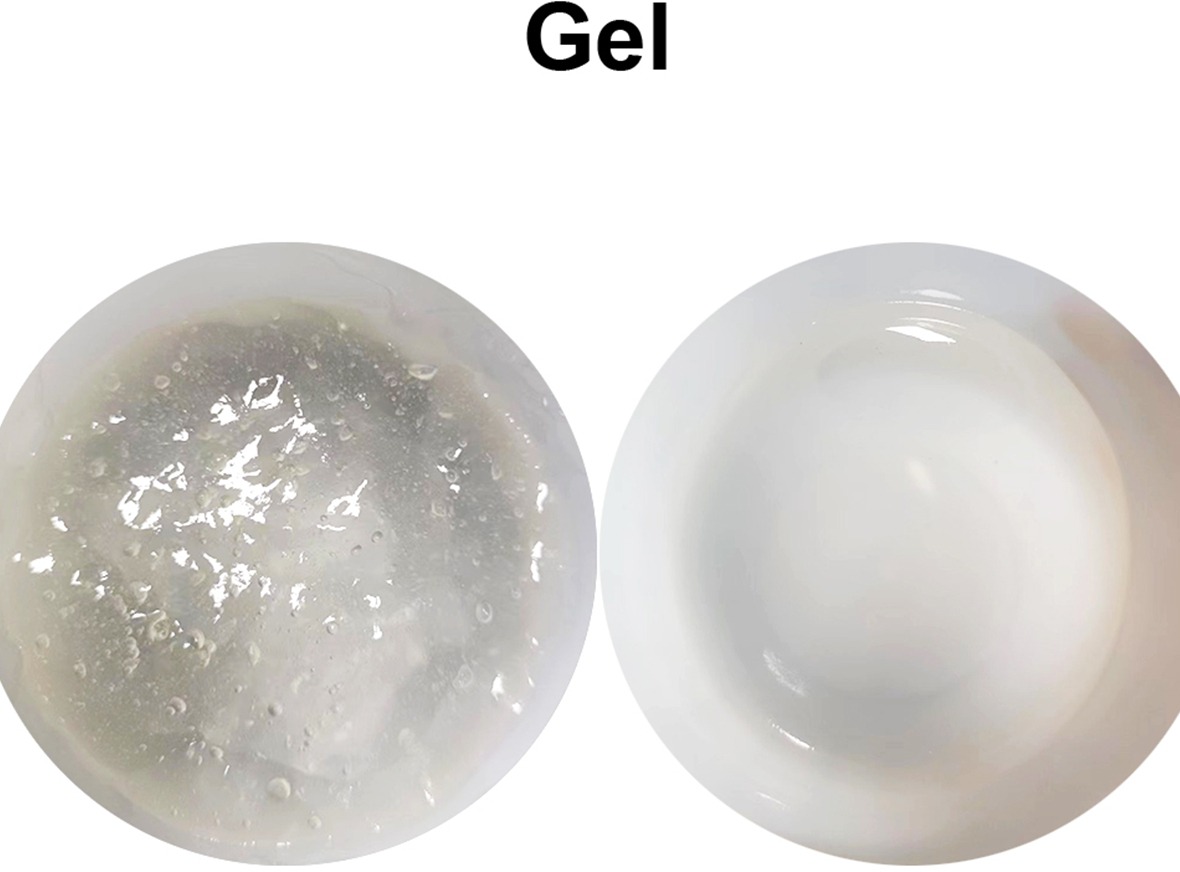
As functional materials with unique thixotropy, gels (including electronic packaging gel, medical gel, optical gel, and thermal conductive gel) impose three core requirements on the mixing process: 3D network structure protection, thorough bubble removal, and homogeneous dispersion of multi-components. The high shear force of traditional mixing equipment easily causes gel breakdown, bubble adsorption and component inhomogeneity, which seriously impairs their key performance such as bonding strength, light transmittance and thermal conductivity. Centered on low-damage mixing, high-efficiency defoaming and precise homogenization, the SMIDA Planetary Centrifugal Mixer creates a customized gel mixing solution that meets precision requirements across multiple fields.
I. Three Core Process Challenges in Gel Mixing
Fragile Thixotropic Structure Prone to Damage
The 3D network structure of gels is extremely sensitive to mechanical shear force. The impact and friction from traditional paddle stirring directly damage the network structure, causing gels to lose viscosity, elasticity or light transmittance (e.g., the bonding strength of medical gels drops by more than 30%, and the light transmittance of optical gels decreases by 15%-20%).
Bubbles Hard to Remove and Easy to Adsorb
Gels feature high viscosity (usually 10,000-100,000 mPa·s) and poor fluidity. Air bubbles entrained during stirring are easily adsorbed by the network structure and cannot float up naturally. Traditional static defoaming is extremely inefficient (taking hours to dozens of hours) and unable to remove deep nano-scale bubbles.
Inhomogeneous Mixing of Multi-Components
Gels often require the addition of functional fillers (e.g., thermal conductive powder, antibacterial agents, crosslinking agents) or composite resin systems. Different components have large differences in density and viscosity, and traditional stirring is prone to "local enrichment", leading to performance fluctuations of gels (e.g., the local thermal conductivity deviation of thermal conductive gels exceeds 50%).
II. SMIDA Customized Gel Mixing Solution: Balancing Low-Damage and High Precision
1. Paddle-Free Low-Shear Design: Ultimate Protection for Gel Thixotropic Structure
SMIDA abandons traditional mechanical paddles and achieves mixing through material self-motion formed by "Revolution + Rotation", avoiding direct impact between paddles and gels. For different types of gels (silicone gel, polyurethane gel, medical hydrophilic gel), a "low-shear program" (1000-1500rpm revolution + 300-600rpm rotation) can be preset, and mixing is completed through mild collision and convection between materials. After mixing, the structural integrity retention rate of gels reaches over 98%, and key performance (bonding strength, light transmittance, elasticity) remains unattenuated.
Meanwhile, the paddle-free design eliminates residue dead zones, with microbial residue ≤10 CFU/㎡ after cleaning, meeting the hygienic requirements of medical and food-grade gels.
2. Vacuum + Centrifugal Synergistic Defoaming: Thorough Removal of Deep Bubbles
Centrifugal Bubble Extrusion Pretreatment
The strong centrifugal force generated by revolution squeezes the hidden bubbles inside the gel to the surface, forming a "bubble-enriched layer". This breaks the adsorption force between bubbles and the gel network structure, laying a solid foundation for subsequent defoaming.
High-Vacuum Extraction System
Equipped with a high-vacuum system of above -0.095MPa, the mixer extracts bubbles synchronously during the mixing process — bubbles expand 10-20 times in volume in a vacuum environment, quickly separate from the gel matrix and are removed, achieving a defoaming rate of 99.9%. It can remove nano-scale bubbles with a diameter of <1μm, avoiding performance defects caused by bubbles in gel applications (e.g., reduced insulation of electronic packaging gel, uneven light transmittance of optical gel).
3. 3D Composite Force Field: Realize Global Homogeneous Dispersion of Multi-Components
SMIDA’s 3D force field composed of centrifugal force from revolution + shear force from rotation + axial tumbling from 45° inclined axis can effectively entrain components with large differences in density and viscosity (e.g., light crosslinking agents and heavy thermal conductive powder), avoiding "local enrichment".
Through intelligent parameter regulation (rotation speed adjustable at a 0-1.5 ratio to revolution), it can precisely match the mixing requirements of gels and fillers, achieving a mixing uniformity of over 99.2%. The distribution deviation of functional fillers (e.g., thermal conductive powder, antibacterial agents) in the gel is ≤0.5%, ensuring the consistency of the overall performance of gels.
4. Precise Temperature Control System: Ensure the Stability of Gel Formulation
Shear heating during gel mixing may cause temperature rise, leading to premature crosslinking or component denaturation. SMIDA is equipped with a jacketed temperature control system with a temperature control range of -15℃ to 25℃ and an accuracy of ±1℃. It can offset shear heating in real time, keep the material temperature stable within the process range, avoid premature gel curing or performance attenuation, and ensure formula repeatability.
Summary
With the core advantages of low-damage mixing, high-efficiency defoaming and precise homogenization, the SMIDA Planetary Centrifugal Mixer perfectly adapts to the mixing needs of gels in electronic packaging, medical, optical, thermal conductive and other fields. It not only solves the pain points of gel breakdown, bubble residue and inhomogeneous mixing of traditional equipment, but also meets the performance and hygienic requirements in precision scenarios, becoming the core equipment for high-quality gel production.