EN
EN

Temperature Control for Heat-Sensitive Materials: The Complete Mixing Guide
Mixing heat is the hidden killer of heat-sensitive materials — a temperature-controlled planetary mixer protects both efficiency and product quality.
Heat-sensitive materials — conductive adhesives, biologics, cosmetics and two-component resins — degrade when mixing generates heat.
This complete guide explains why temperature control matters, which materials are at risk, and how SMIDA TTC mixers hold -15 to 25 °C at full speed.
What is a temperature control mixer?
It is a planetary centrifugal mixer that actively holds the material inside a set temperature range during mixing, using integrated heating or cooling so the batch never crosses its damage threshold.
In planetary mixer user communities, heat is one of the most discussed complaints.
A typical comment: "My machine generates so much heat that I have to stop every 30 seconds to protect the product."
Shear friction heats the batch in almost every mixing device.
For heat-sensitive materials, that heat is not an inconvenience — it is a product killer.
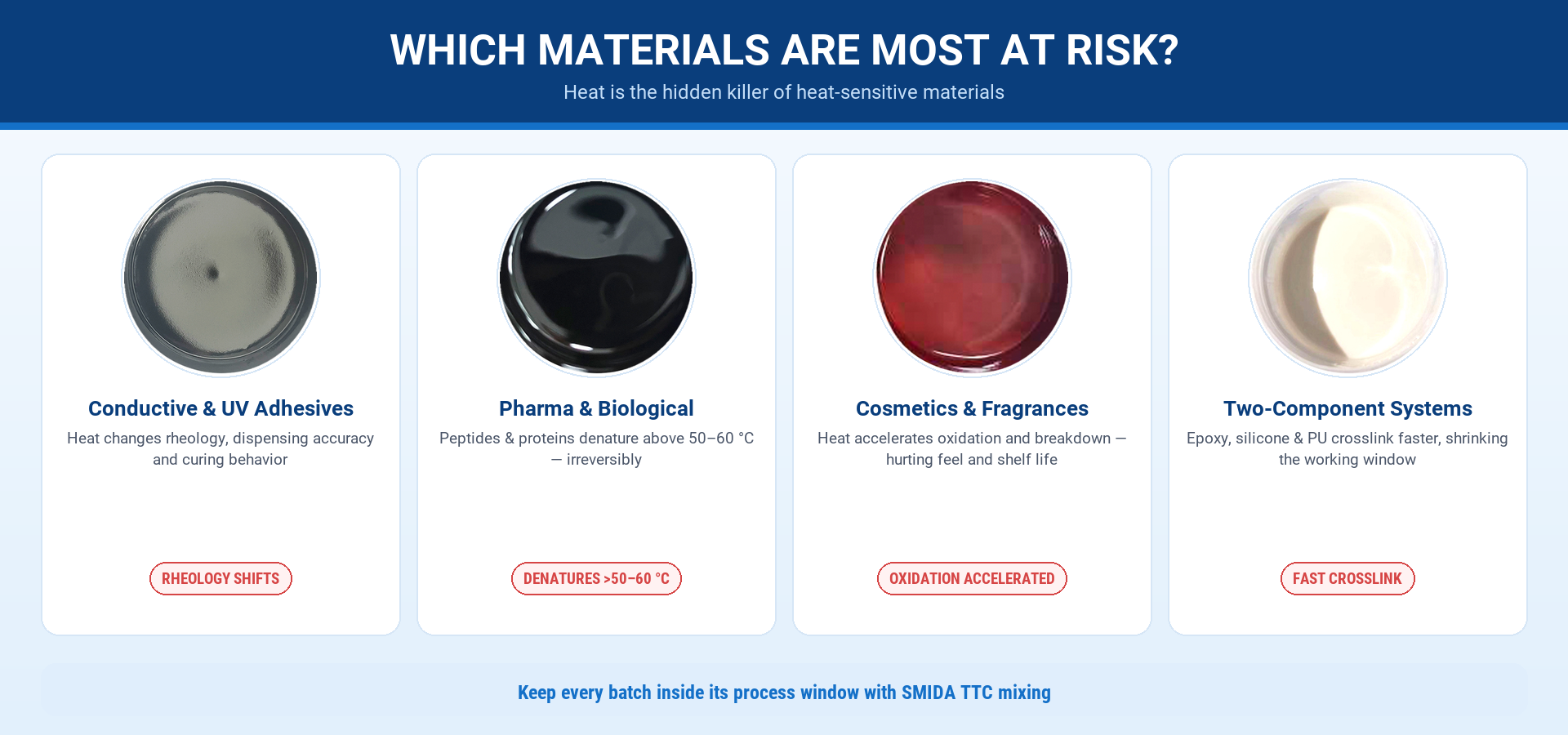
Which Materials Are Most at Risk?
-
Conductive adhesives and UV adhesives.
Rising temperature changes rheology, disturbs dispensing accuracy, and shifts curing behavior in ways that are hard to predict and harder to control. -
Pharmaceutical and biological materials.
Peptides, proteins and active ingredients denature above roughly 50–60 °C.
Once activity is lost, it cannot be recovered. -
Cosmetics and fragrances.
Heat accelerates oxidation and ingredient breakdown, hurting skin feel, color and shelf life. -
Two-component reactive systems.
Epoxy, silicone and polyurethane crosslink faster as temperature rises.
Heat during mixing shortens the working window and can even trigger partial gelation in the cup.
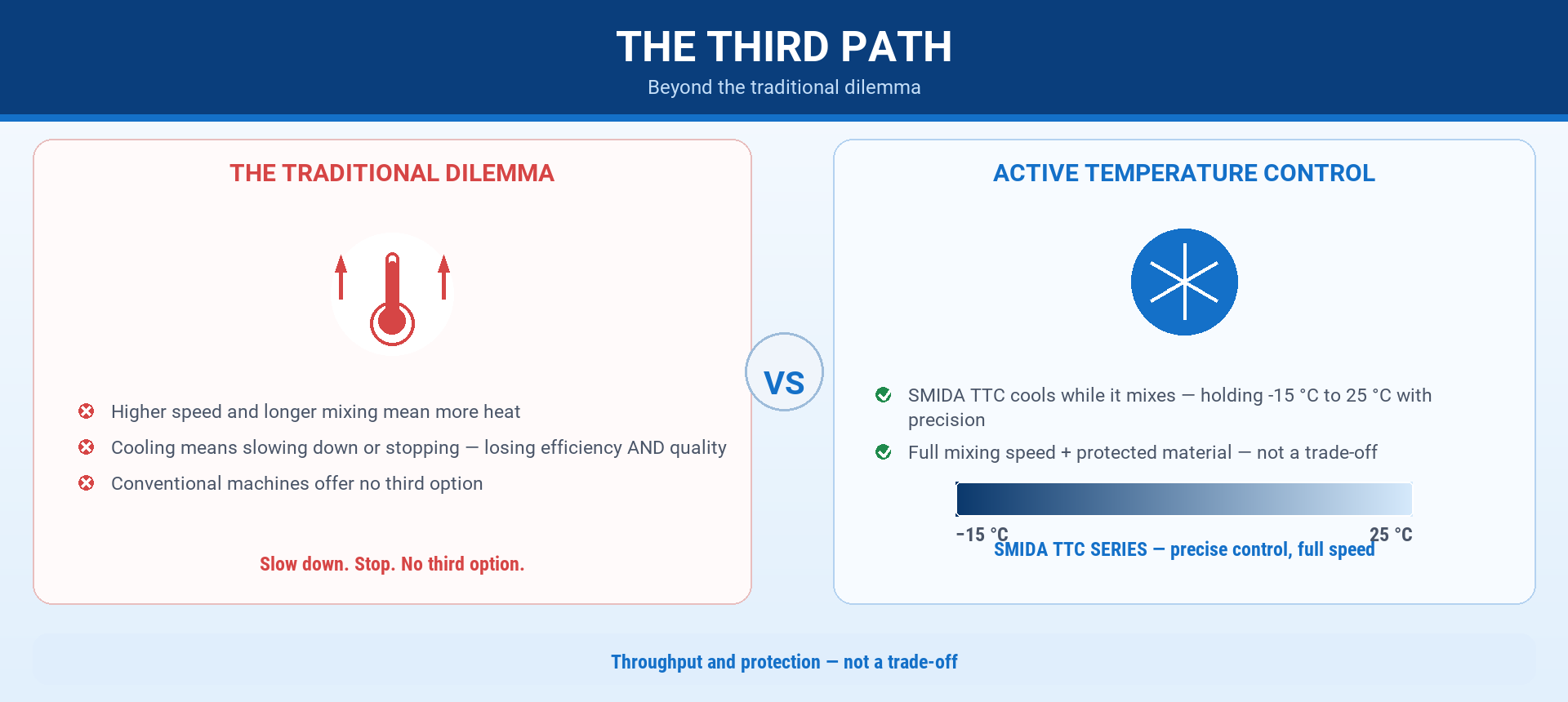
The Traditional Dilemma: Speed or Safety
Conventional mixers generate heat in proportion to speed and mixing time.
The faster and longer you mix, the hotter the batch gets.
Users who need to protect heat-sensitive materials therefore slow down or stop to cool — trading throughput for safety, and sometimes losing both.
There is no third option on a conventional machine.
The Third Path: Active Temperature Control
A temperature-controlled planetary mixer cools while it mixes.
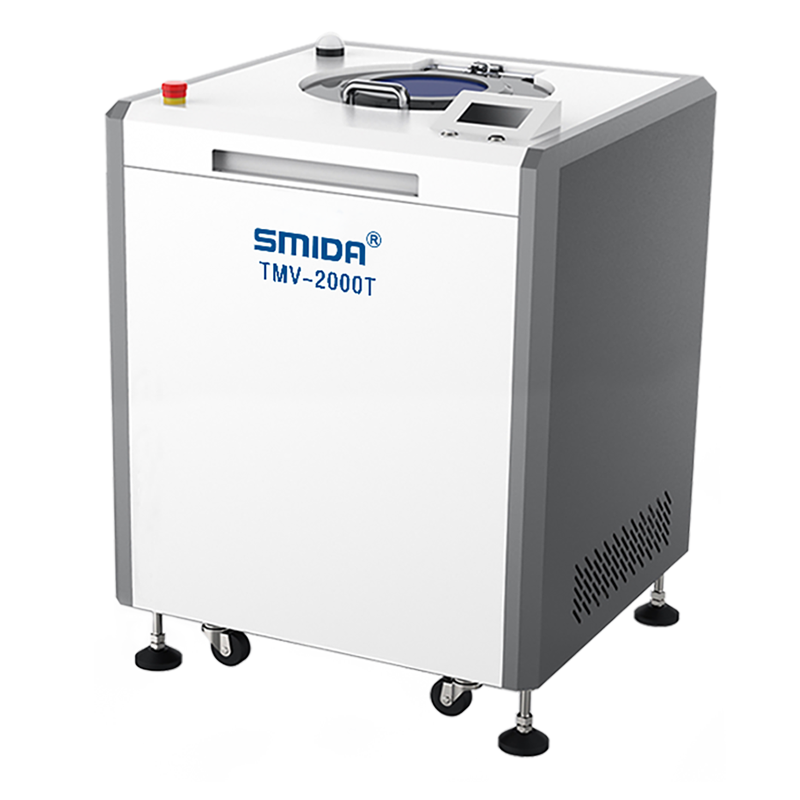
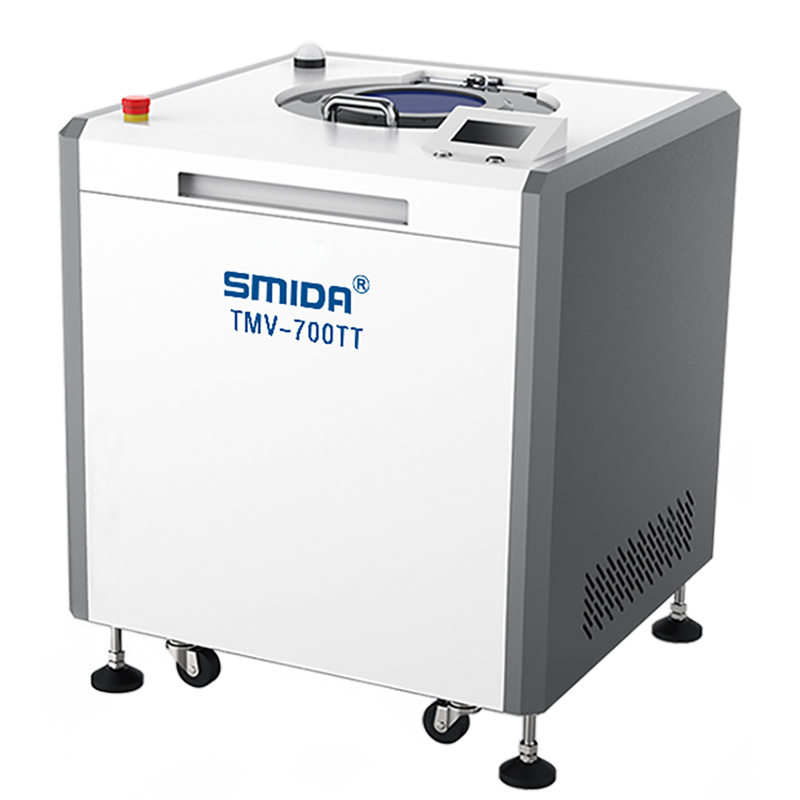
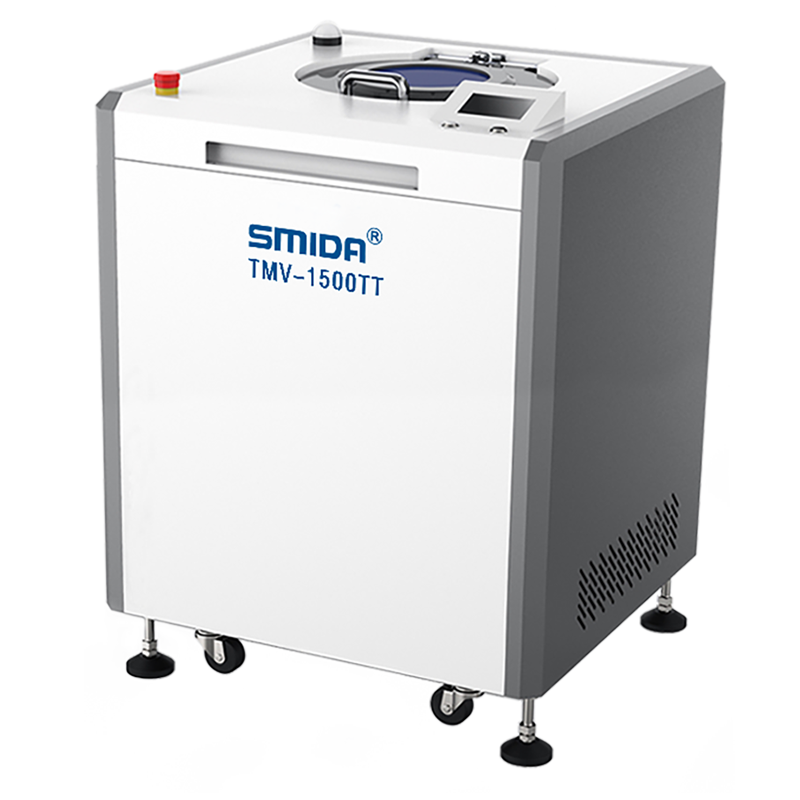
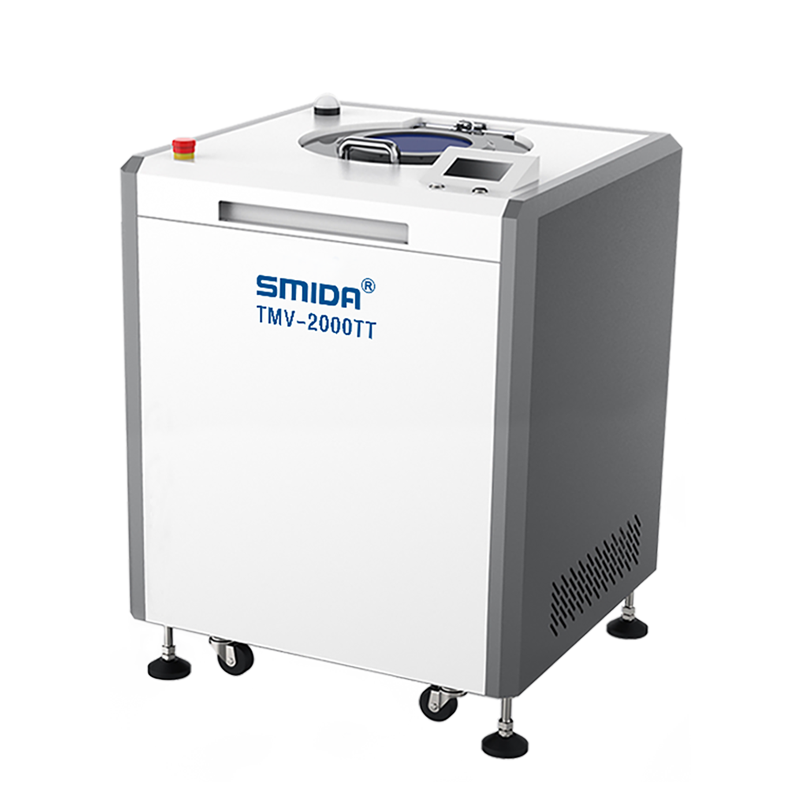
SMIDA's TTC series holds the material between -15 °C and 25 °C with precise, continuous control, keeping the batch inside its process window at full mixing speed.
You keep the throughput of high-speed centrifugal mixing and protect the material at the same time — no stop-and-cool cycles, no compromise.
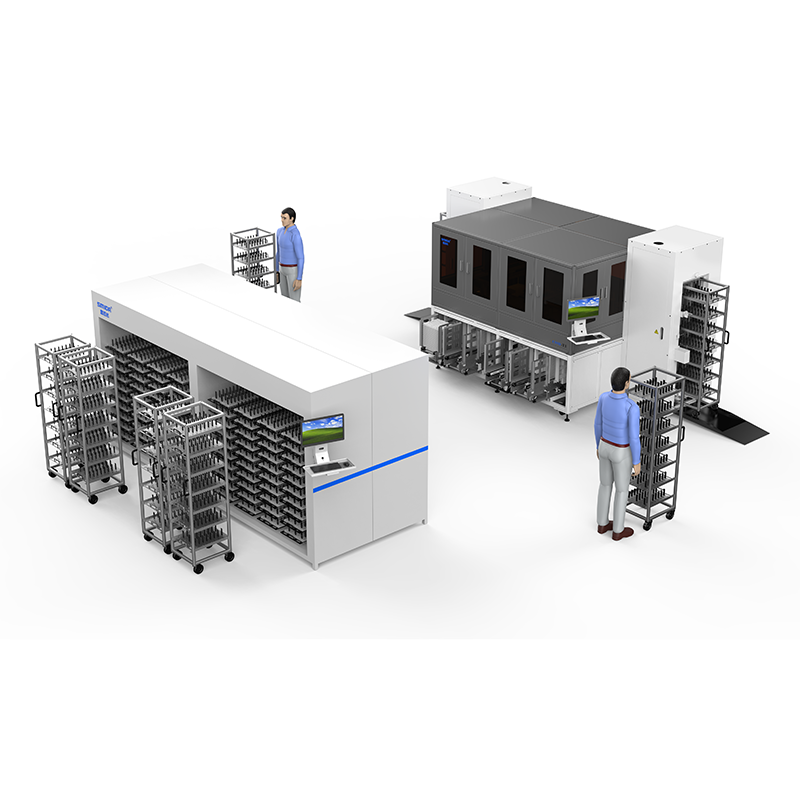
SMIDA offers both standard and TTC temperature-controlled models, from 150 g laboratory cups to 100 kg+ production machines, with vacuum options and dual-cup configurations available.
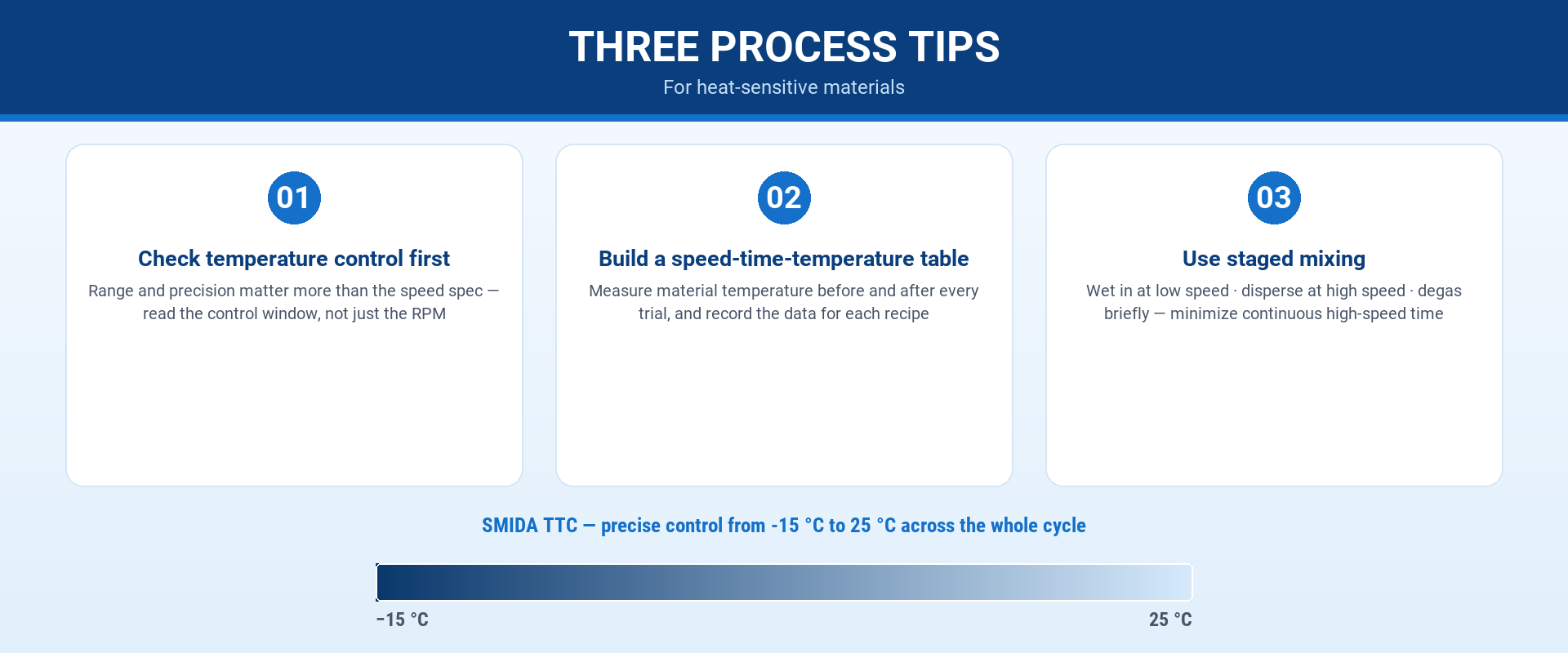
Three Process Tips for Heat-Sensitive Materials
-
Check temperature capability first.
When selecting a machine, verify the temperature control range and precision before comparing speed specs.
A fast machine that overheats your product is not fast at all. -
Build a speed-time-temperature table.
Measure material temperature before and after mixing during trials, and record the relationship for each recipe.
This data becomes your standard operating procedure. -
Use staged mixing for extreme cases.
Wet the material in at low speed, disperse at high speed, then degas briefly under vacuum.
Staged processing minimizes continuous high-speed time and therefore heat input.
Frequently Asked Questions
What is the temperature range of SMIDA TTC mixers?
-15 °C to 25 °C, maintained precisely during the entire mixing cycle.
This covers refrigerated biological materials, room-temperature cosmetics and everything in between.
Does temperature control slow down mixing?
No.
The TTC system cools actively while the machine mixes at full speed.
Throughput and thermal protection are delivered together, not traded against each other.
Can I use one machine for both sensitive and standard materials?
Yes.
Temperature control can be switched per recipe, so one TTC mixer handles heat-sensitive batches and ordinary ones alike.
How do I know if my material needs temperature control?
If your product loses activity, changes color, gels early, or behaves differently after mixing, measure the temperature rise in a trial run.
Materials that degrade above 50–60 °C or react faster with heat are clear candidates.
Heat is not an unavoidable cost of mixing.
A machine that controls temperature saves you downtime, scrap material and the hidden cost of delayed R&D.
Send a sample to the SMIDA lab for a free test, and we will return both mixing results and temperature-rise data so you can decide with facts.

 Hot News