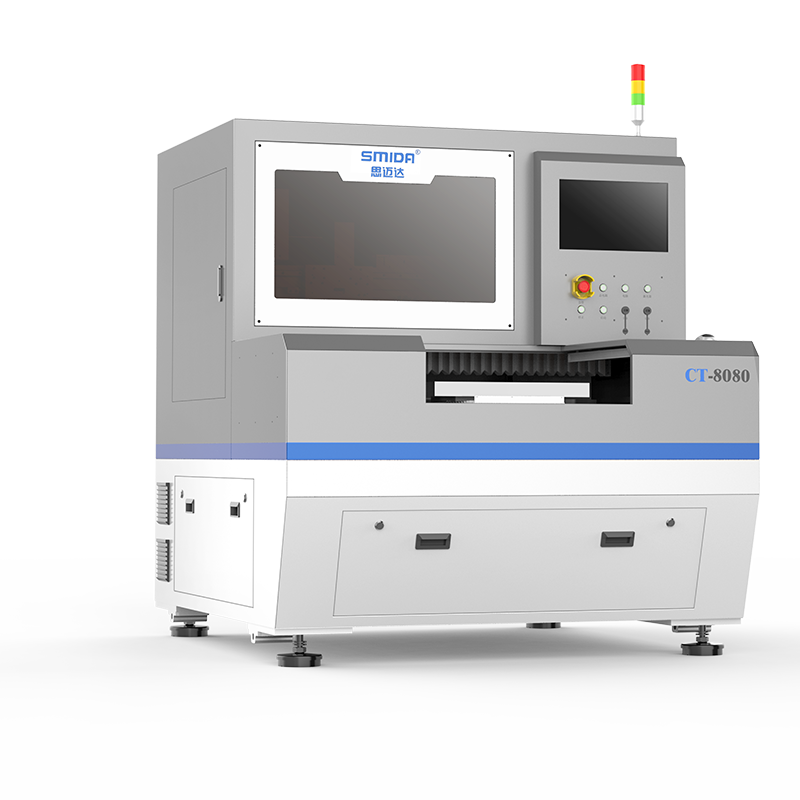
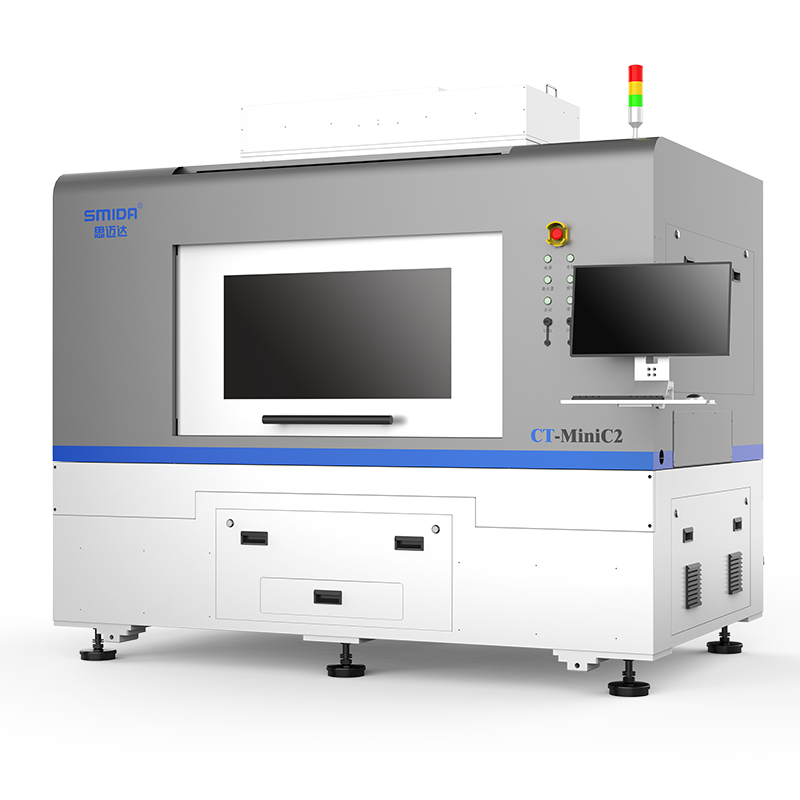
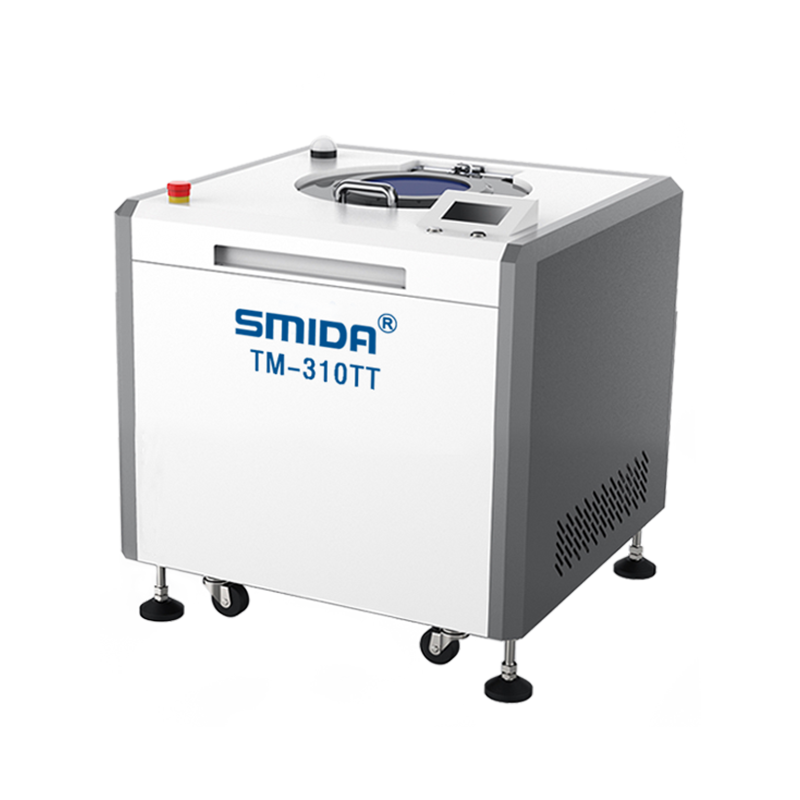
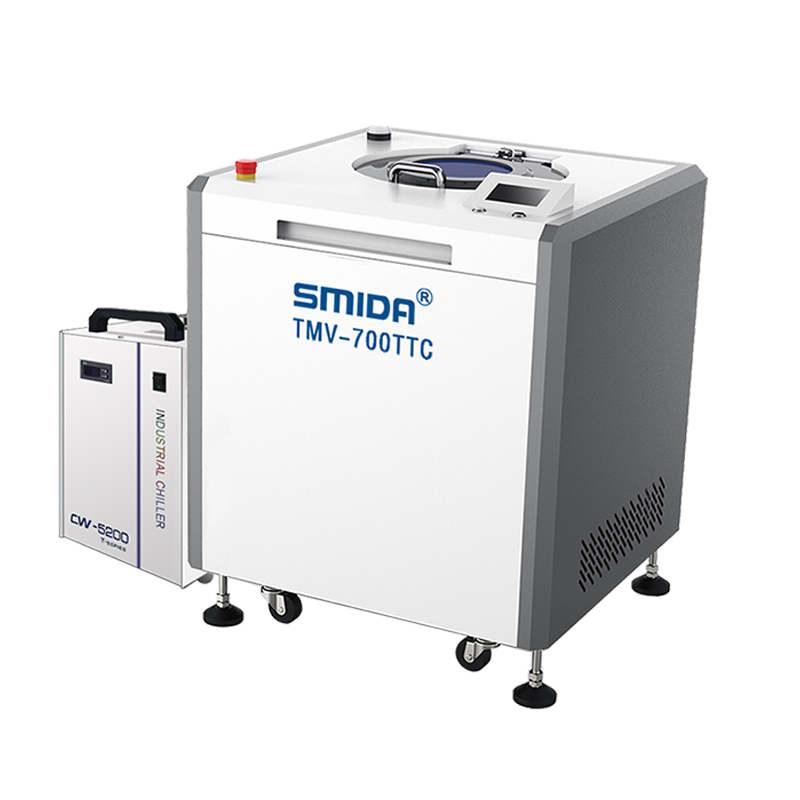
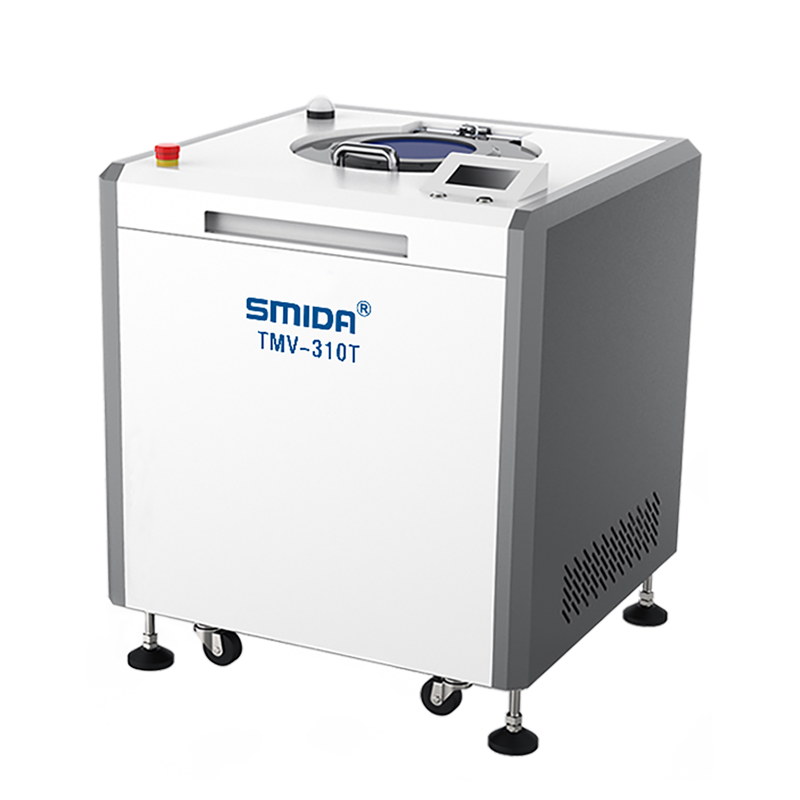
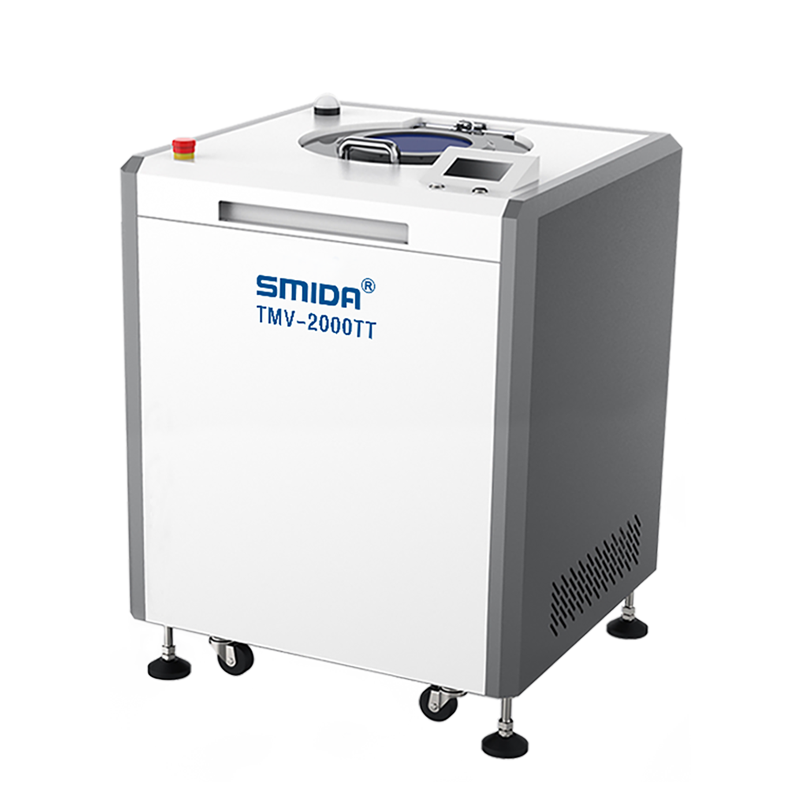
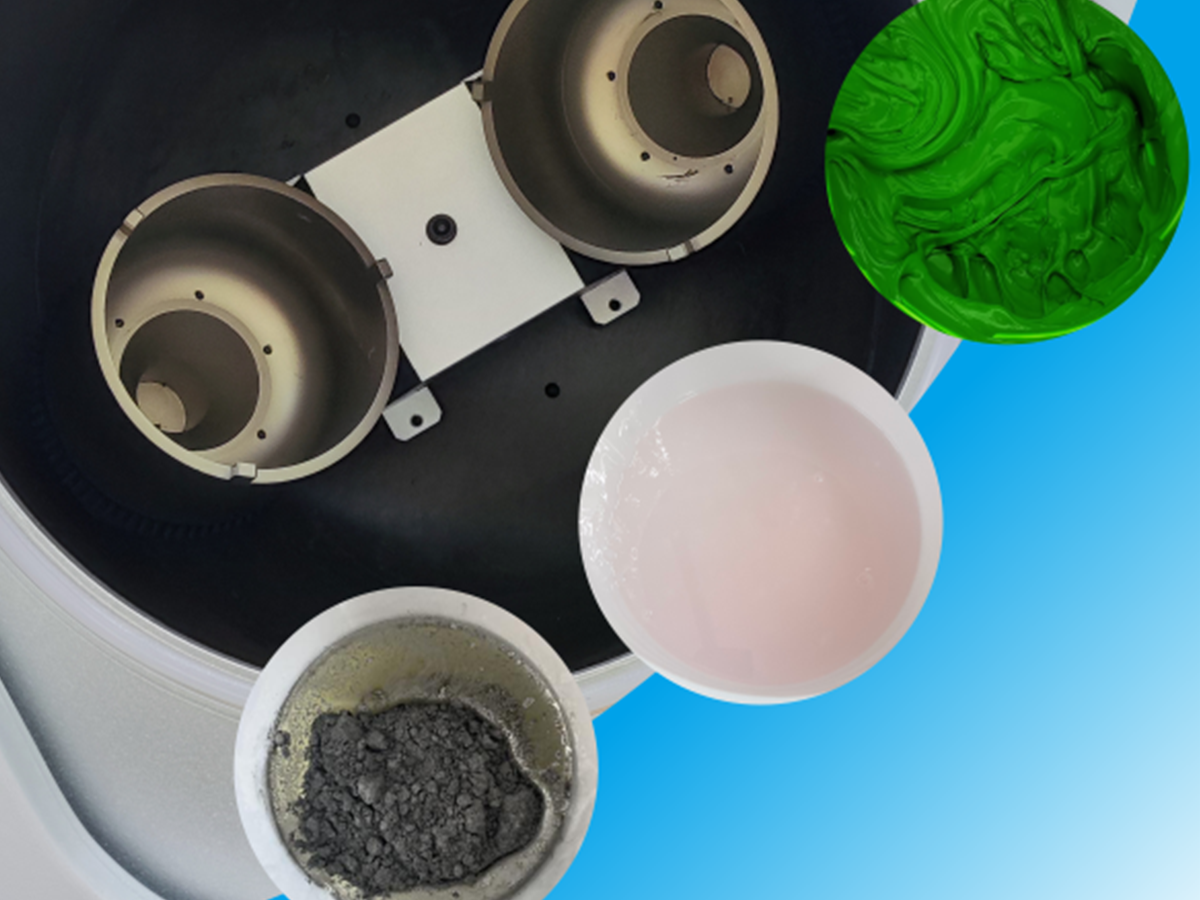
In fields such as precision manufacturing and new material R&D that demand high material mixing uniformity and purity, traditional mixing equipment often restricts production quality due to issues like "mixing dead zones, bubble residue, and material damage." Backed by 16 years of industry technological accumulation, SMIDA Planetary Centrifugal Mixer constructs an efficient and precise mixing system through the synergistic mechanism of "revolution + rotation + vacuum + special structural design." Its principle can be deeply disassembled from four core dimensions:
I. Core Motion Mechanism: "Dual-Force Composite" of Revolution and Rotation, Building a 3D Mixing Field
The core principle of SMIDA Planetary Centrifugal Mixer originates from the innovative application of "planetary motion" — through the high-speed revolution of the mixing container (or container bracket) and independent rotation, it forms the superposition of multi-directional forces, enabling full mixing of materials without paddle contact. The specific mechanism is as follows:
1. High-Speed Revolution: Centrifugal Force Dominates "Material Extrusion and Bubble Floation"
Motion Characteristics: After the equipment starts, the material container (or container bracket) rotates clockwise at high speed around the central axis of the equipment, generating strong centrifugal force directed outward (centrifugal acceleration can reach several times the gravitational acceleration).
Working Principle: Centrifugal force pushes the materials in the container to move away from the central axis, forming a uniform "annular material layer" along the container wall. During this process, due to the much lower density of bubbles inside the material than the material itself, they will move to the material surface under the extrusion of centrifugal force — similar to "squeezing a sponge," gradually "pushing" the bubbles hidden inside the material to the surface, laying the foundation for subsequent defoaming.
Key Advantages: Compared with traditional mixing equipment that relies on paddles for "stirring and pushing," the centrifugal force from SMIDA's revolution acts more uniformly, avoiding mixing dead zones caused by uneven local material stress. At the same time, it reduces frictional temperature rise between materials and equipment components (protecting heat-sensitive materials).
2. Independent Rotation: Shear Force Drives "Particle Dispersion and Vortex Mixing"
Motion Characteristics: While revolving, the material container rotates counterclockwise at high speed around its own axis, forming a rotational motion opposite to the direction of revolution.
Working Principle: The shear force generated by rotation exerts a "tearing effect" on the material — the material inside the container has a speed difference with the outer material (driven by revolution), producing intense relative motion, which in turn forms local vortices. These vortices tear the material into fine "material streams," breaking particle agglomeration (such as metal powder and nano-scale powder caking) and enabling molecular-level contact between different components of the material.
Synergistic Effect: The centrifugal force of revolution and the shear force of rotation form a "composite force field," making the material exhibit "3D spiral motion" in the container — revolving around the central axis (radial motion), rotating around its own axis (circumferential motion), and rolling axially due to force differences. This movement trajectory covers every corner of the container, completely eliminating mixing dead zones and ultimately achieving a mixing uniformity of over 99.5% (far higher than the 85%-90% level of traditional equipment).
II. Key Structural Support: Paddle-Free Design and 45° Inclined Axis, Optimizing Mixing Efficiency and Material Protection
The realization of SMIDA Planetary Centrifugal Mixer's principle relies on the "blessing" of two core structural designs, solving the pain points of "material damage" and "insufficient mixing" of traditional mixing equipment:
1. Paddle-Free Design: Achieving Mixing Through "Material Self-Motion," Avoiding Secondary Pollution and Morphological Damage
Principle Logic: Traditional mixers rely on mechanical stirring of paddles for mixing, which easily leads to two problems: first, friction between paddles and materials will damage the morphology of sensitive materials (such as granular powder in cosmetics and colloidal structure of pharmaceutical ointments); second, material residue in paddle gaps will cause cross-contamination.
SMIDA's Solution: Cancel traditional paddles and achieve mixing entirely through "material self-motion" formed by "revolution + rotation" — materials collide, shear, and roll with each other under the action of the composite force field, without direct friction with metal components. This design not only avoids material morphology damage but also eliminates "residue dead zones." During cleaning, only the inner wall of the container needs to be cleaned, reducing maintenance costs by more than 60%.
2. 45° Inclined Rotating Axis: Enhancing 3D Flow and Improving Dispersion Efficiency
Structural Details: The rotating axis (rotation axis) of the material container is not vertically arranged but inclined at 45° to the revolution axis.
Principle Effect: The inclined axis upgrades the material's movement trajectory from "planar circular motion" to "spatial spiral motion" — when the container rotates, the material will roll axially "up and down" due to the inclined angle, instead of only rotating on the horizontal plane. This movement can fully entrain materials with large density differences (such as heavy metal powder and light resin liquid), avoiding stratification (such as the problem of "heavy materials sinking to the bottom and light materials floating up" in traditional mixing), and is especially suitable for complex systems such as "solid-liquid mixing" and "powder-liquid mixing."
III. Vacuum Synergistic Effect: Extracting Nano-Scale Bubbles, Achieving "Mixing + Defoaming" Integration
The "defoaming capacity" of SMIDA Planetary Centrifugal Mixer is an important extension of the principle system. Through the dual action of "centrifugal bubble squeezing + vacuum bubble extraction," it completely removes bubbles in materials (including nano-scale microbubbles):
1. Centrifugal Pretreatment: "Concentrating Bubbles to the Surface"
As mentioned earlier, the centrifugal force generated by revolution has squeezed the bubbles inside the material to the surface, forming a "bubble-enriched layer" (usually only a few millimeters thick), where the bubbles are in a "to-be-extracted" state.
2. Vacuum System: "Thoroughly Extracting Bubbles" in a Negative Pressure Environment
Workflow: The equipment is equipped with a high-power vacuum pump, which synchronously extracts air from the container during the mixing process, forming a high vacuum environment of above -0.095MPa inside the container.
Principle Mechanism: In a vacuum environment, the bubbles on the material surface will expand rapidly (volume can expand 10-20 times) due to the "internal and external pressure difference," and move to the vacuum interface at the top of the container, eventually being extracted by the vacuum pump. For nano-scale bubbles (diameter <1μm), the vacuum environment can break their surface tension, separating them from the surrounding materials and avoiding the limitation of traditional equipment that "can only remove visible bubbles."
Applicable Scenarios: This mechanism is especially suitable for fields highly sensitive to bubbles, such as electronic pastes (e.g., silver paste, dielectric paste) and optical materials (e.g., liquid crystal module adhesives) — bubble residue can cause short circuits in electronic components and reduce the light transmittance of optical materials. SMIDA's "centrifugal + vacuum" synergistic principle can increase the bubble removal rate to 99.9%.
IV. Auxiliary Technology Adaptation: Intelligent Parameter Regulation and Single-Drive Mechanism, Ensuring Stable Principle Implementation
To ensure the adaptability of the "revolution + rotation + vacuum" principle in different material scenarios, SMIDA optimizes the principle application effect through two auxiliary technologies:
1. Intelligent Parameter Regulation: Matching Force Field Intensity on Demand, Adapting to Multi-Morphology Materials
Principle Support: Different materials (such as high-viscosity resin, low-viscosity solvent, and nano-powder) have different requirements for mixing force — high-viscosity materials require stronger shear force (need to increase rotation speed), and low-viscosity materials require stronger centrifugal force (need to increase revolution speed).
Implementation Method: The equipment supports 1-20 groups of preset programs, with adjustable parameters including: revolution speed, rotation speed, mixing time, and vacuum degree. For example, when processing lithium battery cathode paste (high viscosity), strong shear force can be used to break powder agglomeration; when processing ink (low viscosity), centrifugal force can be set to achieve uniform mixing without damaging the ink molecular structure.
2. Single-Drive Mechanism: Ensuring Motion Synchronization and Improving Principle Stability
Patented Technology: SMIDA adopts its own patented "integrated single-drive mechanism for revolution and rotation of the mixing body" (Patent No.: CN222093093U), driving both revolution and rotation movements through a single motor.
Principle Advantages: Traditional multi-motor drive is prone to "asynchrony between revolution and rotation" (such as force field disorder caused by motor speed deviation), while the single-drive mechanism ensures that the revolution and rotation speeds always maintain a preset ratio through precise design of gear transmission ratio, avoiding uneven mixing caused by motion imbalance. At the same time, the single-drive simplifies the mechanical structure, reducing more than 50% of failure points and ensuring long-term stable operation of the principle.
Summary: Principle Synergy Achieves "Efficient, Precise, and Safe" Mixing Goals
The principle system of SMIDA Planetary Centrifugal Mixer is the in-depth synergy of "motion mechanism (revolution + rotation), structural design (paddle-free + 45° inclined axis), vacuum system, and intelligent regulation": squeezing bubbles through centrifugal force of revolution, dispersing particles through shear force of rotation, protecting materials with paddle-free design, enhancing 3D flow with 45° inclined axis, and finally extracting bubbles with vacuum system — the entire process requires no manual intervention. It not only solves the pain points of "uneven mixing, bubble residue, and material damage" of traditional equipment but also adapts to the needs of electronics, medicine, cosmetics, new energy and other industries, becoming a core solution for efficient mixing.
 Hot News
2026-08-27
2026-08-26
2026-08-25
2026-08-24
2026-08-23
2026-08-22

SMIDA provides automated material processing equipment for global manufacturers. Our patented high-precision solutions and full-lifecycle support serve 2,000+ clients across 40+ countries. Trusted by 19 Fortune 500 companies. Request a consultation.SMIDA is a trustworthy intelligent equipment manufacturer with 16+ years of industry expertise. We boast a production base of 10,000+㎡ in China, a team of 100+ professionals across diverse fields, and 50+ authorized patents.
SMIDA Technology Park, No. 85, Zhenyu 2nd Road, Yutang Street, Guangming District, Shenzhen, China
Copyright © 2026 by Shenzhen Smida Intelligent Equipment Co., Ltd. Privacy Policy
 EN
EN