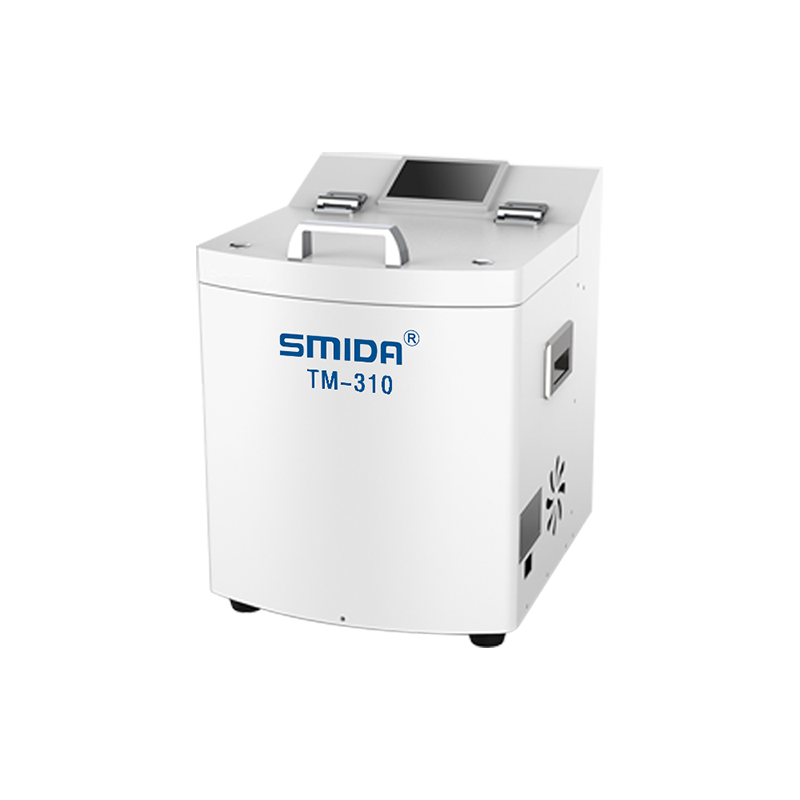
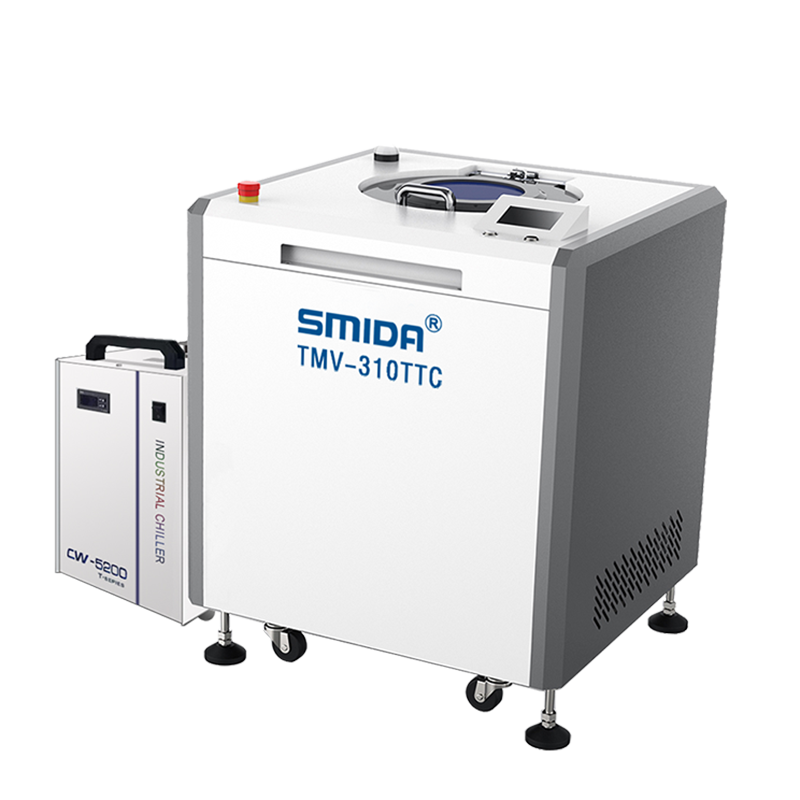
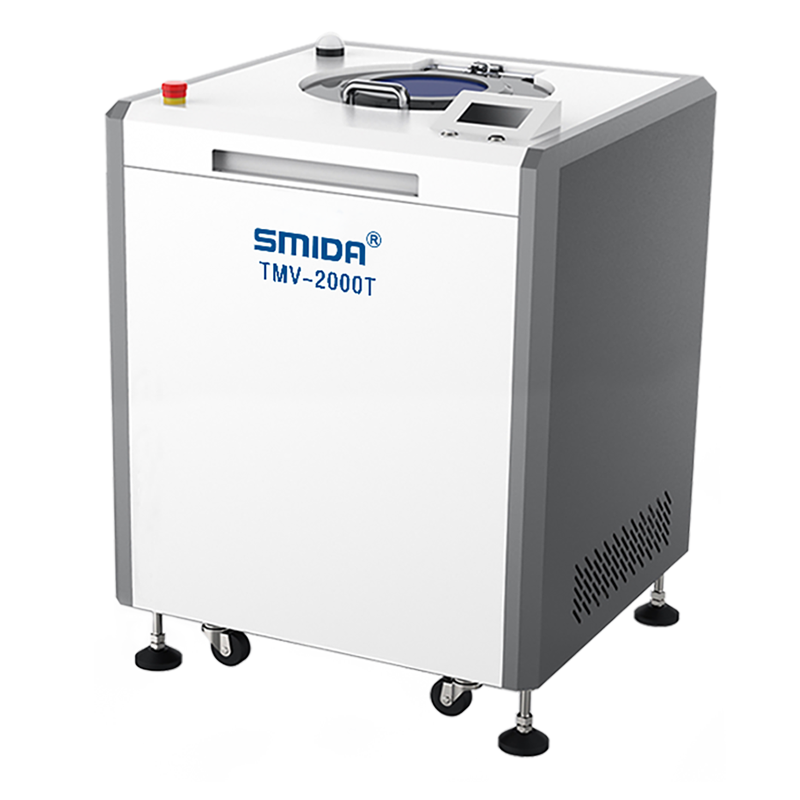
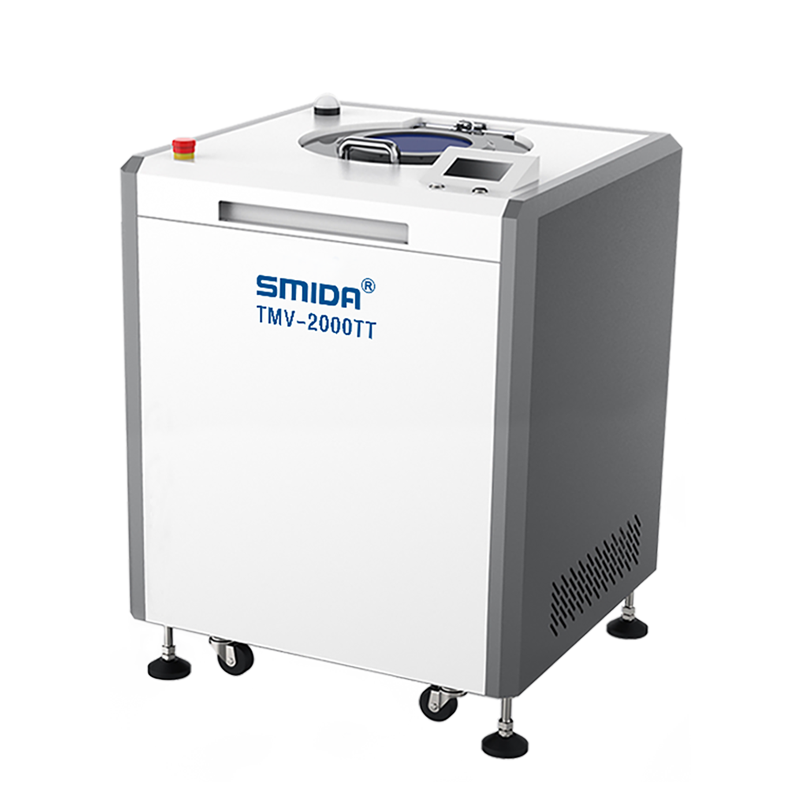
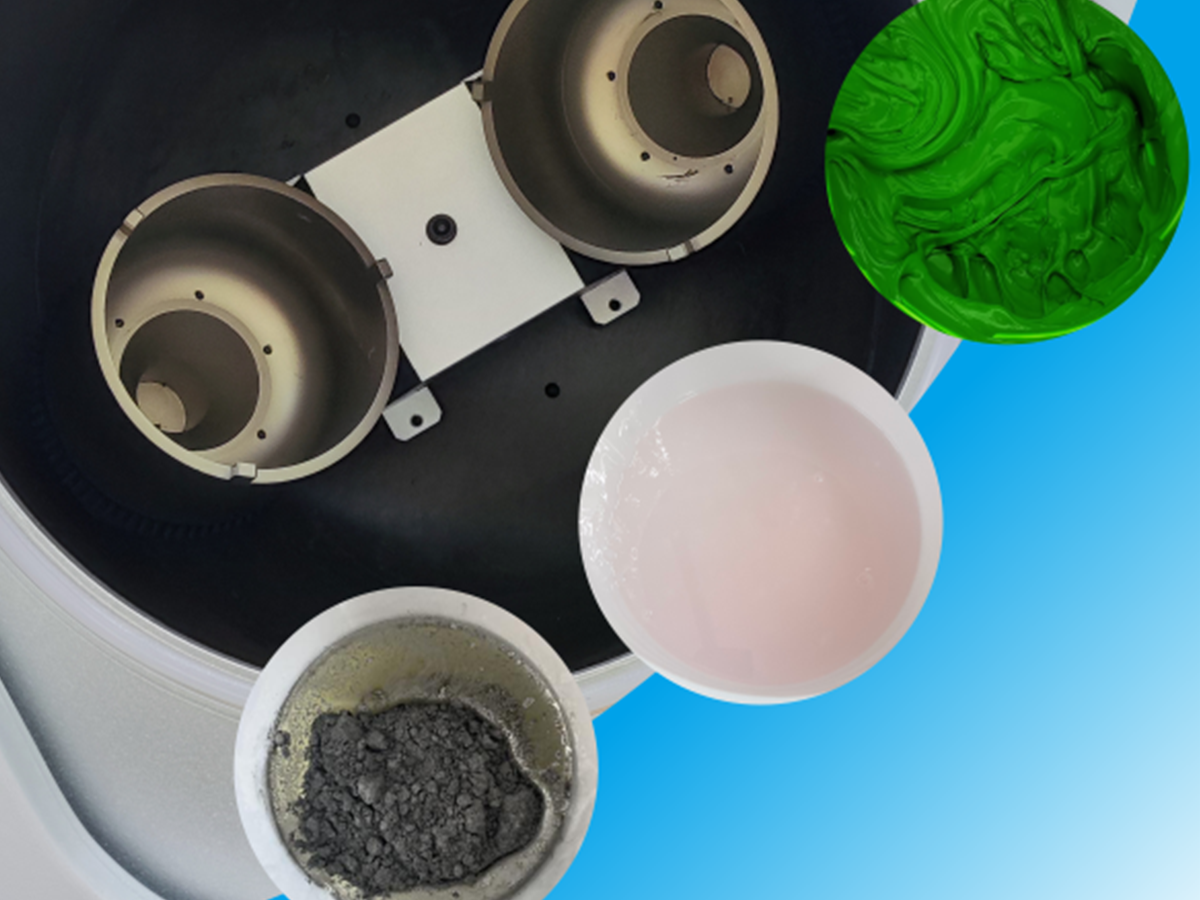
Backed by its core technology system of "Revolution + Rotation + Vacuum + Paddle-Free Inclined Structure", 15 years of deep industry expertise and patented design (Patent No.: CN222093093U), the SMIDA Planetary Centrifugal Mixer precisely meets the stringent requirements for material mixing uniformity, purity and safety in precision manufacturing, new material R&D, electronic industry, food and pharmaceutical sectors and more. Its processable materials cover multi-characteristic substances including high-viscosity, sensitive and precision-grade materials. This article provides an in-depth analysis from five core dimensions: physical properties, chemical & process properties, typical application scenarios, equipment compatibility optimization and usage precautions.
I. Core Physical Property Compatibility: Meeting Mixing Needs of Multi-Form Materials
Through the synergy of adjustable force field intensity and vacuum environment, the SMIDA Planetary Centrifugal Mixer perfectly adapts to materials with the following physical properties, solving the pain points of "uneven mixing, bubble residue and morphological damage" of traditional equipment:
High-Viscosity & Special Rheological Materials
Applicable Range: Paste, cream and semi-solid materials with a viscosity of 500 mPa·s to 5,000,000 mPa·s, as well as shear-sensitive and thixotropic materials.Typical Examples: Sealant, silicone rubber, epoxy potting adhesive, lithium battery cathode/anode slurries, electrode paste, conductive adhesive, thermal grease, dental resin, nail polish, eyelash glue, etc. Adaptation Principle: The strong centrifugal force generated by the equipment's revolution (centrifugal acceleration up to several times the gravitational acceleration) effectively overcomes the flow resistance of high-viscosity materials and drives the formation of an annular flow layer. The 3D spiral motion formed by rotational shear force and the 45° inclined axis achieves "self-mixing" of materials without paddle contact, avoiding structural damage to shear-sensitive materials (e.g., gels, certain coatings). The vacuum environment prevents air bubble entrainment during mixing, ensuring high-viscosity materials are pore-free and uniformly textured after mixing.
Precision Materials Requiring Ultra-High Uniformity
Applicable Range: Materials requiring ultra-fine dispersion, nano-scale mixing or uniform fusion of multiple components, allowing particle sizes as low as the nanometer level and a component ratio deviation of ≤0.5%.Typical Examples: Ceramic slurry, metal powders (e.g., silver powder, copper powder), carbon nanotubes, graphene, nano-composite materials, electronic pastes (conductive paste, dielectric paste, 5G paste), solar cell paste, resistor paste, etc. Adaptation Principle: The precise speed ratio of revolution and rotation forms a composite force field to achieve molecular-level contact of materials, with a mixing uniformity of over 99.5%. The design without mixing dead zones avoids particle agglomeration, and the vacuum system can remove nano-scale bubbles, ensuring the dispersion precision of precision materials and meeting the requirements for component consistency in electronic components, new materials and other fields.
Materials with Volatile Components or Easy Foaming Properties
Applicable Range: Materials that easily produce bubbles under normal pressure stirring and contain solvents or volatile substances; stable processing is achievable for materials with a volatile component content of ≤30%.Typical Examples: Resins, epoxy potting adhesives, electronic printing inks, solder mask inks, anti-counterfeiting inks, mesh board inks, colorants, pigment dispersion systems, etc.Adaptation Principle: The high-vacuum environment can quickly extract volatile solvents in materials and bubbles generated during mixing. Meanwhile, the centrifugal force of revolution squeezes hidden bubbles inside the material to the surface to form an "enriched layer", accelerating bubble rupture and extraction. Ultimately, a 99.9% bubble removal rate is achieved, avoiding product performance defects caused by bubble residue (e.g., short circuits in electronic components, color differences in ink printing).
II. Key Chemical & Process Property Compatibility: Ensuring Material Stability & Safety
For materials with special chemical properties or process requirements, SMIDA ensures no attenuation of material performance and controllable processes during mixing through optimizations such as vacuum isolation and hygienic design:
Perishable Materials Sensitive to Oxidation/Moisture
Applicable Range: Materials that require oxygen-free and low-humidity environments to avoid oxidation, hydrolysis or component changes, including metal-based, powder and some organic materials.Typical Examples: Lithium battery anode slurries, metal powders (aluminum powder, zinc powder, etc.), nano-metal materials, certain pharmaceutical intermediates, hyaluronic acid fillers, sensitive silicone materials, etc.Adaptation Principle: The equipment supports vacuum protection, isolating air and moisture throughout the mixing process. The paddle-free design reduces the contact area between materials and metal components, avoiding metal ion contamination and reducing the trigger conditions for material oxidation reactions, ensuring the purity and performance stability of materials after mixing.
Materials Requiring Reaction/Curing Process Control
Applicable Range: Materials accompanied by chemical reactions such as polymerization and cross-linking during mixing, which require the removal of by-product gases or control of reaction rates.Typical Examples: Polyurethane adhesives, acrylic resins, epoxy composite materials, some medical ointments, polymer coatings, etc. Adaptation Principle: The vacuum system can real-time extract by-product gases (e.g., carbon dioxide, small molecule volatiles) generated by chemical reactions, breaking the reaction equilibrium to promote the forward progress of the reaction. The equipment's supporting temperature control function (temperature control range: -10℃ to 25℃) can precisely adjust the reaction temperature, avoiding uneven curing or incomplete reaction caused by temperature fluctuations, and ensuring the consistency of the final performance of materials.
Special Materials with High Sanitation/Safety Requirements
Applicable Range: Food and pharmaceutical materials requiring sterile environments, as well as flammable, explosive and highly corrosive hazardous chemicals.Typical Examples: Edible spices, syrup, chocolate slurry, paste food additives, medical ointments, orthopedic/dental restorative materials, flammable and explosive solvent-based inks, acid-base chemical raw materials, etc. Adaptation Principle: For the processing of food and pharmaceutical grade materials, the equipment's contact materials are 316L stainless steel + PTFE coating, complying with GMP standards. The paddle-free design has no residue dead zones, and the microbial residue after cleaning is ≤10 CFU/㎡. For flammable and explosive materials, the equipment is equipped with an explosion-proof motor and anti-static design, and the vacuum environment reduces oxygen concentration to avoid combustion and explosion risks. For corrosive materials, special alloys (e.g., Hastelloy) or anti-corrosion coating designs are adopted to prevent equipment corrosion and material contamination.
III. Typical Application Fields & Representative Material List
The material compatibility of the SMIDA Planetary Centrifugal Mixer has been scale-verified in multiple industries. The core application fields and corresponding representative processed materials are as follows:
New Energy Sector: Lithium battery cathode/anode slurries, solid electrolytes, solar cell paste, fuel cell proton exchange membrane materials, wind turbine blade composite materials (glass fiber + resin), sodium-ion battery electrode materials, etc.
Electronics & Precision Manufacturing Sector: Conductive adhesive, thermal grease, electronic packaging materials, liquid crystal module electrical adhesives, 5G base station dielectric paste, conductor paste, mesh board ink, flat panel ink, anti-counterfeiting ink, etc.
Chemical Engineering & New Material Sector: Silicone rubber, sealant, epoxy potting adhesive, polyurethane adhesive, carbon nanotube composite materials, graphene dispersion liquid, nano-metal slurry, ceramic slurry, metal powder mixing systems, etc.
Food & Pharmaceutical Sector: Paste food additives, medical ointments, dental resin, orthopedic restorative materials, hyaluronic acid fillers, raw materials for medicinal syrup preparation, etc.
Cosmetics Sector: Blush powder, foundation cream, lipstick/lip gloss matrix, eyebrow pencil/eyeshadow powder mixture, sunscreen lotion, BB cream paste, nail polish resin system, etc.
IV. Equipment Compatibility Optimization: Customized Design for Different Materials
To further improve material processing compatibility, the SMIDA Planetary Centrifugal Mixer realizes a "one material, one solution" mixing scheme through three customized designs:
Adjustable Vacuum Degree & Rotation Speed: The vacuum degree supports precise adjustment from 0.2 to 101.7 kPa. A combination of medium-low vacuum and medium rotation speed is adopted for low-viscosity materials (e.g., resins) to avoid material splashing; a combination of high vacuum and high rotation speed is used for high-viscosity precision materials (e.g., lithium battery slurries) to enhance dispersion and defoaming effects.
Corrosion-Resistant & Hygienic Customization: For acid-base materials, the mixing container can be made of corrosion-resistant materials; special models for the food and pharmaceutical industry meet the requirements of dust-free production.
Upgraded Temperature Control Protection: For materials requiring reaction control, a temperature control system is configured to support water-cooled temperature control; for temperature-sensitive materials, a suitable ambient temperature is ensured throughout the process.
V. Usage Precautions: Ensuring Material Processing Effect & Equipment Safety
Material Particle Size & Hardness Limitations: It is recommended to process materials with a particle size of ≥0.1 μm to avoid excessive wear on the equipment inner wall caused by overly coarse particles (particle size >500 μm) or super-hard particles (Mohs hardness >6). For ultra-fine powder materials, pre-dispersion is recommended to improve mixing efficiency.
Viscosity & Processing Capacity Matching: The single processing capacity needs to be adjusted according to material viscosity. For high-viscosity materials (>500,000 mPa·s), it is recommended to control it at 60%-70% of the equipment's rated processing capacity; low-viscosity materials can operate at full load to avoid insufficient mixing or equipment overload caused by excessive materials.
Safety Specifications for Special Materials: Explosion-proof equipment must be selected for flammable and explosive materials, and the vacuum degree should be increased slowly during mixing to avoid pressure surges caused by rapid solvent volatilization. For materials containing highly toxic or highly corrosive substances, specialized sealing devices and protective systems must be equipped, and operators must wear professional protective equipment.
With "full characteristic compatibility, high-precision processing and high safety guarantee" as the core, the SMIDA Planetary Centrifugal Mixer covers the entire processing scenarios from daily consumer product raw materials to high-end industrial precision materials. Through technological innovation, it breaks the compatibility limitations of traditional equipment, provides an integrated material processing solution of "mixing + defoaming + protection" for various industries, and becomes a core equipment driving industrial upgrading.
 Hot News
2026-08-27
2026-08-26
2026-08-25
2026-08-24
2026-08-23
2026-08-22

SMIDA provides automated material processing equipment for global manufacturers. Our patented high-precision solutions and full-lifecycle support serve 2,000+ clients across 40+ countries. Trusted by 19 Fortune 500 companies. Request a consultation.SMIDA is a trustworthy intelligent equipment manufacturer with 16+ years of industry expertise. We boast a production base of 10,000+㎡ in China, a team of 100+ professionals across diverse fields, and 50+ authorized patents.
SMIDA Technology Park, No. 85, Zhenyu 2nd Road, Yutang Street, Guangming District, Shenzhen, China
Copyright © 2026 by Shenzhen Smida Intelligent Equipment Co., Ltd. Privacy Policy
 EN
EN