EN
EN

Thermal Paste and Gel Mixing and Degassing: A Process Guide
High-filler thermal compounds lose their cooling power to agglomerates and bubbles — mixing and degassing decides how much heat actually moves.
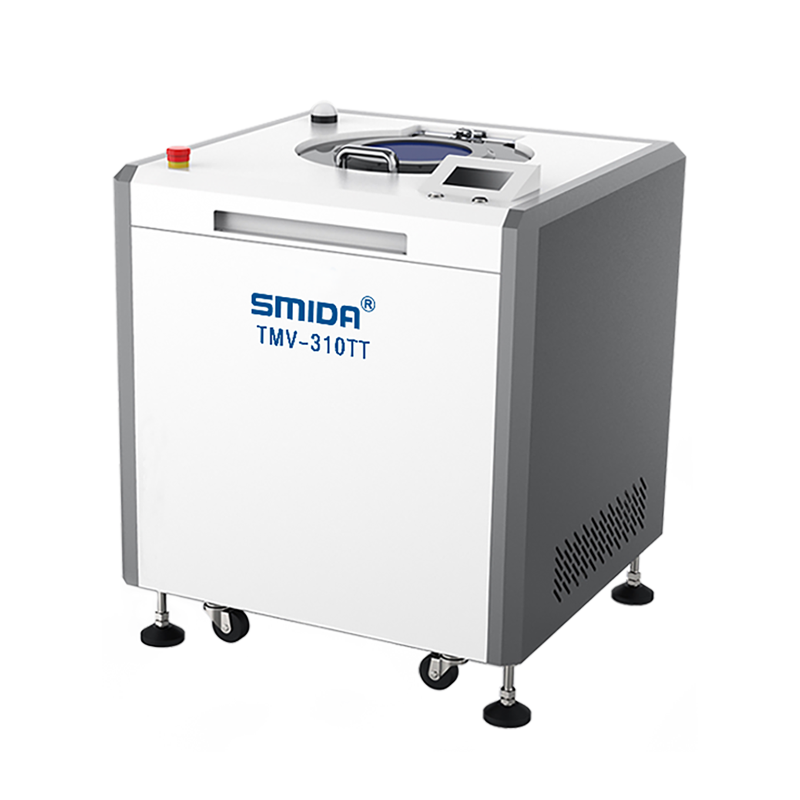
A thermal paste and gel mixing and degassing machine keeps high-filler thermal compounds uniform and bubble-free.
This process guide covers why high-solid-content mixing fails, the four-step process that works, and how to choose the right machine.
What is thermal paste and gel mixing and degassing?
It is the process of dispersing thermally conductive fillers evenly in a silicone or resin matrix and removing microbubbles under vacuum, so the finished compound conducts heat as designed.
AI servers, 5G base stations and electric-vehicle power electronics run hot, and thermal management materials have become a high-stakes category.
Thermal gels and pastes are steadily replacing traditional pads because they apply with low stress, compress easily, and suit automated dispensing.
Yet preparing them is far more demanding than mixing oil and powder.
Thermal gels typically combine silicone resin with very high loadings of conductive fillers such as alumina, boron nitride and zinc oxide — often over 70% by weight.
High solid content creates a chain of process problems that directly cap thermal performance.
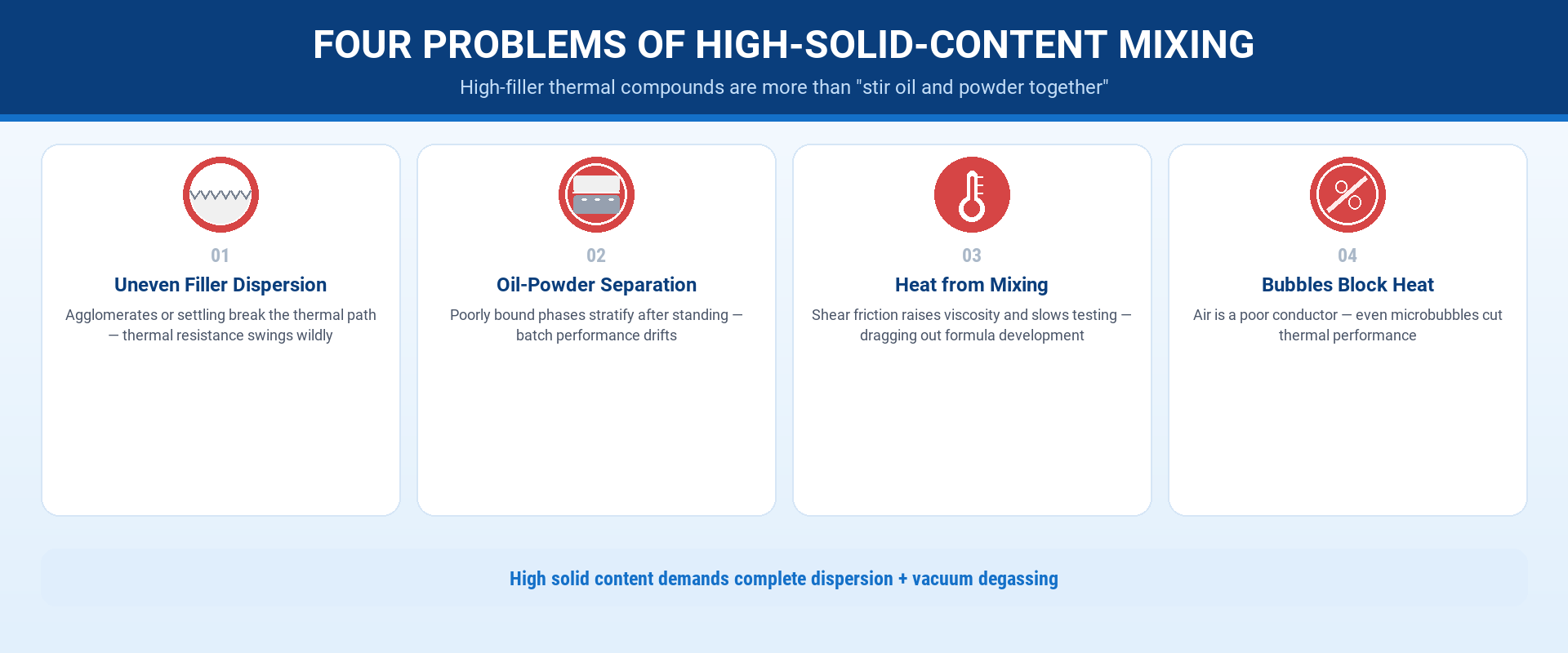
The Four Problems of High-Solid-Content Mixing
-
Uneven filler dispersion.
Powder agglomerates or settles at the container bottom, leaving local filler ratios out of balance.
The thermal path breaks, and thermal resistance swings unpredictably. -
Oil-powder separation.
When the oil phase and powder are not well bound, the compound stratifies after standing and batch performance drifts. -
Process heat.
Shear friction from high-solid mixing raises viscosity and slows testing, dragging out formula development. -
Bubbles that block heat.
Air is a poor thermal conductor.
Even small microbubbles visibly degrade thermal conductivity and reliability.
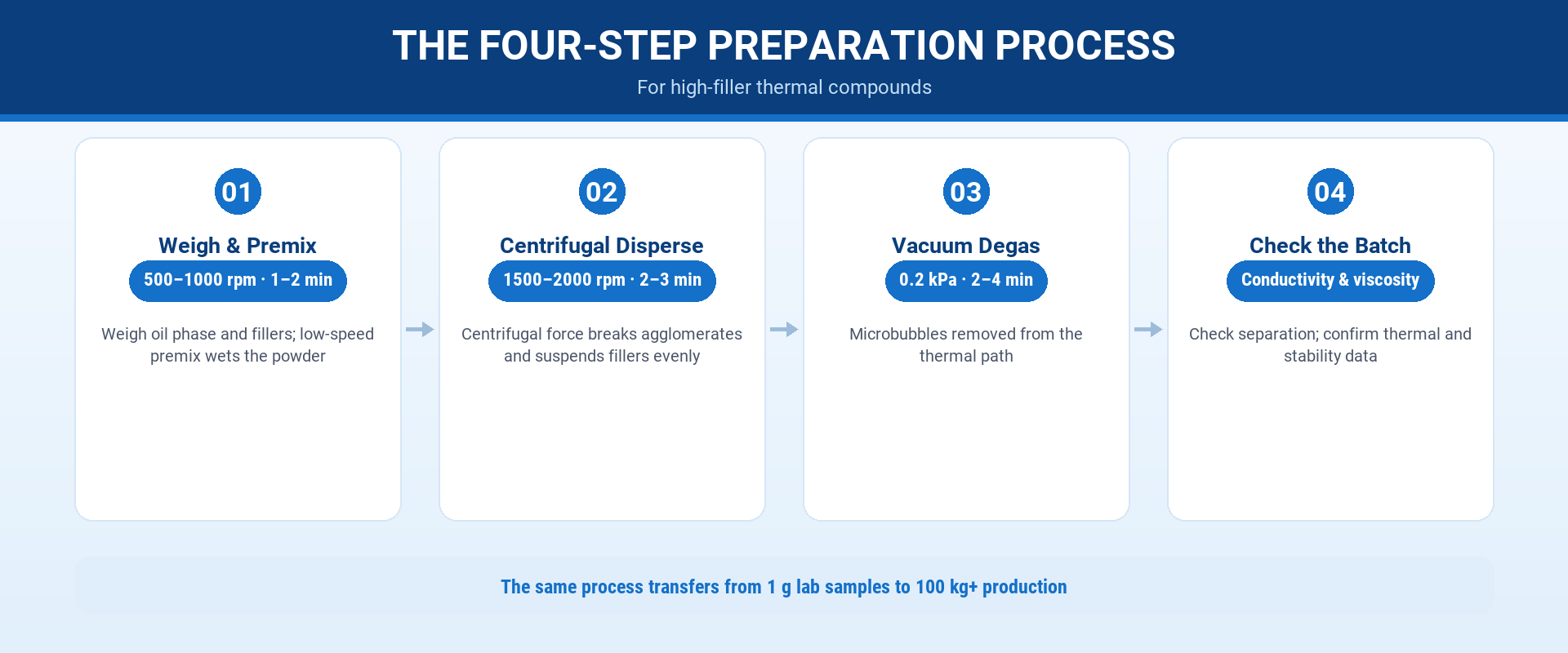
The Four-Step Preparation Process
-
Premix.
Weigh the oil phase and fillers to the formula, then premix at low speed (about 500–1000 rpm for 1–2 minutes) so the powder wets before high-speed work. -
Disperse.
Centrifugal mix at about 1500–2000 rpm for 2–3 minutes to break agglomerates and suspend fillers uniformly. -
Degas under vacuum.
Hold at 0.2 kPa-class vacuum for 2–4 minutes to pull out microbubbles and restore the thermal path. -
Verify.
Check for separation, and measure thermal conductivity and viscosity to confirm the batch is stable and within spec.
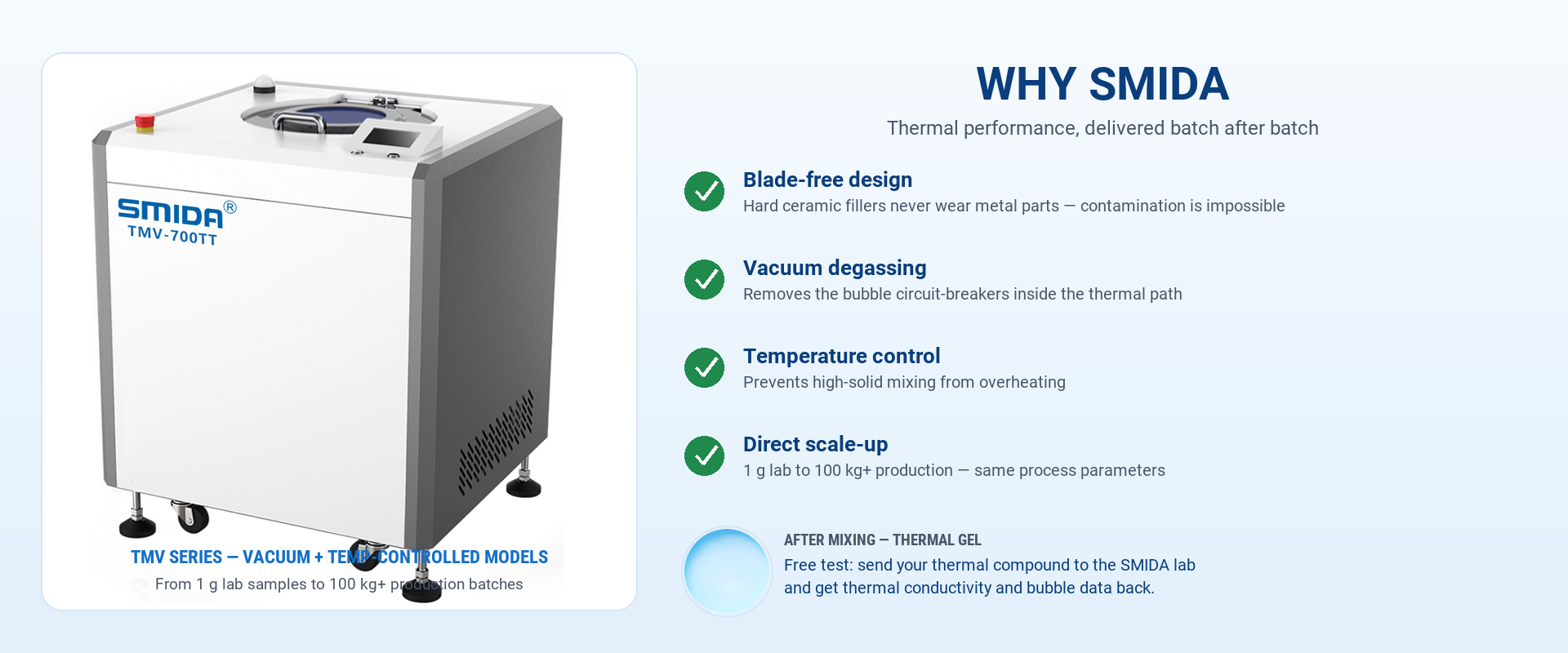
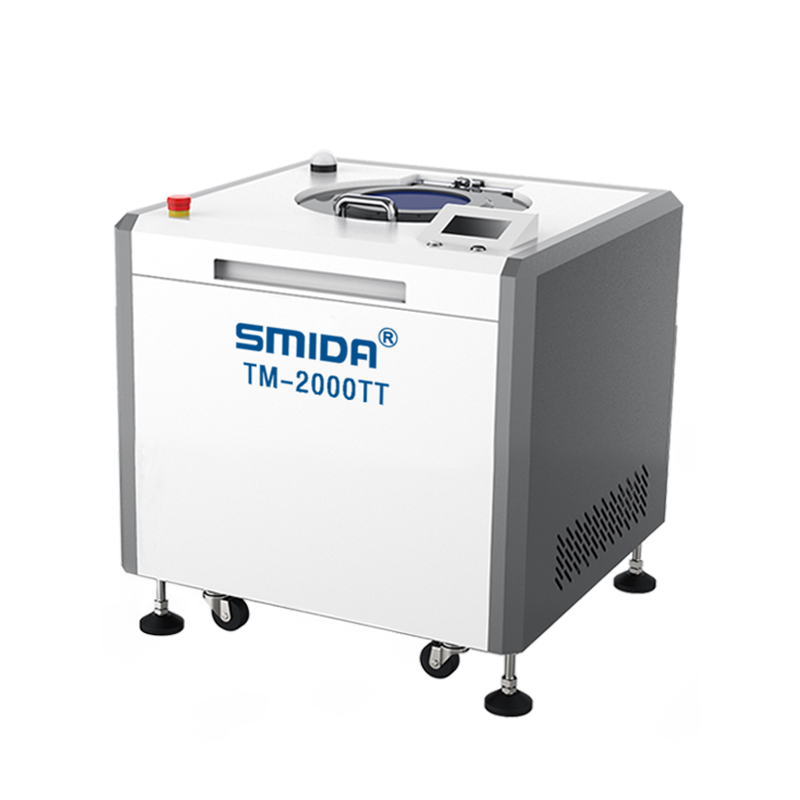
Why SMIDA's Planetary Centrifugal Mixer for Thermal Materials
SMIDA's design answers each problem directly:
-
Blade-free mixing.
Hard ceramic fillers never touch metal parts, so there is no wear and no contamination. -
Vacuum degassing.
Microbubbles that would act as thermal circuit breakers are removed in the same cycle. -
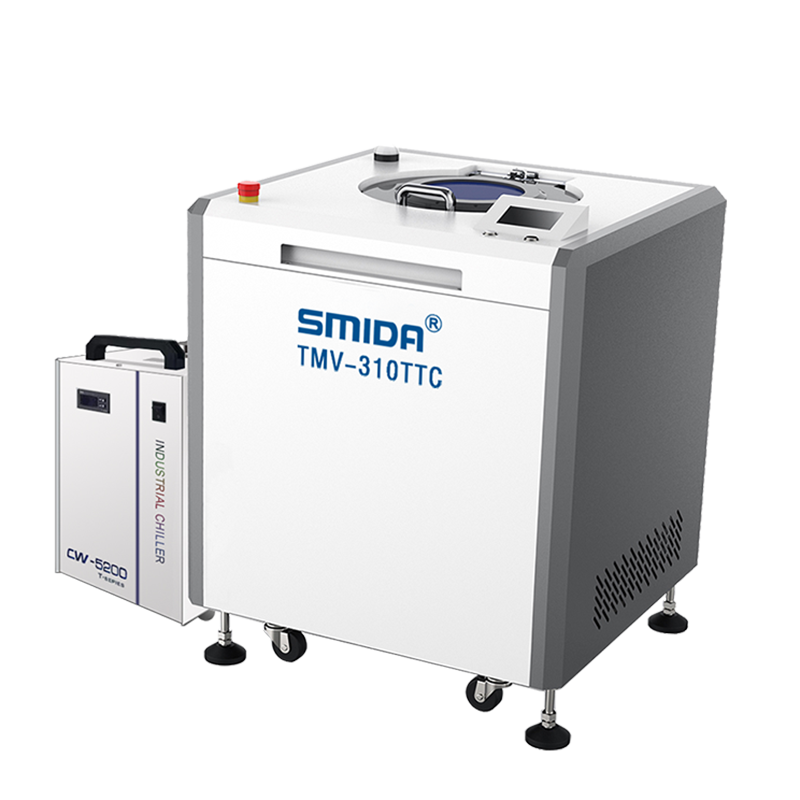
Temperature control option.
TTC models prevent high-solid mixing from overheating, protecting viscosity and speeding up testing. -
Single-platform scale-up.
From 1 g lab samples to 100 kg+ production batches (equipment range 150 g to 100 kg+), the same parameters transfer directly — no re-tuning when you scale.
Frequently Asked Questions
Why does my thermal paste show inconsistent thermal conductivity between batches?
Two causes dominate: undispersed filler agglomerates and entrapped microbubbles.
Complete dispersion followed by vacuum degassing removes both, and stored parameters keep every batch identical.
Can a planetary centrifugal mixer really handle 70%+ filler loading?
Yes.
Centrifugal force loads the entire batch simultaneously, so even very high-solid compounds mix evenly with no dead zones — something blade mixers struggle to achieve.
Does vacuum degassing really improve thermal performance?
Yes.
Air has very low thermal conductivity.
Removing microbubbles restores contact between filler particles and the matrix, measurably lowering thermal resistance.
How do I scale up from R&D to production?
Lock the process parameters on a small machine first, then reproduce them on a larger model from the same platform.
SMIDA offers cross-capacity sample testing to validate scale-up before you commit.
Thermal materials are sold on their ability to move heat, and mixing and degassing determines how much of that ability is delivered.
Send a sample of your compound to the SMIDA lab for a free test, and we will return thermal conductivity and bubble-level data so you can judge the process, not just the machine.

 Hot News