EN
EN

Two-Component Medical Silicone Mixing and Degassing: A Complete Guide
Clean, bubble-free mixing of two-component medical silicone and white masterbatch is the quiet foundation of compliant device manufacturing.
A medical silicone mixing and degassing machine homogenizes two-component medical silicone and white masterbatch without blades or bubbles.
This guide covers the five failures that threaten yield and compliance, the four standard actions that prevent them, and how to choose the right machine.
What is a medical silicone mixing and degassing machine?
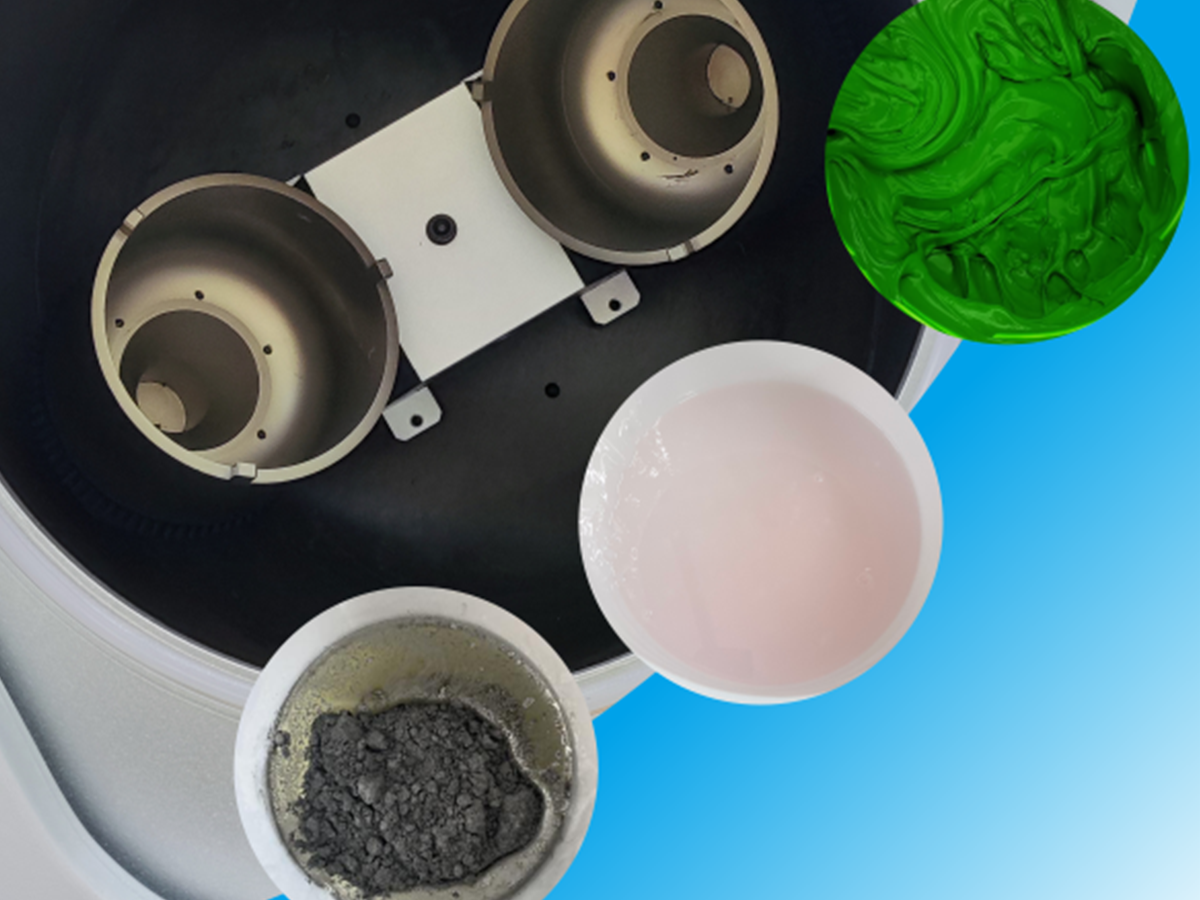
It is a blade-free planetary centrifugal mixer that homogenizes two-component medical silicone with white masterbatch while removing bubbles under vacuum, in one closed step.
Two-component medical silicone has earned its reputation as a "gold material" in device manufacturing: excellent biocompatibility, temperature and aging resistance, flexibility, and strong chemical inertness.
It appears in catheters, sealing rings, face masks, balloons, laryngeal masks, and negative-pressure drainage balls.
White masterbatch, used to control color marking, is present on nearly every medical silicone line.
The mixing step that combines A/B components with masterbatch looks deceptively simple, yet it decides both yield and regulatory compliance.
The Five Failures That Threaten Yield and Compliance
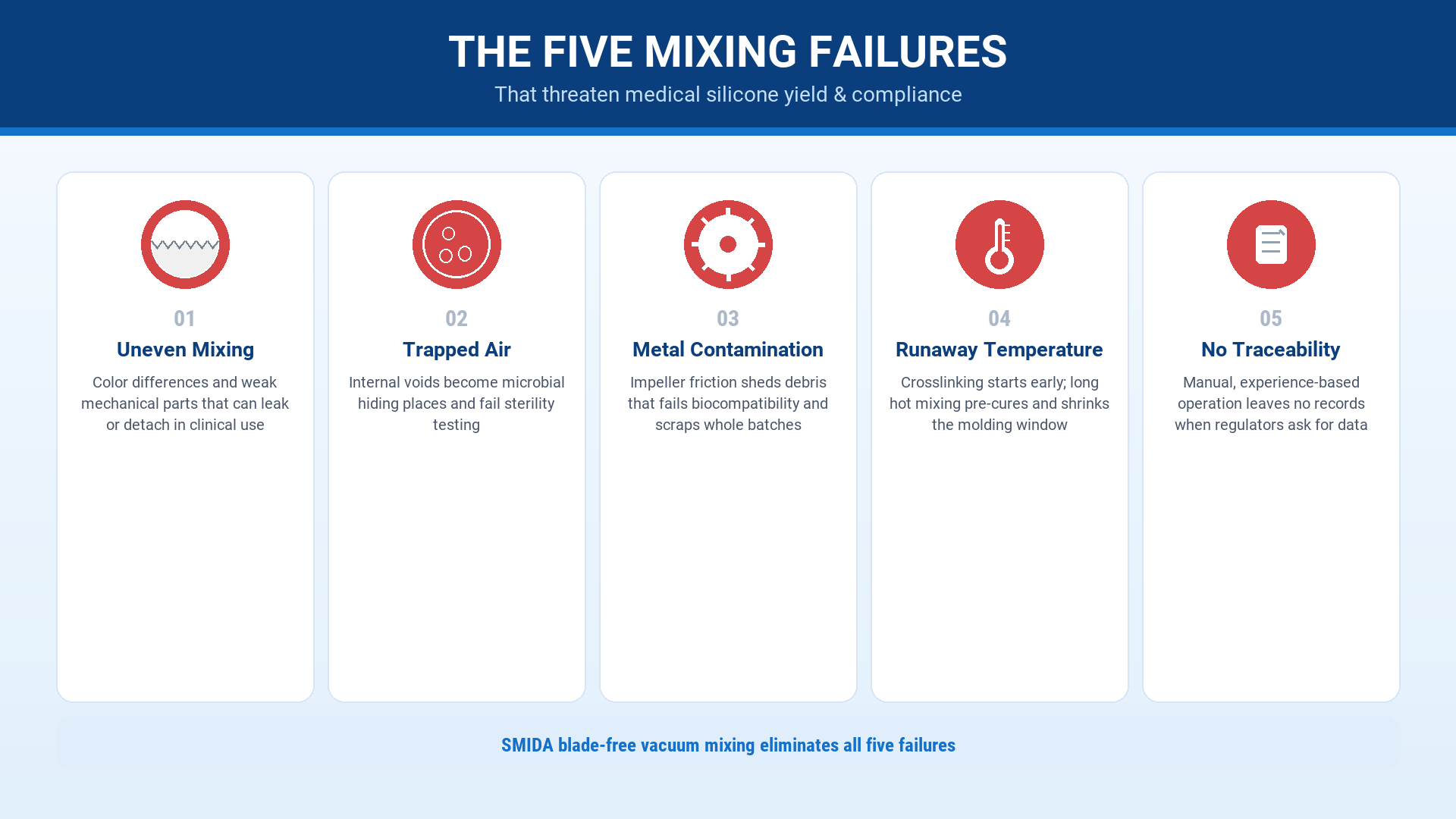
Working with medical silicone processors, we see the same five problems repeat:
-
Uneven mixing.
When masterbatch agglomerates or the A/B ratio is not fully homogenized, finished parts show color differences and inconsistent mechanical properties.
In clinical use, weak spots can leak or detach. -
Entrapped air.
High-viscosity silicone traps air easily during stirring.
The common "mix first, degas later" two-step approach lets air back in during transfer.
Internal voids become hiding places for microorganisms, and parts can fail sterility or leak testing. -
Metal contamination.
Impeller blades rubbing against the mixing vessel shed metal debris.
Excess impurities fail biocompatibility testing and can scrap an entire batch. -
Uncontrolled temperature rise.
Crosslinking begins soon after the two components meet.
Long, hot mixing accelerates the reaction, risking pre-cure and shrinking the molding window. -
Missing traceability.
Manual operation with no recorded speed, vacuum or time leaves nothing to show during audits.
Regulators increasingly expect data, not promises.
Four Standard Actions for Medical-Grade Mixing and Degassing
-
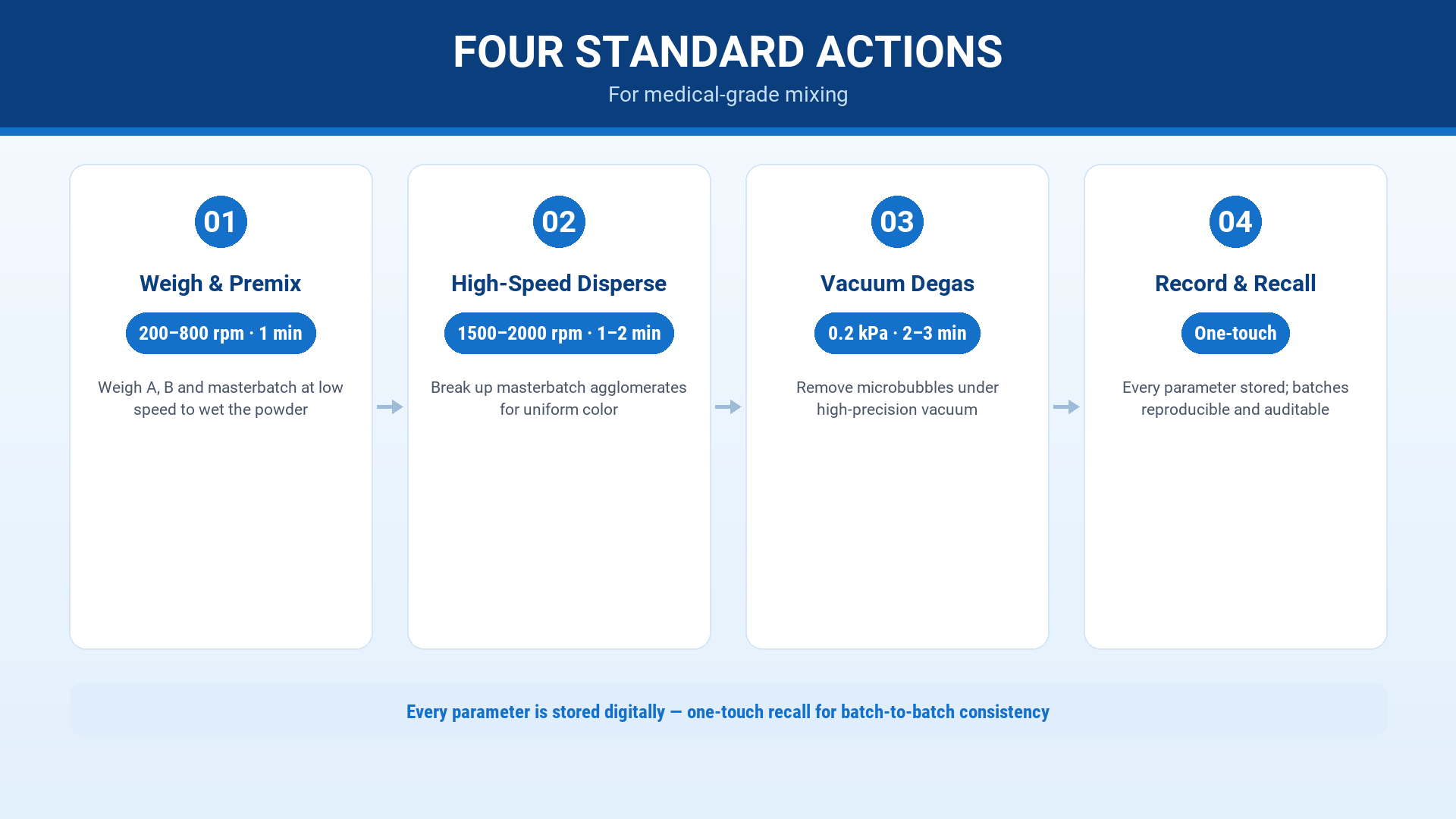
Premix.
Weigh A, B and masterbatch to the formula, then premix at low speed (about 200–800 rpm for 1 minute) to wet the powder and remove bulk air. -
Disperse.
Increase to high speed (about 1500–2000 rpm for 1–2 minutes) so the masterbatch agglomerates are fully broken up and the compound is microscopically uniform. -
Degas under vacuum.
Hold at 0.2 kPa-class vacuum for 2–3 minutes to pull out microbubbles without re-entering air. -
Record and recall.
Store every parameter digitally and recall formulas with one touch, so each batch is reproducible, auditable and free of operator judgment.
Why SMIDA's Planetary Centrifugal Mixer Fits Medical Work
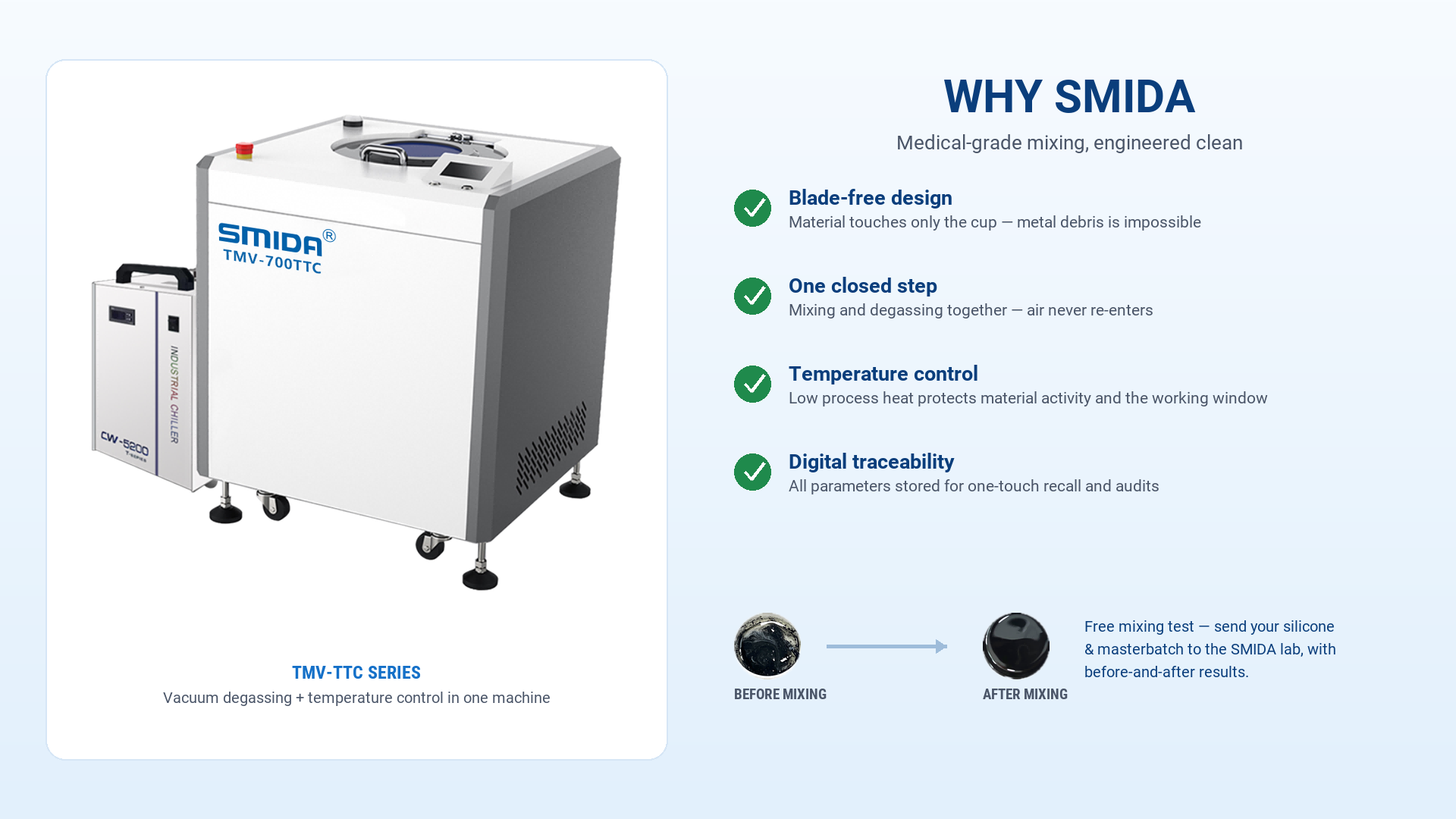
SMIDA's design choices map directly to the five failures above:
-
Blade-free, non-contact mixing.
Material touches only the cup, so metal debris and cross-contamination between batches are impossible. -
One-step mixing and degassing.
Mixing happens inside a sealed cup under vacuum, so air never gets a second chance to enter. -
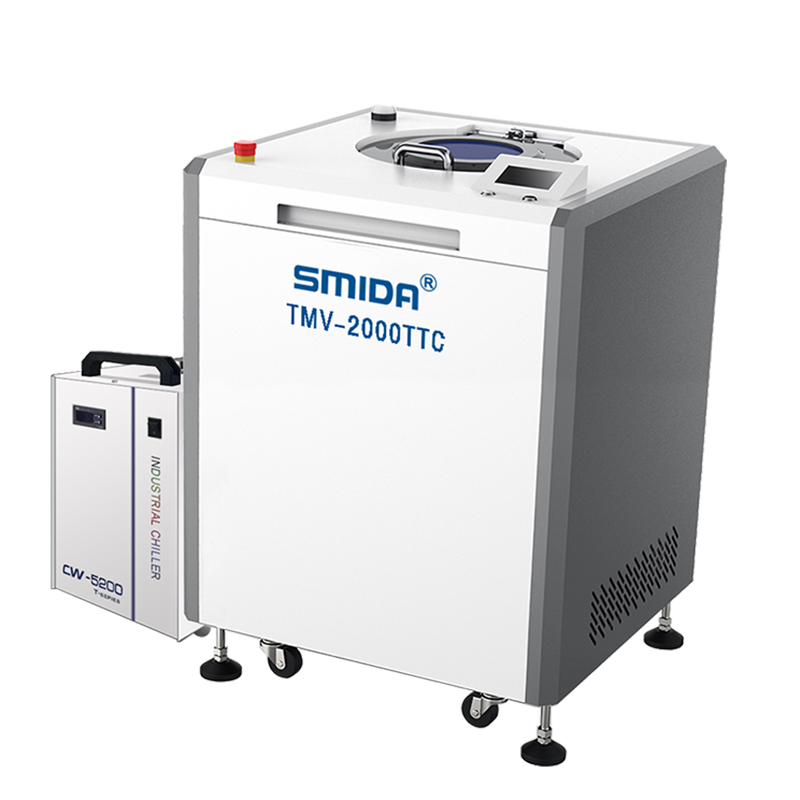
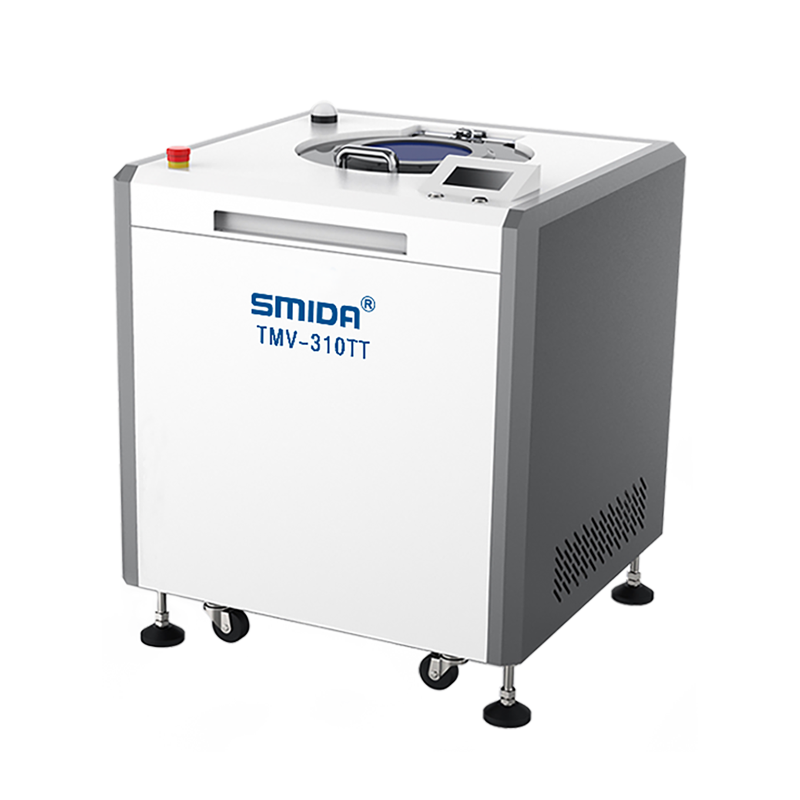
Temperature-controlled models (TTC).
Process heat stays low, protecting material activity and preserving the working window before cure. -
Digital parameter storage.
One-touch recall satisfies the traceability and audit requirements of medical manufacturing.
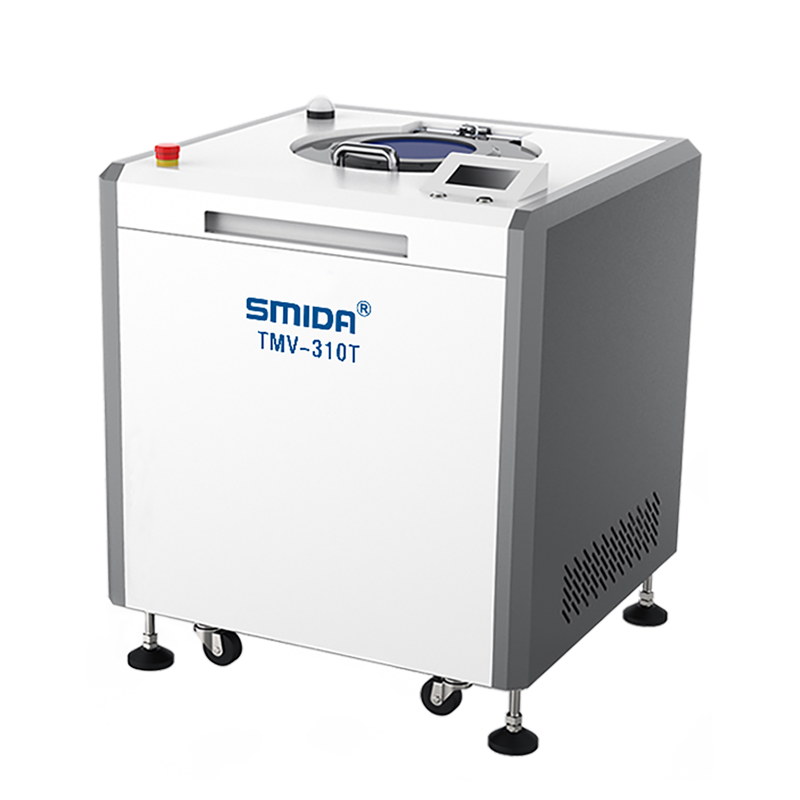
Capacity scales from 1 g laboratory samples to 100 kg+ production batches (equipment range 150 g to 100 kg+), and vacuum, temperature-controlled and non-vacuum variants are available.
SMIDA mixers are CE and ISO 9001, ISO 14001 and ISO 45001 certified, with more than 17 years of material-processing experience and 2,000+ customers in 40+ countries.
Frequently Asked Questions
Is a planetary centrifugal mixer suitable for medical-grade silicone?
Yes.
Blade-free closed mixing meets the cleanliness and traceability demands of medical silicone, and sealed cups keep the compound free of contamination and re-entrained air.
How do I stop color drift between batches?
Disperse the white masterbatch at high speed until agglomerates are gone, then save the exact speed, vacuum and time.
One-touch recall makes every batch identical instead of operator-dependent.
Why is temperature control important for two-component silicone?
Crosslinking accelerates with heat.
Uncontrolled mixing heat can partially cure the silicone in the cup, shrinking the molding window and wasting material.
A temperature-controlled mixer keeps the compound inside its process window.
What capacity do I need for my line?
Tell us your batch weight and cycle time.
SMIDA offers everything from 150 g R&D cups to 100 kg+ production machines, and we will size the model from your actual demand.
Compliance is not built on inspection luck; it is built on the certainty of each process step.
Send your silicone and masterbatch to the SMIDA lab, and we will run a free mixing and degassing test and return before-and-after data, so you can see the difference before you buy.
 Hot News